

Upholstery warranty coverage is defined as a manufacturer’s written guarantee to repair or replace furniture that fails due to defects in materials or workmanship. Most fabric warranties last one year and cover specific failures like seam slippage, while leaving out everyday wear, stains, and pet damage. That gap surprises a lot of homeowners at the worst possible moment. Understanding what your warranty actually promises, and what it does not, is the clearest way to protect a purchase you plan to live with for years. Striped Sofa Co builds this understanding into every conversation about fabric selection and care.
What is upholstery warranty coverage and what does it include?
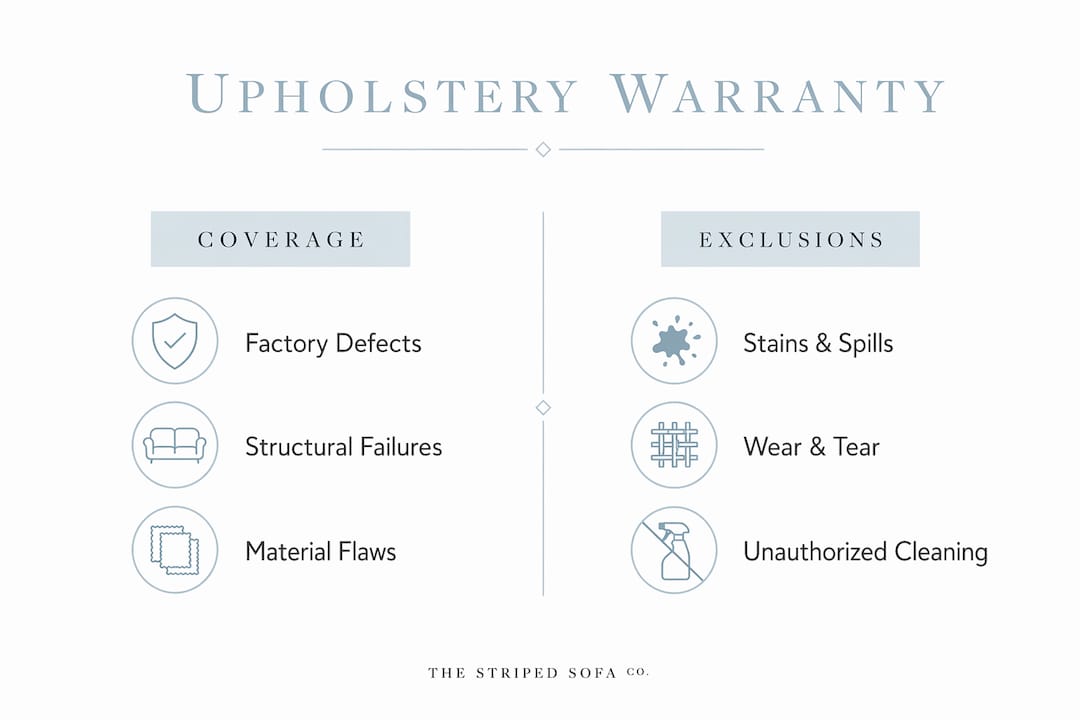
Upholstery warranty coverage protects you against production errors, not lifestyle accidents. Manufacturer warranties are designed to catch failures that originate in the factory: a seam that separates under normal use, a frame joint that fails without abuse, or fabric that arrives with a weaving flaw. They are not designed to cover what happens after the sofa settles into your living room.

Warranty coverage is also modular, meaning different components carry different durations. A frame may carry a lifetime guarantee, cushion cores may be covered for one to five years, and the upholstery fabric itself typically carries the shortest term, often just one year. That layered structure means you could have a valid frame claim years after your fabric coverage has expired.
The industry term for this type of protection is a “limited warranty,” and that word “limited” carries real weight. It signals that the manufacturer has defined a precise list of qualifying defects. Anything outside that list falls to you, or to a separate protection plan.
What does upholstery warranty cover and what does it exclude?
The clearest way to read any warranty is to separate the “covered” column from the “excluded” column before you sign anything.
Typically covered:
- Seam slippage or separation under normal use
- Structural frame defects such as cracked joints or broken supports
- Fabric weaving defects present at delivery
- Stitching failures not caused by misuse
Commonly excluded:
- Fading, pilling, and natural compression of cushion foam from regular use
- Pet damage, claw marks, and animal hair embedded in fabric
- Liquid damage and sunlight fading from improper placement or care
- Shrinking or stretching caused by humidity or temperature changes
- Damage from unapproved cleaning products
One detail that catches many homeowners off guard: natural variations in leather and fabric are not considered defects. Color shifts between dye lots, slight grain differences in leather, and minor surface wrinkles in woven textiles are all normal characteristics of natural materials. Consumers often mistake these traits for damage, which leads to warranty disputes that go nowhere.
Foam cushion wear follows a similar logic. Compression is expected over time, and most warranties only recognize it as a defect if the cushion loses a significant portion of its original loft, typically around 25–30% of its original height. Slight softening is not a claim.
Pro Tip: Read the exclusions list before you read the coverage list. The exclusions tell you far more about what you actually own.
Choosing stain-resistant sofa fabrics from the start reduces the likelihood of damage that falls outside warranty protection, which is a smarter long-term move than relying on coverage alone.
How is an upholstery warranty different from a furniture protection plan?
The distinction here is the most misunderstood point in all of furniture retail. A manufacturer warranty covers how the sofa was made. A protection plan covers how you live with it.
Manufacturer warranties protect against production errors and structural failures. Protection plans, sold separately at the point of purchase, cover sudden accidental damage: a wine spill, a child’s crayon mark, a pet scratch. Protection plans often last 36 months and require you to report damage promptly after it occurs, along with proof of original purchase.
| Feature | Manufacturer warranty | Furniture protection plan |
|---|---|---|
| What it covers | Factory defects in materials and workmanship | Sudden accidental damage like spills and stains |
| Typical duration | 1 year for fabric, longer for frame | Often 36 months from purchase date |
| Who provides it | The furniture manufacturer | A third-party plan provider or retailer |
| Claim trigger | Defect discovered during normal use | Accidental damage reported promptly |
| Proof required | Proof of purchase, photos of defect | Proof of purchase, incident report |
The critical word in protection plan language is “sudden.” Cumulative wear and tear does not qualify. A stain you report the day it happens is covered. A stain you notice three months later is not. That reporting window is narrow, and missing it voids the claim entirely.
Pro Tip: Photograph any accidental damage the moment it happens, before you attempt to clean it. That photo timestamp is your strongest evidence for a protection plan claim.
Understanding sofa fabric durability ratings before you buy helps you choose a fabric that holds up well enough to reduce how often you need either type of coverage.
Common reasons upholstery warranty claims get denied
Most claim denials come down to one of four causes, and all four are avoidable with the right habits.
-
Using unapproved cleaning products. Aftermarket stain repellents and unapproved cleaners void warranties outright. Manufacturers cite improper maintenance as the cause of damage, and they are legally correct to do so. Always use the cleaning method specified in your warranty documentation.
-
Delaying the report. Cumulative damage and delayed claim reports are among the most common reasons claims are denied. Manufacturers expect you to report a defect when you notice it, not months later. A seam that separates in january and gets reported in april raises questions about whether normal use caused the failure.
-
Misreading normal characteristics as defects. Grain variation in leather, slight color shifts in woven fabric, and minor surface texture differences are not manufacturing errors. Filing a claim for these characteristics wastes time and signals to the manufacturer that you may not have read the warranty terms carefully.
-
Damage from excluded causes. Pet scratches, sunlight fading, and liquid damage from improper care are excluded from virtually every manufacturer warranty. Filing a claim for these outcomes will be denied regardless of how the damage looks.
The best practices to preserve your coverage are straightforward:
- Keep your original receipt and warranty documentation in a dedicated folder
- Follow the manufacturer’s specific cleaning instructions, not general fabric care advice
- Inspect your furniture every few months and document any changes with dated photos
- Report any suspected defect as soon as you notice it, not when it becomes severe
Choosing a performance fabric sofa with bleach-cleanable upholstery simplifies maintenance and reduces the risk of accidentally voiding your warranty with the wrong cleaning product.
How to file an upholstery warranty claim and get results
Filing a warranty claim successfully requires preparation before anything goes wrong.
-
Confirm the damage qualifies. Compare what you see against the covered defects list in your warranty document. Seam separation, frame failure, and fabric weaving flaws qualify. Fading, pilling, and pet damage do not.
-
Gather your documentation. Locate your original proof of purchase, the warranty card or document, and any photos of the defect. Manufacturers require all three before processing a claim.
-
Report promptly and in writing. Contact the manufacturer or retailer by email so you have a written record. Describe the defect clearly, include your photos, and reference your purchase date and warranty terms.
-
Follow the manufacturer’s instructions exactly. Do not attempt to repair the defect yourself before the claim is processed. Self-repair attempts can be interpreted as an admission that the damage was not a factory defect.
-
Evaluate whether a protection plan fills the gap. If your damage falls outside warranty coverage, a protection plan may still apply. If you do not have one, consider adding it to your next furniture purchase at the point of sale.
Pro Tip: Ask the retailer for the warranty document before you buy, not after. If they cannot produce it, that tells you something important about the purchase.
Reviewing upholstery construction methods before purchase helps you identify quality signals that reduce the likelihood of a defect claim ever being necessary.
Key Takeaways
Upholstery warranty coverage protects against factory defects only, and a separate protection plan is the only way to cover accidental damage from real home life.
| Point | Details |
|---|---|
| Warranty scope is narrow | Manufacturer warranties cover defects in materials and workmanship, not accidents or wear. |
| Coverage is modular | Fabric typically carries a 1-year warranty; frames may be covered much longer. |
| Exclusions are extensive | Fading, pilling, pet damage, and liquid damage are excluded from nearly every manufacturer warranty. |
| Protection plans fill the gap | A 36-month protection plan covers sudden accidental damage that warranties do not touch. |
| Documentation wins claims | Proof of purchase, dated photos, and prompt reporting are the three requirements for a successful claim. |
What I’ve learned about warranties after years in the furniture world
I have watched homeowners walk away from beautiful sofas feeling let down, not because the furniture failed them, but because no one explained what the warranty actually promised. That gap between expectation and reality is one of the most preventable frustrations in furniture ownership.
The honest truth is this: a manufacturer warranty is a quality assurance document, not a lifestyle insurance policy. It tells you that the people who built your sofa stand behind their craft. It does not promise that the sofa will survive a decade of family life without a scratch. Expecting it to do both leads to disappointment.
What I recommend to every homeowner is to treat the warranty and the protection plan as a pair, not alternatives. The warranty covers the maker’s responsibility. The protection plan covers yours. Together, they create something close to genuine peace of mind.
The other thing I have come to believe deeply is that fabric choice matters more than most people realize. A high-performance upholstery fabric that resists stains and cleans easily reduces the number of situations where you ever need to file a claim at all. The best warranty is the one you never have to use.
— Kevin O’Gara
Sofas built to last, backed by a brand that stands behind them
At Striped Sofa Co, every sofa is made to order in America using FSC and SFI certified wood, soy-based foam, and stain-resistant, bleach-cleanable fabrics free from harmful PFAS chemicals. That material quality is the foundation of any meaningful warranty promise.

When you choose a custom performance striped sofa from Striped Sofa Co, you are selecting upholstery built to hold up through real home life, not just showroom conditions. The fabric options are designed to clean easily and resist the everyday accidents that fall outside standard warranty coverage. Explore the full collection at Striped Sofa Co and find a sofa that earns its place in your home for years to come.
FAQ
What is upholstery warranty coverage in simple terms?
Upholstery warranty coverage is a manufacturer’s guarantee to repair or replace furniture that fails due to defects in materials or workmanship. It does not cover accidental damage, normal wear, or lifestyle-related issues like stains or pet scratches.
How long does an upholstery warranty typically last?
Fabric warranties typically last one year, while frame warranties can extend much longer, sometimes for the lifetime of the sofa. Warranty duration varies by component, so always read the full warranty document rather than relying on a single headline number.
Does upholstery warranty cover stains and spills?
No. Manufacturer warranties exclude stains, spills, and liquid damage caused by improper care. A separate furniture protection plan is the only coverage option for accidental spills and stains.
What voids an upholstery warranty?
Using unapproved cleaning products or aftermarket stain repellents voids most upholstery warranties. Delayed reporting of defects and damage from excluded causes like pets or sunlight also result in denied claims.
Is a furniture protection plan worth buying?
A protection plan is worth buying if you have children, pets, or high-traffic use in your home. It covers the sudden accidental damage that manufacturer warranties specifically exclude, and plans often last 36 months from the original purchase date.