

Upholstery fabric grades are a classification system that ranks fabrics by durability, material quality, and price. Most manufacturers use a scale from Grade A through Grade F or higher, with each step up representing better materials and longer wear. Understanding these grades means more than reading a letter on a spec sheet. It means knowing the abrasion tests behind the number, the pilling risk hiding in the fiber blend, and whether that “bleach cleanable” claim actually holds up on every seam. This guide gives you the full picture on upholstery fabric grades explained, so you can choose fabric that looks beautiful and lasts.
What do upholstery fabric grades actually mean?
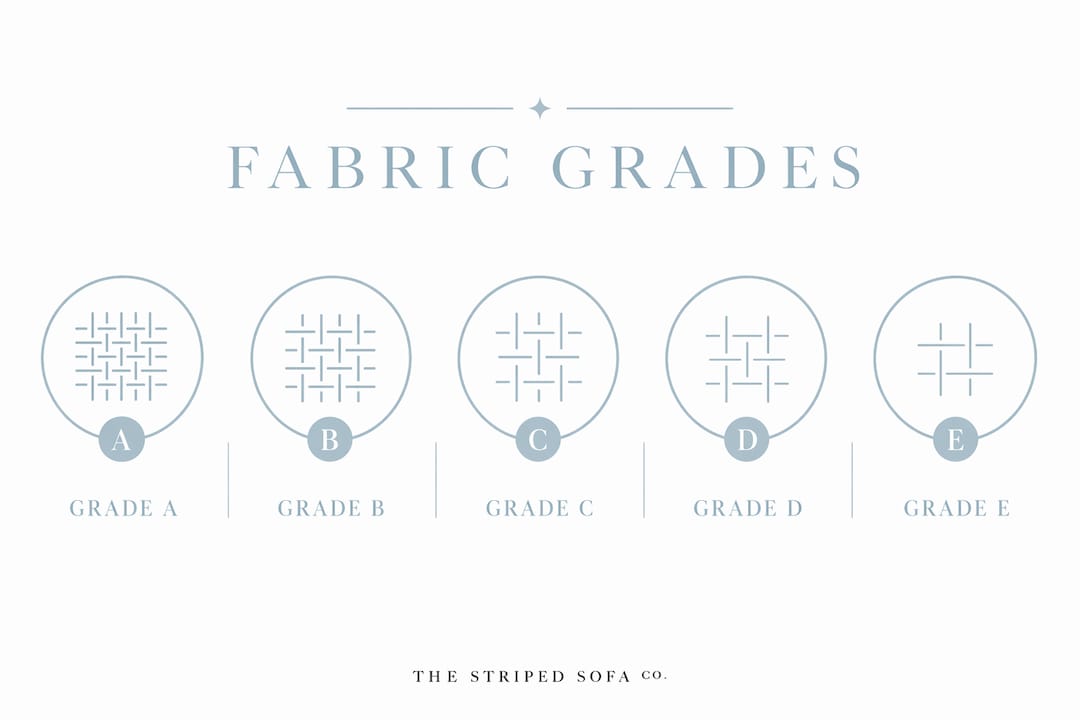
Upholstery fabric grades classify materials along a rising scale of cost and performance. Grade A fabrics are typically entry-level synthetics, affordable and serviceable but less durable under heavy use. Grade D and E fabrics offer higher-quality materials, including cotton, wool, and commercial-grade performance textiles, with noticeably better wear characteristics.
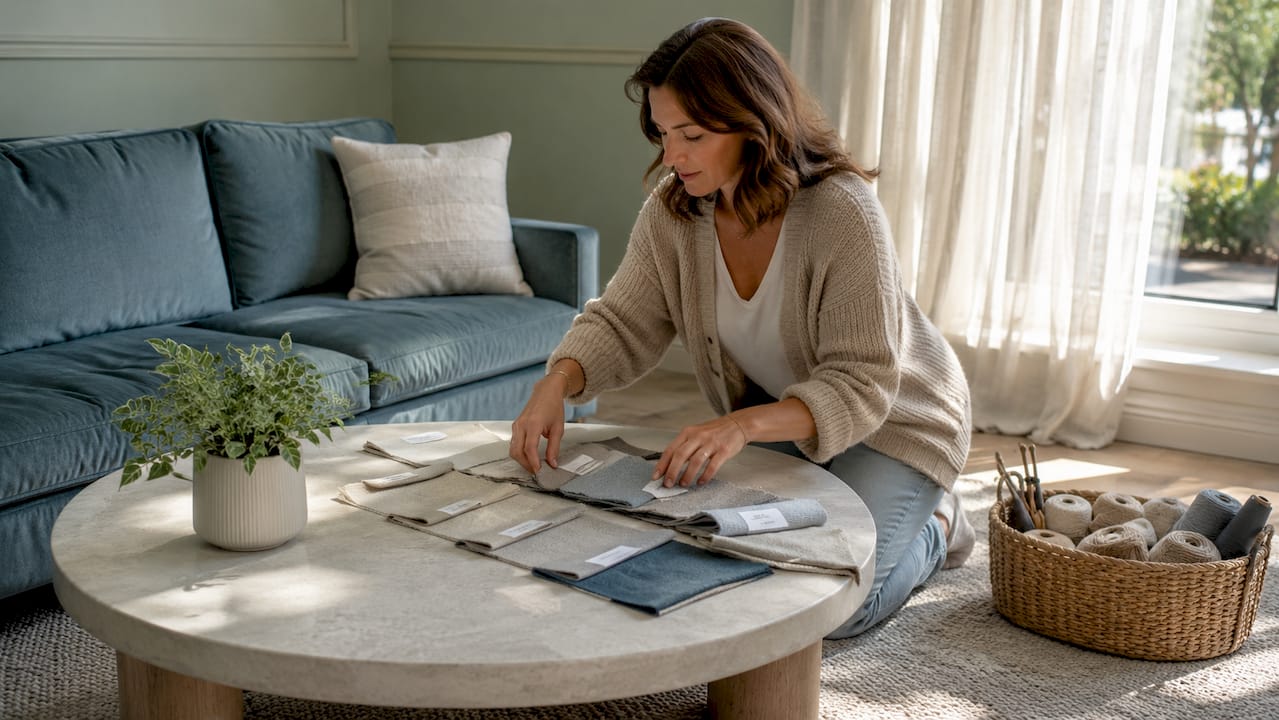
The grading system is not universal. Each manufacturer or upholsterer sets its own scale, so a Grade C from one brand may not equal a Grade C from another. What grades consistently signal, across most systems, is the relative position of a fabric within that supplier’s lineup. A higher grade means a higher price and, generally, a more durable or refined material.
The table below shows how typical grade tiers map to fabric types and common use cases.
| Grade | Typical Materials | Best For |
|---|---|---|
| A | Entry-level synthetics, polyester blends | Light use, guest rooms, low-traffic spaces |
| B | Mid-weight synthetics, textured weaves | Everyday seating, moderate traffic |
| C | Cotton blends, linen blends | Living rooms, decorative accent pieces |
| D | Wool, performance synthetics, velvet | Family rooms, active households |
| E/F | Commercial-grade performance fabrics, natural fibers | Heavy use, pets, children, high-traffic areas |
Key features that typically rise with grade level:
- Fiber quality: Higher grades use longer staple fibers and tighter yarn twists, which resist wear and pilling.
- Weave density: Denser weaves hold their structure longer under repeated stress.
- Performance treatments: Stain resistance, moisture barriers, and bleach cleanability appear more reliably at higher grades.
- Colorfastness: Better dyes and finishing processes reduce fading and color transfer.
How do Wyzenbeek and Martindale tests define fabric durability?
Abrasion resistance is the most cited durability metric in upholstery, and two tests dominate the industry. The Wyzenbeek and Martindale tests use different motions, so their rub counts are not interchangeable. Wyzenbeek, the standard in the United States, counts each back-and-forth motion as one double rub. Martindale, common in Europe, uses a figure-eight motion. A fabric rated at 30,000 Martindale cycles is not the same as one rated at 30,000 Wyzenbeek double rubs.
The most important question when reading a durability spec is not whether the number is high, but which test method produced it. Always check the spec sheet for the test name before comparing fabrics across brands or suppliers.
The table below shows standard abrasion minimums by use category, using the Wyzenbeek scale.
| Use Category | Minimum Double Rubs |
|---|---|
| Light domestic | 15,000 |
| Heavy domestic | 25,000+ |
| Commercial | 30,000+ |
Approximately 3,000 Wyzenbeek double rubs correspond to one year of typical residential use. A sofa rated at 30,000 double rubs, used daily in a family room, should hold up for roughly a decade before showing significant wear.
Pro Tip: Ask your fabric supplier to confirm whether the abrasion rating on a spec sheet is Wyzenbeek or Martindale. If the test method is not listed, treat the number as unverified.
High abrasion resistance alone does not guarantee a fabric will look good over time. A fabric with excellent abrasion ratings can still pill badly, because abrasion and pilling resistance are distinct properties measured by separate tests. A fabric that survives 50,000 double rubs but pills at Grade 2 will look worn and fuzzy within months of regular use.
What other performance factors affect upholstery fabric quality?
Abrasion scores tell one part of the story. Several other performance properties determine how a fabric actually holds up in a lived-in home.
Pilling resistance measures how a fabric’s surface forms small fiber balls under friction. Pilling is tested using ISO 12945-2, graded on a scale of 1 to 5, with 5 being the best. Contract-grade fabrics require a minimum of Grade 4 to avoid noticeable surface pilling. Natural-synthetic blends pill the most, while long staple fibers and tightly twisted yarns resist pilling best. For homes with pets, prioritizing low pilling risk is as important as abrasion resistance to maintain a fabric’s appearance.
Crocking is the transfer of dye from a fabric onto other surfaces or clothing. Contract upholstery standards recommend a minimum crocking grade of 4 for dry contact and 3 for wet contact. Homeowners can use these thresholds as a practical benchmark, especially when choosing dark fabrics or heavily saturated colors.
Lightfastness measures how well a fabric resists fading under light exposure. The Blue Wool Scale grades this property, and Grade 4 is the minimum for indirect light exposure, while Grade 5 or higher suits moderate natural light. For south-facing rooms or spaces with significant sun exposure, Grade 6 or above is the right target.
Cleaning protocols deserve careful scrutiny. Performance fabric claims like “bleach cleanable” require specific cleaning protocols to be validated, including dilution ratios, dwell time, rinsing, and coverage of all fabric components. These claims may not apply uniformly to seams, backing, or foam. Always request the full cleaning spec, not just the marketing label.
Pro Tip: Test results for abrasion, pilling, and lightfastness can vary between colorways within the same fabric range. Always verify specs for the exact color you plan to order, not just the fabric line.
How to choose the right fabric grade for your home
Matching a fabric grade to your lifestyle is more reliable than choosing by aesthetic alone. The right grade depends on how a room is used, who uses it, and what you value in long-term care and sustainability.
-
Assess your traffic level. A formal sitting room used occasionally can work beautifully with a Grade B or C fabric. A family room sofa that hosts movie nights, homework sessions, and weekend guests needs Grade D or higher, with a minimum of 25,000 Wyzenbeek double rubs.
-
Factor in pets and children. Pets and children accelerate wear in ways that abrasion scores alone do not capture. Look for fabrics with a pilling resistance of Grade 4 or above, snag-resistant weaves, and verified stain-resistance protocols. High-traffic homes benefit most from fabrics built for durability across all performance metrics, not just one.
-
Consider your light exposure. South-facing rooms or spaces with large windows require a lightfastness grade of 6 or higher on the Blue Wool Scale. Choosing a beautiful fabric without checking this number is a common and costly mistake.
-
Read the full spec sheet, not just the grade label. Upholstery fabric specification is a multi-metric process that should review abrasion test type, pilling, crocking, lightfastness, and cleaning protocols together. A grade label summarizes cost and general quality. The spec sheet reveals whether the fabric is actually right for your home.
-
Weigh sustainability alongside performance. Durability is the most sustainable choice you can make. A fabric that lasts 15 years generates far less waste than one replaced every 4 years. Look for fabrics free from PFAS chemicals, sourced from suppliers who disclose their materials and manufacturing practices. Performance and environmental responsibility are not opposites.
Key Takeaways
Upholstery fabric grades indicate relative cost and quality within a supplier’s range, but true durability requires reviewing abrasion test type, pilling resistance, crocking, lightfastness, and cleaning protocols together.
| Point | Details |
|---|---|
| Grades vary by supplier | A Grade C from one brand does not equal a Grade C from another; always compare full specs. |
| Test method matters | Wyzenbeek and Martindale scores are not interchangeable; confirm which test was used before comparing. |
| Abrasion is not the whole story | High abrasion ratings do not prevent pilling; check ISO 12945-2 pilling scores separately. |
| Lightfastness protects color | Use Blue Wool Scale Grade 6+ for south-facing rooms and spaces with significant sun exposure. |
| Sustainability starts with durability | Longer-lasting fabrics reduce replacement waste; prioritize PFAS-free performance materials. |
Why I think most people read fabric grades backwards
I have spent years watching homeowners walk into a showroom, point to a Grade A sofa, and feel good about saving money. What they rarely realize is that they have just chosen the fabric most likely to disappoint them within three years. The grade label tells you where a fabric sits in a supplier’s pricing lineup. It does not tell you how the fabric was tested, what fibers were used, or whether the “stain-resistant” claim covers the seams.
The most common misconception I encounter is that a higher grade automatically means a better-looking fabric. That is not true. A Grade E performance textile in a tight, plain weave may outlast a Grade C silk blend by a decade, but the silk blend will always photograph better. The real skill is knowing what you are optimizing for, and being honest about how your household actually lives.
My advice is to ask your supplier for the full spec sheet before you fall in love with a color. Ask specifically: What test method produced the abrasion rating? What is the pilling resistance grade? What does “bleach cleanable” actually cover? If a supplier cannot answer those questions, that tells you something important about the fabric and about the supplier.
The trend toward sustainable, PFAS-free performance fabrics is one of the genuinely good developments in this industry. These materials perform at Grade D and E levels, clean easily, and do not carry the chemical burden of older stain-resistant treatments. When you choose a fabric that lasts and cleans safely, you are making a decision that is good for your home and for the people in it. That is the kind of quiet, lasting quality I have always believed furniture should embody.
— Kevin O’Gara
How Striped Sofa Co approaches performance upholstery
Choosing the right fabric grade is only half the work. The other half is finding a maker who builds the sofa to match that fabric’s potential.
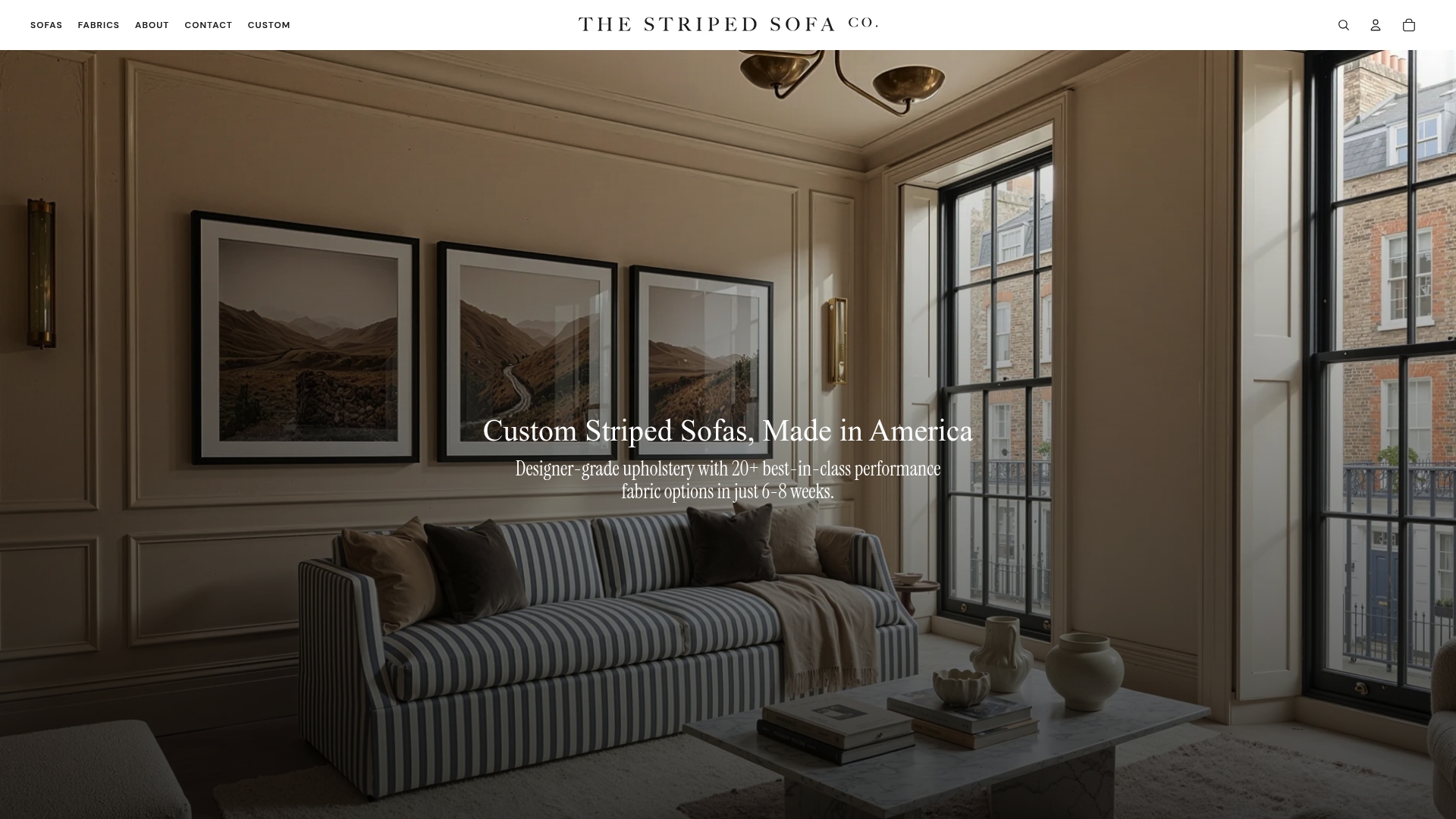
Striped Sofa Co designs custom performance sofas using designer-grade upholstery fabrics that are stain-resistant, bleach-cleanable, and free from PFAS chemicals. Every sofa is made to order in America using FSC and SFI certified wood and soy-based foam, so the sustainability runs through the entire piece, not just the fabric face. The Dalston and Chelsea models are built with the same performance standards that contract designers specify for high-traffic commercial spaces. If you want a sofa that holds its beauty for years, explore the full collection and request fabric specs before you order.
FAQ
What is a fabric grade in upholstery?
A fabric grade ranks upholstery materials by cost and general quality within a supplier’s lineup, from entry-level synthetics at Grade A to high-performance or natural fibers at Grade E and above. Grades do not follow a universal standard, so always compare full spec sheets across suppliers.
What is the difference between Wyzenbeek and Martindale abrasion tests?
Wyzenbeek counts back-and-forth double rubs and is the standard in the United States, while Martindale uses a figure-eight motion common in Europe. Their scores are not interchangeable, so always confirm which test method was used before comparing durability ratings.
How many double rubs do I need for a family room sofa?
Heavy domestic use requires at least 25,000 Wyzenbeek double rubs, with approximately 3,000 double rubs corresponding to one year of typical residential use. A sofa rated at 30,000 double rubs should hold up well in an active household for roughly a decade.
What is pilling and why does it matter for upholstery?
Pilling is the formation of small fiber balls on a fabric’s surface from friction, and it is measured separately from abrasion resistance using ISO 12945-2 on a scale of 1 to 5. A fabric can score well on abrasion tests and still look worn quickly if its pilling resistance falls below Grade 4.
How do I check if a performance fabric’s cleaning claims are valid?
Request the full cleaning protocol from your supplier, including dilution ratios, dwell time, rinsing instructions, and confirmation that the claim covers seams and backing, not just the fabric face. If those details are not available, treat the cleaning claim as unverified.