

Sustainable upholstery is defined as furniture fabric and construction designed to minimize environmental harm while maximizing durability and aesthetic appeal. The role of sustainable upholstery extends far beyond the fabric itself. It shapes how long a sofa lasts, how much waste it generates, and how many harmful chemicals enter your home. Certifications like OEKO-TEX Standard 100, GRS, and EU Ecolabel now give you a reliable way to verify those claims before you buy. Choosing eco-friendly upholstery options is one of the most direct sustainable furniture choices a homeowner can make, and the impact compounds over the life of a sofa.
How do sustainable upholstery materials reduce environmental impact?
Sustainable upholstery materials lower environmental harm through three measurable pathways: reduced carbon output, lower water consumption, and fewer toxic chemicals in production. Each pathway matters, and the fabric you choose determines which ones you address.
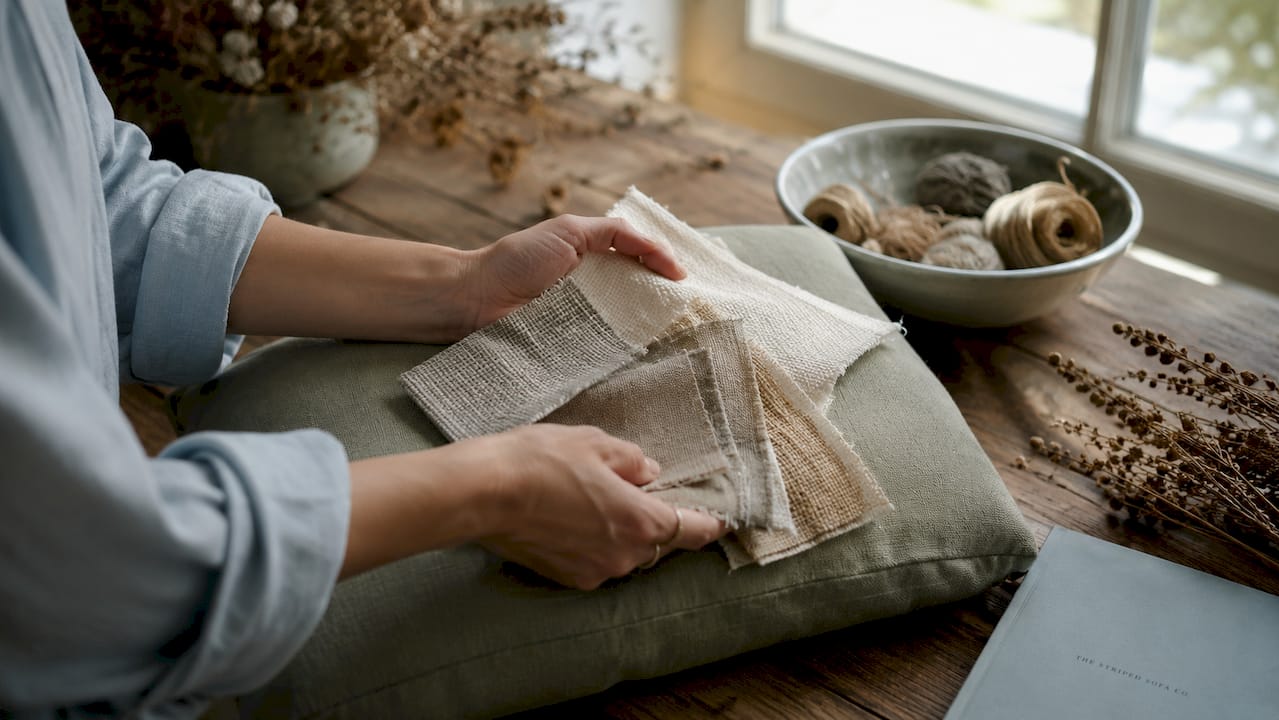
Natural fibers lead the conversation. Organic cotton, linen, hemp, and wool are biodegradable and reduce chemical runoff when farmed with responsible certifications. Hemp, in particular, requires far less water than conventional cotton and replenishes soil rather than depleting it. Linen, made from flax, grows with minimal irrigation and produces a fabric that ages with quiet beauty.
Recycled synthetics offer a different kind of environmental value. Recycled olefin, for example, diverts plastic waste from landfills and oceans, then converts it into a fabric that performs exceptionally well in high-traffic settings. A 100% recycled olefin fabric can achieve 40,000 Martindale rubs and a light fastness rating of 7, matching the durability of virgin synthetic fabrics without the virgin plastic inputs. That performance level means the fabric resists both physical wear and UV fading, which extends the life of your furniture.
Cork is a less obvious but genuinely impressive option. Harvested from the bark of cork oak trees without cutting them down, cork upholstery panels are naturally antimicrobial, water-resistant, and fully renewable. It works beautifully on accent chairs and ottomans where texture adds visual warmth.
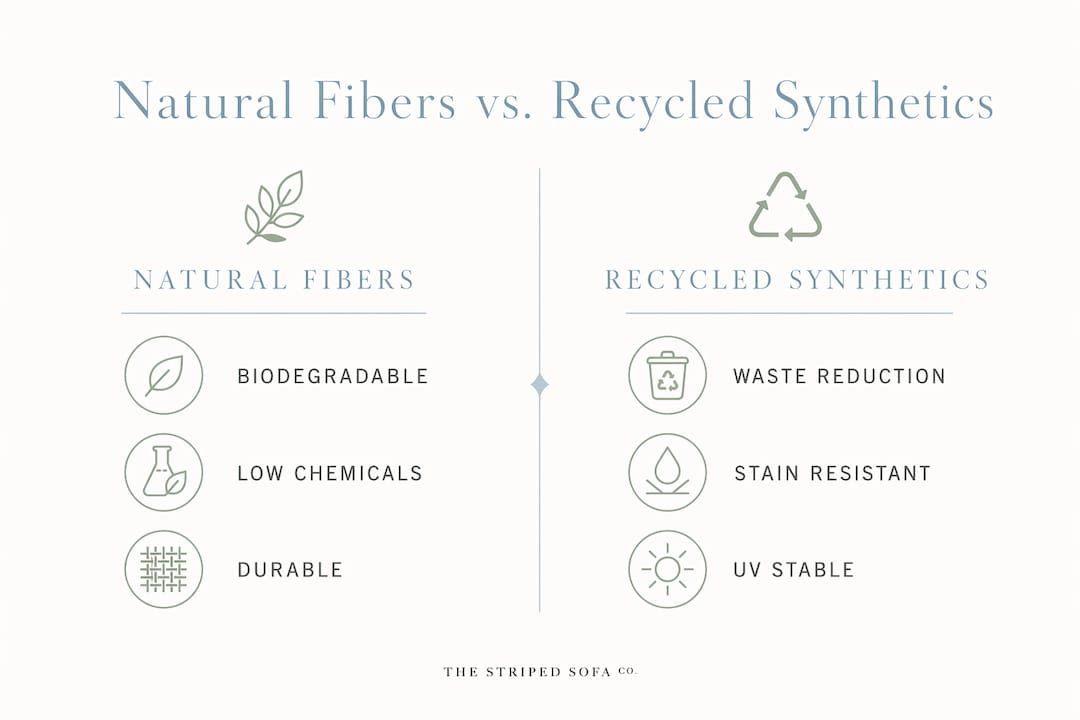
Natural fibers vs. recycled synthetics: a quick comparison
| Material | Environmental benefit | Performance strength | Best use case |
|---|---|---|---|
| Organic cotton | Biodegradable, low chemical input | Soft, breathable | Bedroom furniture, low-traffic seating |
| Linen | Low water use, biodegradable | Durable, ages well | Living room sofas, accent chairs |
| Hemp | Soil-restoring, minimal irrigation | Strong, UV-resistant | High-use seating, outdoor-adjacent pieces |
| Recycled olefin | Diverts plastic waste | 40,000 Martindale rubs, stain-resistant | Family rooms, high-traffic sofas |
| Cork | Renewable, antimicrobial | Water-resistant, tactile | Ottomans, accent seating |
Bio-based foams also belong in this conversation. Soy-based foam, used by Striped Sofa Co in every sofa they build, replaces a portion of petroleum-based foam with a renewable agricultural byproduct. The result is a seat cushion with a lower carbon footprint and no sacrifice in comfort or support.
What certifications and standards ensure upholstery sustainability and durability?
Third-party certifications are the only reliable way to verify a sustainability claim. Without them, “eco-friendly” is just a marketing phrase.
GRS, OEKO-TEX Standard 100, and EU Ecolabel are the three certifications that carry the most weight in the upholstery industry. Each one verifies a different dimension of sustainability:
- GRS (Global Recycled Standard): Confirms that recycled content claims are accurate and that the supply chain meets social and environmental criteria. If a fabric is labeled “recycled olefin,” GRS certification proves it.
- OEKO-TEX Standard 100: Tests every component of a fabric, including threads, buttons, and dyes, for harmful substances. A fabric carrying this label contains no known toxic chemicals at harmful concentrations.
- EU Ecolabel: Evaluates the full lifecycle of a product, from raw material extraction through production and disposal. It sets strict limits on water use, energy consumption, and chemical treatments.
Durability certifications matter just as much as environmental ones. Martindale abrasion testing and light fastness ratings quantify how long a fabric will hold up under real-world use. A Martindale rating of 40,000 rubs indicates a fabric suitable for heavy domestic use. A light fastness rating of 7 out of 8 means the color resists fading under prolonged UV exposure. These numbers translate directly into fewer replacements and less waste over time.
Pro Tip: When shopping for sustainable upholstery, ask the retailer for the specific certification number, not just the logo. Legitimate certifications are traceable to a database where you can verify the claim yourself.
Color fastness testing rounds out the picture. A fabric that fades within two years will be replaced sooner, negating its environmental credentials. Verified color fastness means the fabric stays beautiful longer, which is the quietest form of sustainability.
How does sustainable upholstery contribute to long-term furniture value and waste reduction?
Durability is the most underrated dimension of sustainable furniture choices. A sofa that lasts 12 years instead of 7 represents nearly half again as much use from the same materials, energy, and labor.
A typical household sofa lasts 7–12 years, and upholstery quality is the primary variable that determines where on that range your sofa lands. Cheap fabric wears thin, fades, and pills. Quality sustainable fabric, properly maintained, holds its structure and color through years of daily use. That difference in lifespan keeps sofas out of landfills and reduces the demand for new raw materials.
Extending fabric life through maintenance is one of the most practical sustainability tools available to you:
- Vacuum weekly using an upholstery attachment to remove dust, pet hair, and debris before they work into the fibers and cause abrasion.
- Rotate cushions monthly to distribute wear evenly across the fabric surface, preventing premature thinning in high-contact areas.
- Address spills immediately with a clean, dry cloth before moisture sets into the backing material. Prompt response prevents staining and reduces the need for chemical cleaning products.
- Avoid direct sunlight on upholstered surfaces where possible, or choose fabrics with a verified light fastness rating of 6 or higher to resist UV degradation.
- Follow the manufacturer’s cleaning code. Fabrics coded “W” (water-based cleaning) or “S/W” (solvent or water) offer the most flexibility and reduce the risk of damage from incorrect cleaning methods.
Simple care routines like weekly vacuuming and monthly cushion rotation extend fabric life and reduce the need for chemical cleaning products. That reduction in chemical use is itself an environmental benefit that rarely appears in sustainability marketing but adds up meaningfully over a decade.
Modular and reparable upholstery design amplifies these gains. A sofa built with removable cushion covers can have a single worn panel replaced rather than the entire piece discarded. Striped Sofa Co builds made-to-order sofas using FSC and SFI certified wood frames, which means the structural integrity of the piece supports a long life even as fabrics are refreshed over time.
Pro Tip: Choose a sofa with a hardwood frame and removable cushion covers. When the fabric eventually shows wear, reupholstering costs a fraction of replacement and keeps the frame out of the waste stream.
What are common sustainable upholstery materials and how do they compare?
Choosing the right sustainable fabric requires balancing environmental values with practical performance. No single material wins on every dimension, and the best choice depends on how you live in your home.
Natural fibers like linen and wool offer durability and sustainability when transparently sourced with certifications. Linen develops a gentle patina over time, growing more characterful with age. Wool is naturally flame-resistant and resilient, recovering its shape after compression. Organic cotton is soft and breathable, making it a strong choice for bedroom seating, though it requires more careful maintenance in high-traffic areas.
Recycled olefin stands apart in performance. At 275 g/m², recycled olefin’s backing material makes it light and flexible enough to upholster curved frames without bunching or adhesion problems. That physical flexibility matters for design-forward sofas where the fabric must conform to complex shapes. The fabric is also inherently hydrophobic, meaning liquids bead on the surface rather than absorbing into the fibers.
Sustainable fabric comparison
| Material | Stain resistance | UV stability | Durability (Martindale) | Recyclability at end of life |
|---|---|---|---|---|
| Organic cotton | Low | Moderate | 15,000–25,000 | Biodegradable |
| Linen | Low to moderate | Moderate | 20,000–30,000 | Biodegradable |
| Hemp | Moderate | Good | 25,000–35,000 | Biodegradable |
| Recycled olefin | High | Excellent (rating 7) | 40,000+ | Recyclable (plastic stream) |
| Wool | Moderate | Good | 30,000–40,000 | Biodegradable |
The greenest upholstery choice depends on transparent sourcing and verified certifications, not fiber type alone. A conventionally grown cotton fabric with no certification carries a heavier environmental footprint than a certified organic linen. The label on the bolt of fabric tells only part of the story. The certification behind it tells the rest.
For families with children or pets, recycled olefin or a certified performance fabric with PFAS-free stain resistance offers the most practical path to sustainable furniture choices. For those prioritizing natural materials and biodegradability, certified organic linen or hemp, paired with a rigorous maintenance routine, delivers lasting beauty with a lighter footprint.
Key takeaways
Sustainable upholstery reduces environmental impact most effectively when durable, certified materials are paired with consistent maintenance and responsible production methods.
| Point | Details |
|---|---|
| Certifications verify claims | Look for GRS, OEKO-TEX Standard 100, or EU Ecolabel to confirm environmental and safety credentials. |
| Durability equals sustainability | Fabrics rated at 40,000 Martindale rubs last longer, reducing replacement frequency and landfill waste. |
| Maintenance extends fabric life | Weekly vacuuming and monthly cushion rotation meaningfully extend upholstery lifespan. |
| Material choice depends on lifestyle | Recycled olefin suits high-traffic homes; certified natural fibers suit those prioritizing biodegradability. |
| Backing material matters | Fabric weight and backing type affect how well upholstery conforms to frames and holds up over time. |
What I’ve learned about choosing sustainable upholstery that most guides skip
I’ve spent years thinking about what makes a sofa worth keeping. The honest answer is that sustainability and beauty are not in tension. They reinforce each other when you choose well.
The mistake I see most often is treating “eco-friendly” as a category rather than a set of verifiable attributes. A fabric can be marketed as natural and still carry a significant chemical load from conventional farming or synthetic dyes. The certification is not a formality. It is the only thing standing between a genuine environmental choice and a well-designed label.
Maintenance is where I see the most waste in practice. People invest in a quality sofa and then neglect it. A cushion that never gets rotated wears unevenly within two years. A spill left to dry becomes a stain that prompts a replacement. The fabric is not the problem. The habit is. Sustainable upholstery is a long-term investment, and fabric performance and verified environmental claims determine how much of that investment you actually realize.
I also think the design dimension gets underweighted. A fabric you love looking at every day is a fabric you will care for. A sofa that feels like a quiet foundation for your home is one you will keep for a decade. That emotional connection to a piece is itself a sustainability strategy, because it removes the temptation to replace something simply because you’ve grown tired of it.
— Kevin O’Gara
Sustainable sofas made in America, built to last
At Striped Sofa Co, every sofa is made to order using FSC and SFI certified hardwood frames, soy-based foam, and designer-grade performance fabrics that are free from harmful PFAS chemicals. The fabrics are stain-resistant and bleach-cleanable without sacrificing the warmth and layered beauty that make a room feel like home.
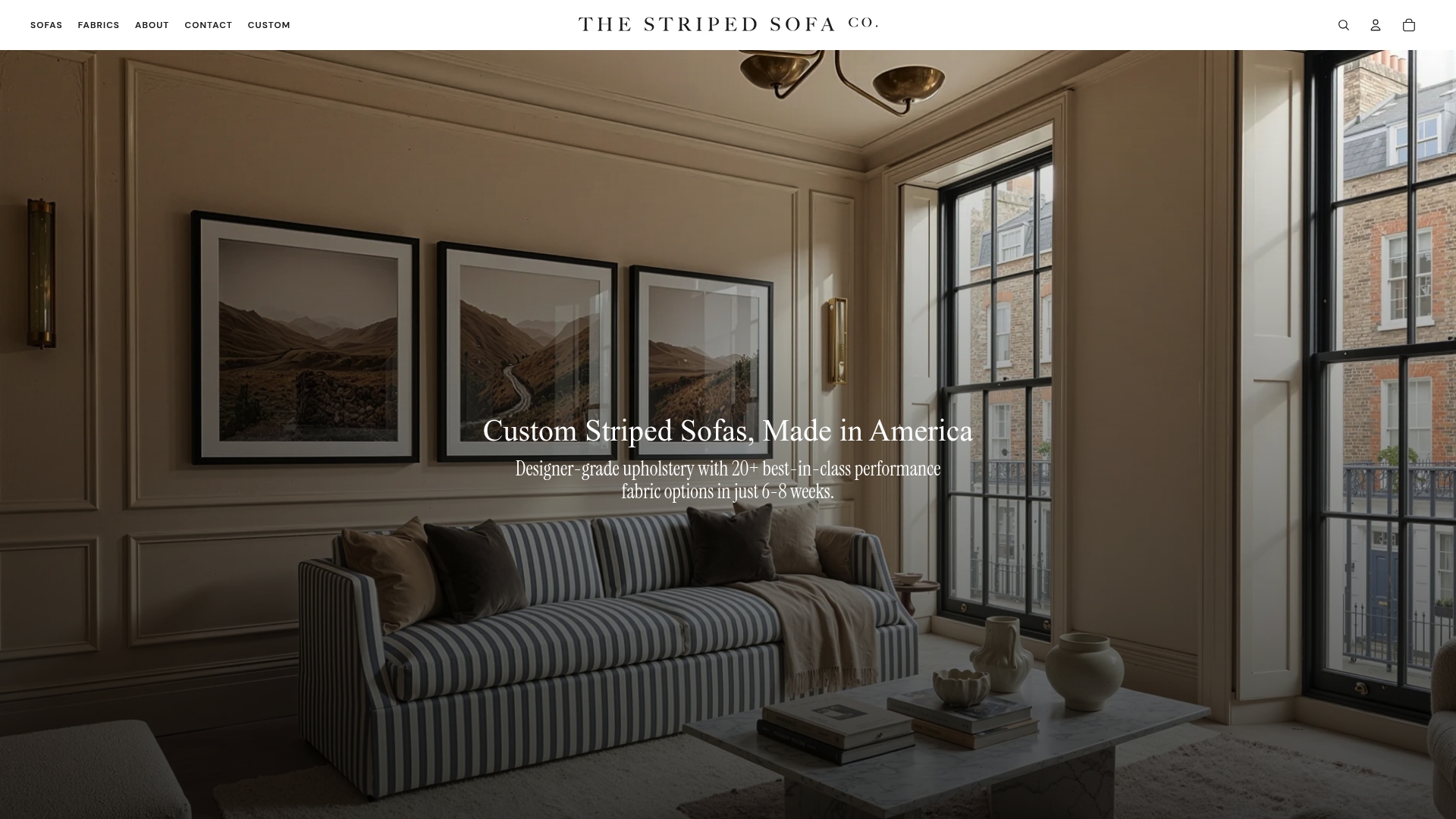
Each piece is built in America and delivered in 6–8 weeks. You choose the silhouette, the stripe, and the fabric, and the result is a sofa that reflects both your design values and your environmental ones. Models like The Chelsea and The Dalston are built to hold their beauty for years. If you are ready to make a furniture choice that holds its beauty and its values for years, explore custom sofa designs at Striped Sofa Co.
FAQ
What is sustainable upholstery?
Sustainable upholstery refers to furniture fabric and construction methods designed to minimize environmental harm through responsible sourcing, low-chemical processing, and long-lasting durability. Certifications like OEKO-TEX Standard 100 and GRS verify these claims independently.
Which sustainable fabric is best for high-traffic homes?
Recycled olefin is the strongest performer for high-traffic use, achieving 40,000 Martindale rubs with built-in stain resistance and UV stability. It diverts plastic waste from landfills and requires no virgin plastic inputs.
How do certifications like OEKO-TEX and GRS help consumers?
OEKO-TEX Standard 100 confirms a fabric contains no harmful substances, while GRS verifies that recycled content claims are accurate and traceable. Both certifications give you a factual basis for comparing eco-friendly upholstery options beyond marketing language.
How long does sustainable upholstery typically last?
A well-maintained sofa with quality sustainable upholstery lasts 7–12 years, with durability determined largely by Martindale abrasion ratings and consistent care routines like weekly vacuuming and monthly cushion rotation.
Are natural fibers always more sustainable than synthetic ones?
Not automatically. The greenest choice depends on transparent sourcing and organic certification, not fiber type alone. A certified recycled synthetic like olefin can carry a lower environmental footprint than conventionally grown, uncertified cotton.