

Stain-resistant sofa fabrics are specially engineered or treated textiles designed to repel liquids before they absorb into fibers. The best types of stain-resistant sofa fabrics combine tight weave construction with protective finishes, creating surfaces that bead moisture and resist everyday spills. For families with children, pets, or simply a love of living fully in their homes, understanding these fabric categories means the difference between a sofa that ages gracefully and one that shows every meal. Cleaning codes, fiber type, and third-party certifications like OEKO-TEX Standard 100 all shape how a fabric performs over years of real use.
1. Microfiber: the workhorse of stain-resistant upholstery
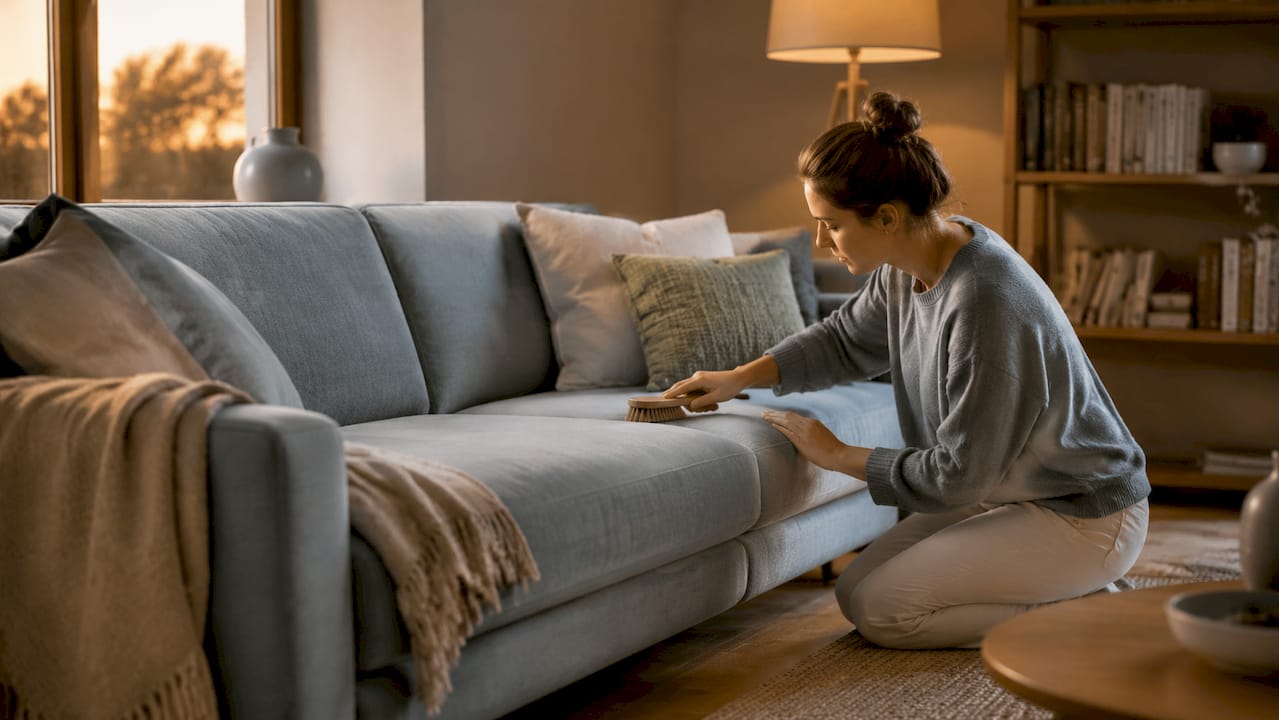
Microfiber is the most widely recommended stain-resistant upholstery fabric for busy households. Its polyester-based construction features fibers finer than a human hair, woven so tightly that liquids bead on the surface rather than soaking through. The result is a velvet-like texture that resists water, stains, and fading better than most traditional woven fabrics. That combination of softness and durability makes microfiber a quiet foundation for family living rooms that see real daily use.
Microfiber also traps fewer allergens and pet dander than open-weave fabrics, which is a practical bonus for households with allergy concerns. It cleans easily with a damp cloth and mild soap, and most microfiber upholstery carries a “W” or “WS” cleaning code, meaning water-based solutions are safe to use.
2. Olefin (polypropylene): built for high-traffic and humid spaces
Olefin, also called polypropylene, is a synthetic fiber engineered for serious durability. It resists stains, mildew, abrasion, and UV fading, which makes it one of the few upholstery fabrics equally at home indoors and outdoors. Families in humid climates or those with covered outdoor seating areas find olefin especially practical. Its moisture resistance also answers the question of what is humidity-resistant upholstery: olefin does not absorb water, so mold and mildew have nowhere to take hold.
The texture of olefin is slightly coarser than microfiber, but modern weaving techniques have improved its softness considerably. It holds color well because the dye is applied during fiber production rather than after weaving.
3. Performance polyester: liquid-repellent and family-friendly
Performance polyester takes standard polyester fiber and adds a tightly engineered weave plus a liquid-repellent finish. The combination of construction and finish causes spills to sit on the surface long enough for you to blot them away before a stain sets. This is the core mechanic behind stain-resistant upholstery explained simply: the fabric slows absorption, giving you time to act. Performance polyester is widely available, durable, and often more affordable than specialty fabrics.
Many performance polyester fabrics also carry high rub counts, a measure of abrasion resistance, making them well-suited to sofas that double as homework stations or movie-night headquarters.
Pro Tip: When shopping for performance polyester, ask for the Martindale or Wyzenbeek rub count. A rating above 30,000 double rubs signals fabric that will hold up to years of family use.
4. Solution-dyed acrylic: colorfast and breathable
Solution-dyed acrylic is the fabric of choice when you want stain resistance paired with rich, lasting color. The dye is added to the liquid acrylic before fibers are formed, which means color lives throughout the fiber rather than sitting on the surface. Stains and bleach cannot strip the color because there is no surface dye to remove. This intrinsic colorfastness also means the fabric resists fading from sunlight, making it a strong choice for rooms with large windows or sunrooms.
Solution-dyed acrylic breathes better than many synthetics, which adds comfort during warmer months. It is a common choice for high-traffic family sofas where both durability and appearance matter over the long term.
5. Leather and faux leather: wipe-clean classics
Leather and faux leather offer a fundamentally different approach to stain resistance. Rather than repelling liquids through fiber engineering, their smooth, non-porous surfaces simply do not absorb most spills at all. Both materials are easy to wipe clean and hold up well against everyday grime, making them a practical choice for families who want a classic, polished look without sacrificing function.
Genuine leather develops a patina over time, which many homeowners find adds character rather than diminishing beauty. Faux leather, typically made from polyurethane, costs less and avoids animal products, though it tends to show wear at stress points after several years. Neither material breathes as freely as woven fabrics, which is worth considering in warmer climates.
6. Crypton and high-performance treated fabrics
Crypton is a branded category of fabric engineered specifically for stain, moisture, and odor resistance. The treatment is built into the fiber structure rather than applied as a surface coating, which means it does not wash off over time. Crypton and similar high-performance treated fabrics are common in healthcare and hospitality settings, but they have moved into residential upholstery because families need the same level of protection.
The key distinction between Crypton and a standard treated fabric is durability of the protection. Surface-applied finishes degrade with cleaning and use. Crypton’s integrated approach maintains performance through repeated washing, which matters for sofa cushion covers that get laundered regularly.
7. Natural fibers with stain-resistant treatments: cotton and linen blends
Treated cotton and linen blends bring the warmth and texture of natural fibers to the stain-resistant category. On their own, cotton and linen absorb liquids quickly and stain easily. With a protective finish applied, they gain meaningful resistance while keeping their soft, breathable character. The role of fabric coating in stain resistance is especially visible here: the finish creates a hydrophobic barrier that causes liquids to bead rather than soak in.
The trade-off is longevity of the treatment. Protective coatings on natural fibers wear down faster than engineered synthetics, particularly with frequent cleaning. Slipcovers made from treated cotton blends offer a practical workaround: you can remove and launder them, then reapply a fabric protector spray to restore performance.
How fabric structure and coatings create stain resistance
Stain resistance arises from two distinct mechanisms, and understanding both helps you evaluate any fabric claim you encounter.
The first mechanism is construction. Tightly woven fabrics trap fewer particles, snag less, and leave less physical space for liquids to penetrate. A tight weave is the structural foundation of stain resistance, independent of any chemical treatment.
The second mechanism is surface finish. Chemical coatings create hydrophobic (water-repelling) or oleophobic (oil-repelling) surfaces. When a liquid hits a treated fabric, surface tension causes it to bead rather than spread. Performance textiles combine both approaches to deliver the strongest results.
Families benefit most from fabrics that slow stain absorption by beading liquids, allowing quick blotting before permanent stains form.
Cleaning codes translate these properties into practical guidance. The four standard codes are:
- W — Clean with water-based solutions only.
- S — Use solvent-based cleaners only; water may cause shrinking or spotting.
- WS — Either water-based or solvent-based cleaners are safe.
- X — Vacuum only; no liquid cleaners of any kind.
Always check the cleaning code on a fabric’s label before treating a spill. Using the wrong cleaner can set a stain permanently or damage the fabric’s protective finish.
Comparing stain-resistant fabrics: durability, cleaning, and health
Choosing the right fabric means weighing three factors together: how long it lasts, how easy it is to clean, and whether its chemical treatments are safe for your household.
| Fabric | Durability | Cleaning ease | Health/safety notes |
|---|---|---|---|
| Microfiber | High | Easy (W or WS code) | Generally low-risk; check for PFAS-free certification |
| Olefin | Very high | Easy; rinse with water | Inherently stain-resistant; no coating needed |
| Performance polyester | High | Easy (W or WS code) | Verify OEKO-TEX or Bluesign certification |
| Solution-dyed acrylic | Very high | Easy; bleach-safe | Colorfast by construction; low chemical concern |
| Leather/faux leather | High (genuine); moderate (faux) | Wipe clean | No chemical treatment needed |
| Crypton-treated fabric | Very high | Machine washable covers | Integrated treatment; confirm PFAS-free status |
| Treated natural fibers | Moderate | Varies; reapply treatment | Higher risk of PFAS; prioritize certified options |
PFAS awareness is non-negotiable for families. The NRDC’s 2026 textile testing report found that labels like “waterproof” or “stain resistant” do not reliably indicate whether PFAS chemicals are present or absent. PFAS are a class of synthetic chemicals linked to health concerns, and they persist in the environment. The same report identifies OEKO-TEX Standard 100, Bluesign, and GOTS as the most reliable third-party certifications for verifying low or no PFAS content in textiles.
Pro Tip: Ask any fabric supplier for the specific certification documentation, not just a marketing claim. “PFAS-free” printed on a hangtag means nothing without a verifiable third-party test result behind it.
Matching stain-resistant fabric to your family’s lifestyle
The right fabric depends on how your household actually lives, not just how a showroom looks.
- High-traffic family homes with young children benefit most from microfiber, olefin, or performance polyester. These fabrics handle repeated spills and daily wear without losing their appearance.
- Pet owners should prioritize tight weaves and smooth surfaces. Tight weave construction reduces snagging from claws and makes pet hair easier to remove with a lint roller or vacuum.
- Humid climates or outdoor-adjacent spaces call for olefin or solution-dyed acrylic. Both resist mildew and moisture without needing additional treatment, making them ideal humidity-resistant sofa fabric options.
- Families who value a classic aesthetic can choose leather or faux leather for a cleanable surface that pairs well with traditional or transitional interiors.
- Budget-conscious homeowners can extend the life of treated natural fiber sofas by using removable, washable slipcovers and reapplying a certified fabric protector spray seasonally.
The most practical stain-resistant fabric performance example is this: a microfiber sofa in a home with two toddlers will outlast an untreated linen sofa in the same home by years, simply because the microfiber buys you the seconds needed to blot a spill before it sets.
Key takeaways
The most effective stain-resistant sofa fabrics combine tight weave construction with either inherent fiber properties or a certified, PFAS-free protective finish.
| Point | Details |
|---|---|
| Construction matters most | Tight weaves resist stains and wear better than loose weaves, regardless of added coatings. |
| Check the cleaning code | W, S, WS, and X codes tell you exactly how to clean a fabric safely and effectively. |
| Verify PFAS-free status | Marketing terms like “stain resistant” do not confirm chemical safety; seek OEKO-TEX or Bluesign certification. |
| Match fabric to lifestyle | Microfiber and olefin suit high-traffic homes; leather suits those who want a wipe-clean classic look. |
| Coatings on natural fibers degrade | Treated cotton and linen need periodic reapplication of protector to maintain stain resistance. |
What I’ve learned about stain-resistant fabrics after years of making sofas
I have spent years thinking about what makes a sofa truly livable, not just beautiful on the day it arrives. The question I hear most often from families is simple: “Will this hold up?” My honest answer is that the fabric matters far more than most people realize, and the marketing around it is often the least reliable guide.
The thing that changed how I think about stain-resistant upholstery was learning to read cleaning codes before anything else. A fabric with a “W” code and a tight weave will serve a family better than a loosely woven fabric with an impressive-sounding finish name. Fabric maintenance behavior predicts stain resilience more accurately than any label.
I am also deeply cautious about chemical treatments, and I think every homeowner should be. The NRDC’s findings on PFAS in textiles confirmed what I had suspected: the words on a hangtag are not a safety guarantee. At Striped Sofa Co, we chose bleach-cleanable, PFAS-free performance fabrics because we wanted to offer families protection without compromise. That decision was not the easiest path, but it was the right one.
My advice is this: request a fabric sample before you commit. Live with it for a week. Spill something on it on purpose. Blot it, clean it with the recommended method, and see how it responds. No article, including this one, replaces that direct experience. The sofa that earns a place in your home is the one that holds up to your life, not a showroom’s.
— Kevin O’Gara
Striped Sofa Co and the art of the livable, beautiful sofa
At Striped Sofa Co, every sofa begins with the belief that beauty and practicality belong together. Our custom performance striped sofas are made to order in America using bleach-cleanable, PFAS-free performance fabrics that meet the demands of real family life without sacrificing the layered beauty of a well-designed room.
Each piece is built on FSC and SFI certified wood frames with soy-based foam, so the care we put into fabric selection extends to every layer of construction. Models like The Chelsea and The Dalston are available in our signature performance fabrics, ready to be personalized to your home. Request a fabric sample, review the cleaning codes, and let the sofa earn its place in your living room.
FAQ
What is stain-resistant fabric in upholstery?
Stain-resistant fabric is upholstery that uses tight weave construction, engineered fibers, or protective coatings to cause liquids to bead on the surface rather than absorb. This gives you time to blot spills before they set into permanent stains.
What are the safest stain-resistant sofa fabrics for families?
Olefin and solution-dyed acrylic are inherently stain-resistant without chemical coatings, making them among the safest choices. For treated fabrics, look for OEKO-TEX Standard 100 or Bluesign certification to confirm low or no PFAS content.
What does the cleaning code on a sofa fabric mean?
Cleaning codes tell you which cleaning method is safe for the fabric. “W” means water-based cleaners are safe, “S” means solvent-based only, “WS” means either, and “X” means vacuum only with no liquid cleaners.
Are “waterproof” or “stain-resistant” labels a guarantee of PFAS-free fabric?
No. The NRDC’s 2026 textile testing report found these labels do not reliably indicate whether PFAS chemicals are present. Always verify with a third-party certification like OEKO-TEX Standard 100 or Bluesign.
What is the best stain-resistant sofa fabric for homes with pets?
Microfiber and olefin are the strongest choices for pet owners. Both feature tight weaves that resist snagging from claws, repel moisture, and release pet hair easily during routine cleaning.
Recommended
- Best Sofa Fabrics for High-Traffic Homes: 2026 Guide – Striped Sofa Co.
- Woven Pinstripe Fabric By-the-Yard | Performance Fabric | Striped Sofa Co.
- Blue Stitched Stripe Fabric By-the-Yard | Performance Fabric – Striped Sofa Co.
- Regatta Stripe Fabric By-the-Yard | Performance Fabric – Striped Sofa Co.