

Custom upholstery is defined as the process of tailoring a furniture piece’s fabric, cushioning, dimensions, and structural details to your specific preferences rather than accepting standard, off-the-shelf options. What does custom upholstery mean in practice? It means every decision, from the spring system beneath the seat to the seam placement on the arm, is made with your space and lifestyle in mind. This is not simply choosing a fabric color. It is a considered, layered process that produces furniture designed around how you actually live.
What does custom upholstery mean for your furniture?
Custom upholstery means tailoring a piece’s components, including fabric, cushions, sizing, and seat details, to your particular space and style rather than using generic standard sizes. That definition carries real weight. A sofa built to standard dimensions may look fine in a showroom but feel wrong in a narrow living room or against a low window sill. Custom upholstery solves that mismatch at the source.
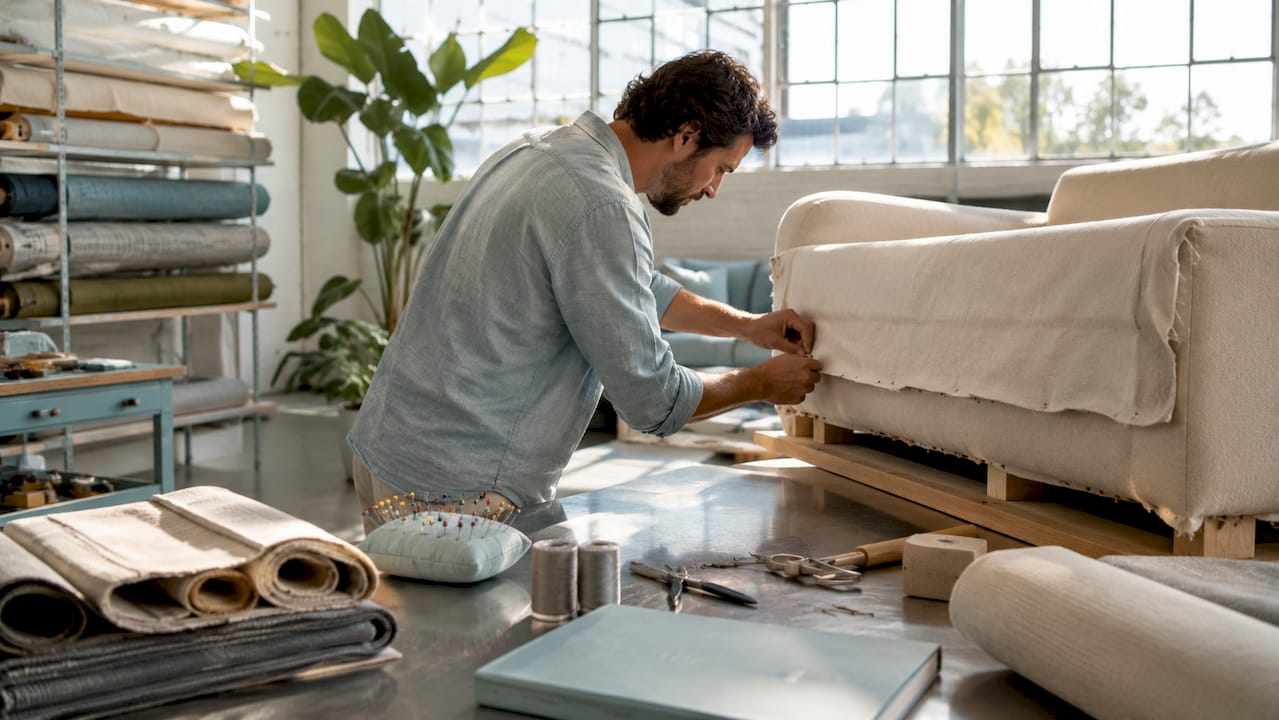
The meaning of custom upholstery also extends well beyond aesthetics. Professionals control diagnosis, support materials, coverage, and fit, not only fabric. That distinction separates a truly custom piece from one that simply wears a different slipcover.
What components go into a custom upholstered piece?
The scope of custom upholstery is wider than most people expect. Fabric is the most visible choice, but the decisions underneath it shape how a piece feels and lasts.
Here are the core components a professional upholsterer controls:
- Frame and support structure. The frame material, joinery, and webbing or spring system determine long-term durability. Eight-way hand-tied springs, for example, distribute weight differently than sinuous wire springs.
- Padding and cushion fill. Foam density, down wrapping, and fiber batting all affect firmness and how a cushion holds its shape over years of use.
- Seat dimensions. Seat depth, arm height, and back height can be adjusted to fit your body and the room’s proportions.
- Fabric selection. Weave, weight, pattern repeat, and performance rating all matter. A family with young children needs a different fabric than a household of adults.
- Seam placement and detailing. Welt cord, tufting, nailhead trim, and cushion edge style are finishing decisions that define the piece’s character.
- Fasteners and closures. Zipper placement and type affect how easily cushion covers can be removed for cleaning.
Customization is practical design tailored to your space and lifestyle, allowing choices like seat depth, cushion firmness, and fabric durability. That practicality is what separates a custom piece from a beautiful but ill-fitting one.
Pro Tip: Ask your upholsterer to show you foam density ratings side by side. A higher ILD (Indentation Load Deflection) number means a firmer seat. Knowing this before you commit saves you from a sofa that feels too soft six months after delivery.
How does the professional custom upholstery process work?
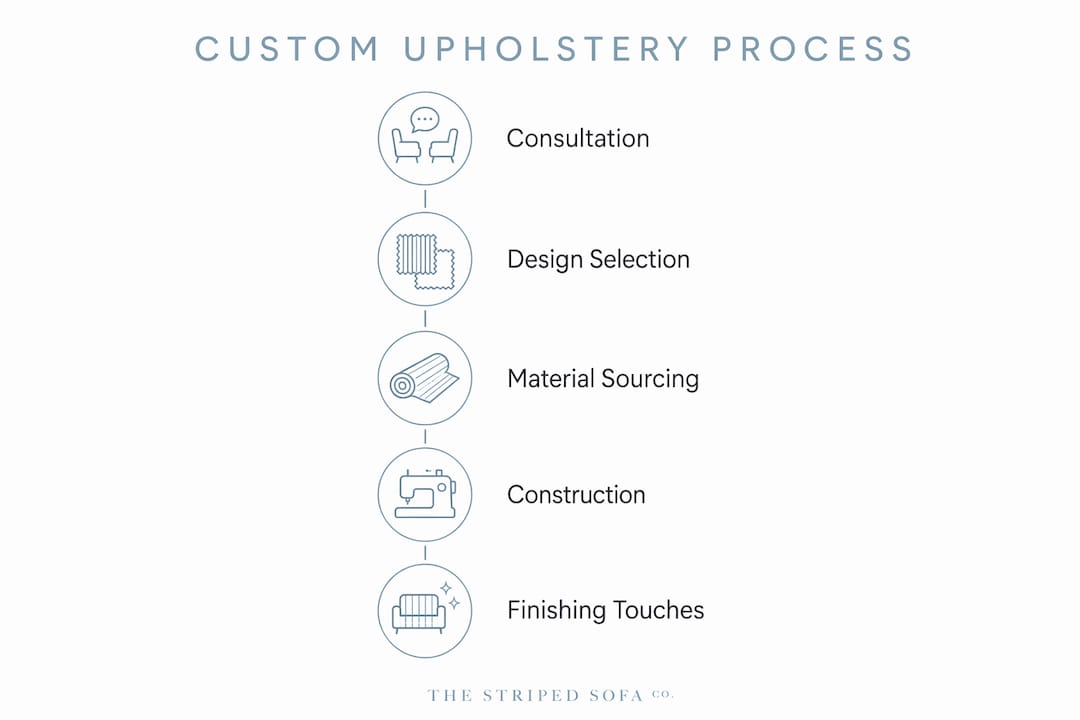
A professional custom upholstery project follows a clear sequence. Understanding each stage helps you know what to expect and where your input matters most.
- Intake and consultation. You describe your needs, share fabric samples or preferences, and discuss dimensions. The upholsterer assesses the piece or design brief.
- Inspection and quote. The shop examines the existing frame (if reupholstering) or reviews the build plan. A quote must clearly state what the shop controls and what is excluded, so there are no hidden costs later.
- Teardown and assessment. This stage is often misunderstood. Teardown is not demolition but an inspection step that reveals hidden conditions influencing upholstery choices and costs. A broken spring or deteriorated foam found at teardown changes the material order. Photos and measurements taken here guide accurate rebuilding.
- Material ordering and yardage estimation. Fabric yardage is calculated not by finished surface size but by cuttable panels with allowances for pattern matching, nap direction, and seam waste. This is a specialized skill. Getting it wrong means running short mid-project.
- Build. The upholsterer constructs or rebuilds the piece according to the documented scope, applying padding, fabric, and finishing details in sequence.
- Final inspection. The finished piece is checked against the original scope before delivery or pickup.
Professional upholstery projects break into measurable stages with documented inclusions and assumptions before material ordering. That documentation is your protection as a client.
Pro Tip: Before teardown begins, ask your upholsterer to photograph the original construction. Those images become a reference map for rebuilding and help resolve any disagreements about scope later.
Custom upholstery vs. reupholstery vs. bespoke: what is the difference?
These three terms are often used interchangeably, but they describe meaningfully different things. Knowing the distinction helps you ask the right questions and set the right expectations.
| Term | What it means | Best for |
|---|---|---|
| Reupholstery | Replacing or rebuilding fabric and padding on an existing piece | Restoring a beloved frame with new materials |
| Custom upholstery | Tailoring fabric, dimensions, and construction to your specs | New furniture built or modified around your preferences |
| Bespoke furniture | Fully designed and handcrafted from scratch per your brief | One-of-a-kind pieces with maximum design control |
Reupholstery usually means rebuilding padding and cover for current use, while custom upholstery tailors the whole piece to your preferences. The frame stays; the experience changes.
Custom often starts with a base model modified per client requests, whereas bespoke is fully handcrafted and designed from scratch. Bespoke typically carries a higher price and a longer lead time. For most homeowners, custom upholstery delivers the personalization they want without the complexity of a fully bespoke commission.
Why choose custom upholstery for your home?
The practical case for custom upholstery is strong, and it goes beyond the pleasure of choosing your own fabric.
- Fit for your body and room. A sofa with a deeper seat suits taller people. A lower back height works better under a window. Standard sizes rarely account for these specifics.
- Material choices that match your life. Pet owners benefit from tightly woven, stain-resistant fabrics. Households with young children need bleach-cleanable performance textiles. Custom upholstery lets you specify exactly what the fabric must do.
- Long-term value. Custom furniture can offer long-term value with higher craftsmanship, better materials, and repairability compared to off-the-shelf pieces. A well-built custom sofa can be reupholstered again in fifteen years rather than replaced.
- Solving tricky spaces. An awkward alcove, a curved wall, or an unusually low ceiling calls for dimensions that mass production cannot provide.
- Statement pieces with personal meaning. A fabric you chose, a silhouette you specified, and a cushion firmness you tested all add up to furniture that feels genuinely yours.
Why do custom sofas cost more? The answer is time and expertise. Every component is specified, sourced, and assembled for one client rather than produced in volume. That labor and material precision carries a price, but it also produces a piece that outlasts and outperforms its mass-produced counterpart.
Key Takeaways
Custom upholstery is the most direct way to get furniture that fits your body, your room, and your daily life rather than asking your life to fit the furniture.
| Point | Details |
|---|---|
| Definition goes beyond fabric | Custom upholstery covers frame, springs, padding, dimensions, and seam details, not just material choice. |
| Process has clear stages | Intake, teardown, material ordering, build, and final inspection each protect your investment and reduce surprises. |
| Terms have distinct meanings | Reupholstery restores an existing piece; custom tailors specs; bespoke builds entirely from scratch. |
| Long-term value is real | Better materials and repairability mean a custom piece often outlasts multiple rounds of off-the-shelf furniture. |
| Documentation protects you | A clear written quote naming inclusions and exclusions is a key quality marker for any custom upholstery project. |
What I have learned from years of thinking about custom furniture
I have spent a long time thinking about what makes a room feel right. The answer almost always comes back to the sofa. It is the piece that anchors everything else, and it is the piece most people compromise on because they cannot find exactly what they want in a store.
The most common mistake I see is treating custom upholstery as a luxury add-on rather than a practical decision. People assume it means spending more for the sake of spending more. What it actually means is spending deliberately. When you specify seat depth, cushion firmness, and a fabric that can handle real life, you stop replacing furniture every few years. That is not luxury. That is good judgment.
I also think people underestimate how much the hidden structure matters. A beautiful fabric on a weak frame is a disappointment waiting to happen. The spring system, the foam density, the webbing tension — these are the things that determine whether a sofa still feels wonderful in year ten. Ask about them. A good upholsterer will welcome the question.
The other thing worth saying plainly: get everything in writing. A clear scope document, with inclusions and exclusions named specifically, is not bureaucratic. It is the foundation of a good working relationship and a finished piece you can trust.
— Kevin O’Gara
Striped Sofa Co. and the art of the custom striped sofa
At Striped Sofa Co., every sofa begins as a conversation about how you live. Each piece is made to order in America, using FSC and SFI certified wood frames and soy-based foam, with lead times of 6–8 weeks.
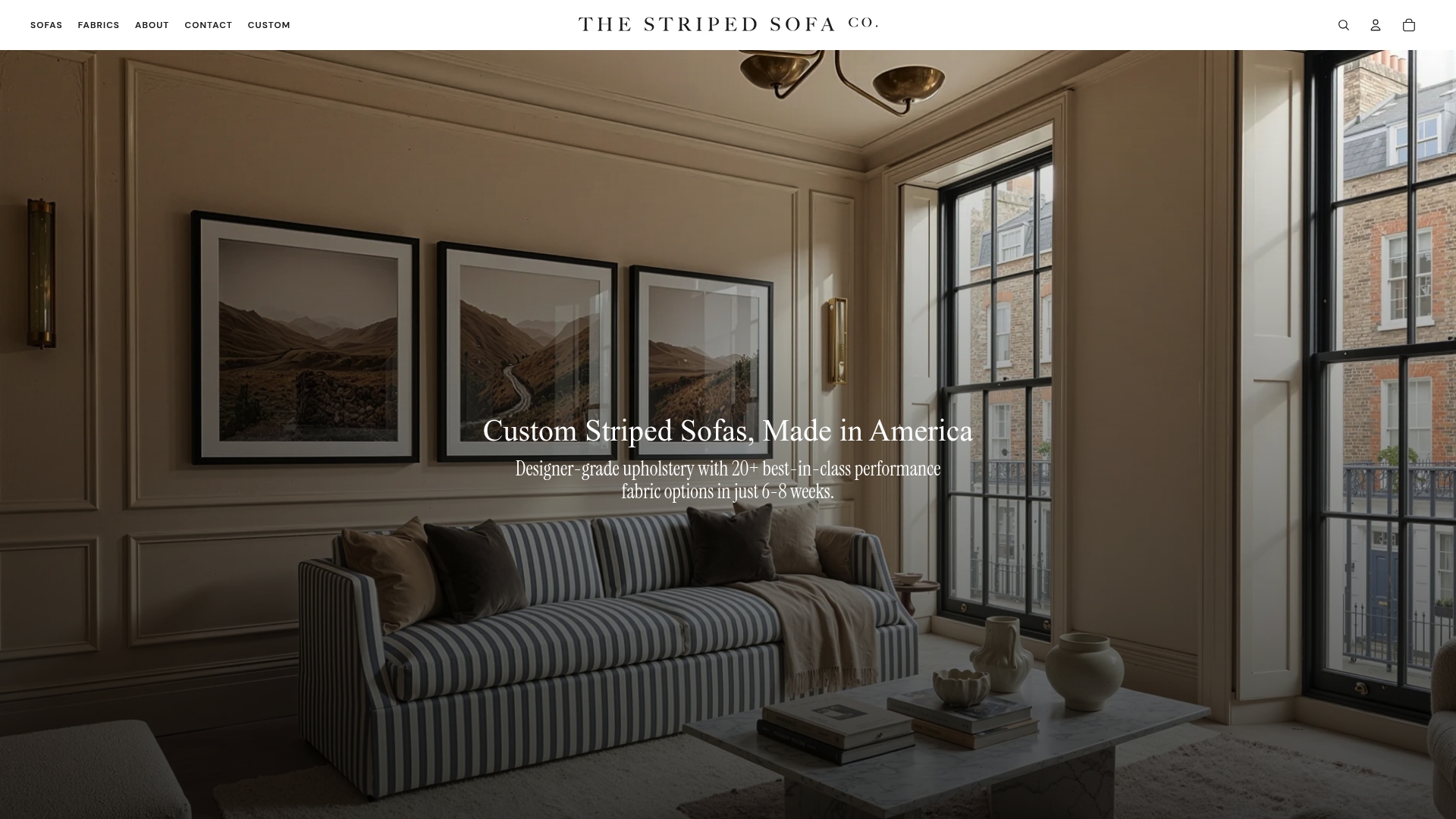
The custom performance sofa design process at Striped Sofa Co. lets you choose from designer-grade, stain-resistant, bleach-cleanable fabrics that contain no harmful PFAS chemicals. Models like the Mayfair and the Dalston are built around classic silhouettes with the material and dimension choices that make a sofa feel like it was always meant to be in your room. Visit Striped Sofa Co. to see the full collection and start your custom order.
FAQ
What is the custom upholstery definition in simple terms?
Custom upholstery means tailoring a furniture piece’s fabric, cushioning, dimensions, and structural details to your specific preferences rather than choosing a standard, pre-made option. It covers everything from spring systems to seam placement.
How is custom upholstery different from reupholstery?
Reupholstery rebuilds the padding and fabric covering on an existing frame. Custom upholstery tailors the entire piece, including dimensions and materials, to your specifications from the start.
Why do custom sofas cost more than store-bought ones?
Custom sofas cost more because every component is specified, sourced, and assembled for one client rather than produced in volume. That individual attention to materials and craftsmanship is reflected in the price and in the longevity of the finished piece.
What fabric choices matter most in custom upholstery?
Weave tightness, fabric weight, pattern repeat, and performance rating all affect durability and appearance. Households with children or pets should prioritize stain-resistant, bleach-cleanable fabrics with a tight weave.
How long does a custom upholstery project typically take?
Lead times vary by shop and complexity, but a well-organized custom upholstery project generally runs several weeks from final approval to delivery. Striped Sofa Co. completes made-to-order sofas in 6–8 weeks.