

Sofa fabric durability ratings are standardized measures of a fabric’s resistance to wear, tested through controlled abrasion protocols and reported as numerical scores. The two dominant industry tests are Wyzenbeek, which reports results in “double rubs,” and Martindale, which reports results in “cycles.” Residential fabric durability typically starts at 15,000 double rubs for everyday use, with 30,000 or more recommended for high-traffic homes. Understanding sofa fabric durability ratings explained in full means knowing not just the numbers, but what they measure, what they miss, and how to match them to the life you actually live.
What are the main tests and metrics used to rate sofa fabric durability?
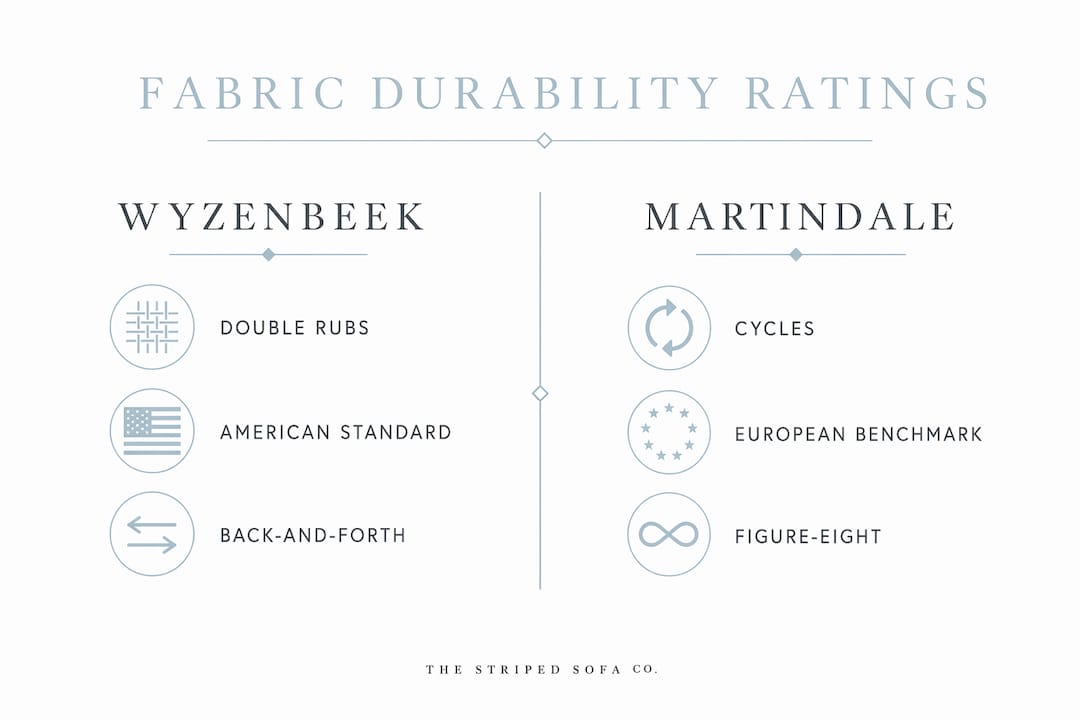
Two tests define the upholstery industry’s approach to abrasion resistance: Wyzenbeek and Martindale. Each measures how well a fabric holds up under repeated friction, but they use different tools, motions, and units. Knowing which test produced a rating is the first thing to check before comparing fabrics.

Wyzenbeek: the American standard
The Wyzenbeek test drags a piece of cotton duck or wire mesh back and forth across a fabric sample. Each back-and-forth pass counts as one “double rub.” The test continues until the fabric shows visible wear or two yarn breaks. Most American furniture manufacturers use Wyzenbeek, so you will see double rub counts on the majority of domestic fabric spec sheets.
Martindale: the European benchmark
The Martindale test moves a wool abradant in a figure-eight pattern across the fabric. Results are reported in cycles, with residential furniture rated at a baseline of 20,000 cycles. Ratings above 40,000 cycles qualify as contract grade, suitable for commercial settings or very heavy home use.
Why you cannot convert one to the other
Wyzenbeek and Martindale ratings are not interchangeable, and numerical values cannot be directly converted between the two systems. Attempting to convert them mathematically is one of the most common errors buyers make. Always identify which test was used before drawing any comparison.
Beyond abrasion, pilling resistance adds another layer to the durability picture. Pilling is rated on a scale of 1 to 5, with grade 3 as the minimum for upholstery. Grades 4 or 5 are preferred for family sofas where the fabric faces daily contact.
Pro Tip: When shopping, ask the retailer or manufacturer to confirm which test method produced the rating and request the full technical data sheet, not just the headline number.
How to interpret durability ratings for different household needs
Matching a rating to your household is more useful than chasing the highest number available. A fabric rated at 15,000–30,000 double rubs suits a guest room or a home with one adult and no pets. That range balances durability with price and gives you the widest selection of colors, textures, and weaves.
For everyday family living, 30,000–50,000 double rubs is the practical target. This range covers homes with children, pets, and daily sofa use. Fabrics in this tier are typically woven tighter and finished for easier cleaning, which compounds their real-world longevity.
Above 50,000 double rubs, the returns diminish for residential use. Ratings in that range are designed for commercial furniture in hotels, offices, and waiting rooms. Selecting them for a home sofa narrows your style choices without delivering meaningful extra life.
| Usage scenario | Recommended rating | Notes |
|---|---|---|
| Guest room or low-traffic space | 15,000–25,000 double rubs | Wide style variety; suitable for occasional use |
| Everyday residential use | 25,000–30,000 double rubs | Standard for most adult households |
| Families with children or pets | 30,000–50,000 double rubs | Prioritize stain resistance alongside rub count |
| Heavy residential or light commercial | 50,000+ double rubs / 40,000+ Martindale cycles | Fewer style options; best for extreme wear scenarios |
Cleanability sits alongside rub count as a defining factor. Performance fabrics combine high abrasion resistance with stain-resistant finishes, making them the practical choice for families. A fabric that survives 40,000 double rubs but cannot be spot-cleaned will look worn long before the weave fails.
Pro Tip: If your household includes young children or pets, look for fabrics with both a 30,000+ double rub rating and a “W” or “WS” cleaning code. That combination gives you the best chance of keeping the sofa looking fresh for years.
What other factors beyond rub counts affect sofa fabric durability?
A high rub count tells you one thing: how well the fabric resists surface abrasion. It tells you nothing about staining, fading, seam failure, or dye transfer. Abrasion ratings must be read alongside pilling, crocking, lightfastness, and seam slippage data for a complete picture.
The four complementary durability attributes every shopper should check are:
- Pilling resistance: Loose fibers ball up on the surface under friction. A grade 4 or 5 on the standard 1–5 scale keeps the fabric looking new. Pilling and seam slippage often cause fabric replacement long before abrasion failure occurs.
- Crocking: This is the transfer of dye from the fabric to skin or clothing. Wet crocking is the more serious concern. Ask for a crocking test result, especially with richly dyed or dark fabrics.
- Lightfastness: Sunlight degrades color and fiber strength. Fabrics near windows need a lightfastness rating of at least 4 on the Blue Wool Scale to resist noticeable fading within a few years.
- Seam slippage: This measures how much force is required to pull fabric threads apart at a seam. Low seam slippage resistance leads to splits at cushion edges and arm seams, which are the highest-stress points on any sofa.
Fabric finish and cleanability round out the full durability profile. A fabric with a durable water-repellent finish or a built-in stain barrier resists spills at the surface level, buying time for cleanup before a stain sets. Cleanability is as important as rub count for long-lasting fabric appearance. Ignoring these attributes and selecting solely on abrasion score is one of the most common and costly mistakes homeowners make.
How to choose sofa fabric based on durability ratings and your home
A clear process removes guesswork from fabric selection. Work through these steps before committing to any upholstery.
- Assess your use case. Count the people and pets in your home. Note whether the sofa sits near a sunny window. Identify your cleaning habits, whether you prefer spot-cleaning or full fabric removal.
- Identify the test method. Confirm whether the rating is in double rubs (Wyzenbeek) or cycles (Martindale). Do not compare a Wyzenbeek number to a Martindale number directly.
- Match the rating to your scenario. Use the table in the previous section as your reference. Resist the pull toward the highest number if your use case does not require it.
- Check complementary attributes. Request pilling grade, crocking results, lightfastness rating, and seam slippage data. A fabric that scores well across all five measures is genuinely durable, not just abrasion-resistant.
- Evaluate stain resistance and cleaning codes. Look for fabrics with a “W” or “WS” cleaning code. For families, stain-resistant fabric options that are also bleach-cleanable offer the most practical protection.
- Balance durability with aesthetics. Matching fabric specs to real use is more effective than over-specifying. Ratings above 50,000 double rubs narrow your style choices without adding meaningful residential benefit.
- Review the warranty. A manufacturer’s durability guarantee tells you how confident they are in the fabric’s real-world performance.
The most common mistake is treating the rub count as the only number that matters. Effective fabric selection considers sunlight exposure, pet ownership, and cleaning routines alongside abrasion data. A fabric that fits your actual environment will outlast a higher-rated fabric that was never suited to your home in the first place.
For a deeper look at how these principles apply to specific fabric categories, the fabric selection complete guide from Striped Sofa Co walks through the full decision process with real fabric examples.
Key takeaways
Sofa fabric durability is defined by abrasion resistance, pilling grade, cleanability, and lightfastness working together, not by rub count alone.
| Point | Details |
|---|---|
| Know your test method | Wyzenbeek double rubs and Martindale cycles are not interchangeable; always confirm which test produced the rating. |
| Match ratings to your household | 15,000–30,000 double rubs suits standard residential use; 30,000–50,000 covers families with children and pets. |
| Avoid over-specifying | Ratings above 50,000 double rubs offer no practical residential benefit and reduce your style options. |
| Check beyond abrasion | Pilling grade, crocking, lightfastness, and seam slippage all affect how a fabric looks and lasts over time. |
| Prioritize cleanability | A stain-resistant, cleanable fabric will maintain its appearance far longer than a high-rub-count fabric with no finish protection. |
Why I think most shoppers are looking at the wrong number
When homeowners come to me with fabric questions, the conversation almost always starts the same way: “What’s the highest rub count you have?” I understand the instinct. A bigger number feels like a safer choice. But after years of watching how sofas actually age in real homes, I have come to believe that chasing the highest abrasion rating is one of the least useful things you can do.
The families whose sofas hold up best over a decade are not the ones who bought the 100,000-rub fabric. They are the ones who matched a solid 35,000-rub performance fabric to their actual lifestyle, chose a finish that resists spills, and picked a color that ages gracefully with the room. The sofa became a quiet foundation for their home rather than a source of anxiety.
What I have seen go wrong, repeatedly, is a shopper who over-specifies on abrasion and under-specifies on everything else. The fabric survives the friction test beautifully, then pills within two years, or fades by a south-facing window, or holds a coffee stain permanently because it had no protective finish. The rub count was impressive. The sofa was not.
My honest advice: treat the rub count as a floor, not a ceiling. Set a threshold that fits your household, then spend the rest of your attention on pilling grade, cleanability, and lightfastness. That is where the real longevity lives. The sofas I am most proud of at Striped Sofa Co are the ones that look as good in year eight as they did on delivery day, and that is never just about abrasion.
— Kevin O’Gara
Performance upholstery worth living with, made in America
Striped Sofa Co builds every sofa to order in 6–8 weeks, using FSC and SFI certified wood frames and soy-based foam. The upholstery fabrics are selected for the full durability profile: high abrasion resistance, stain-resistant finishes, and bleach-cleanable construction free from harmful PFAS chemicals.
For families who want a sofa that holds its beauty through years of real use, the custom performance sofa program lets you choose your fabric, silhouette, and finish with designer-grade guidance. Every option is tested for the attributes that matter most in a lived-in home. Explore the full collection at Striped Sofa Co and find a sofa built to last as long as the memories made on it.
FAQ
What is a fabric durability rating for sofas?
A fabric durability rating measures how well an upholstery fabric resists abrasion, reported as double rubs (Wyzenbeek) or cycles (Martindale). Higher numbers indicate greater resistance to surface wear under repeated friction.
How many double rubs do I need for a family sofa?
Families with children or pets should look for fabrics rated at 30,000–50,000 double rubs. That range provides strong wear resistance alongside the stain-resistant finishes most family sofas require.
Are Wyzenbeek and Martindale ratings the same?
No. Wyzenbeek and Martindale use different protocols and units, and their numbers cannot be converted or compared directly. Always confirm which test produced the rating before making a comparison.
Does a high rub count mean the fabric resists stains?
No. Abrasion ratings measure wear resistance only. Stain resistance, fading protection, and seam strength require separate evaluation and are not captured by the rub count alone.
What pilling grade should I look for in sofa fabric?
A pilling grade of 4 or 5 on the standard 1–5 scale is recommended for family sofas. Grade 3 is the minimum acceptable for upholstery, but grades 4 and 5 maintain a cleaner appearance in high-traffic upholstery settings.