

The role of slipcover vs upholstery in furniture design comes down to one fundamental difference: slipcovers are removable fabric layers that protect and refresh a piece, while upholstery is the fixed fabric and padding built directly into the furniture’s construction. One is a costume; the other is skin. Choosing between them shapes how your furniture ages, how you maintain it, and how your rooms feel season after season. Striped Sofa Co has spent years working with both approaches, and the right answer almost always depends on how long you plan to live with a piece and what kind of life happens around it.
What is the role of slipcover vs upholstery in furniture design?
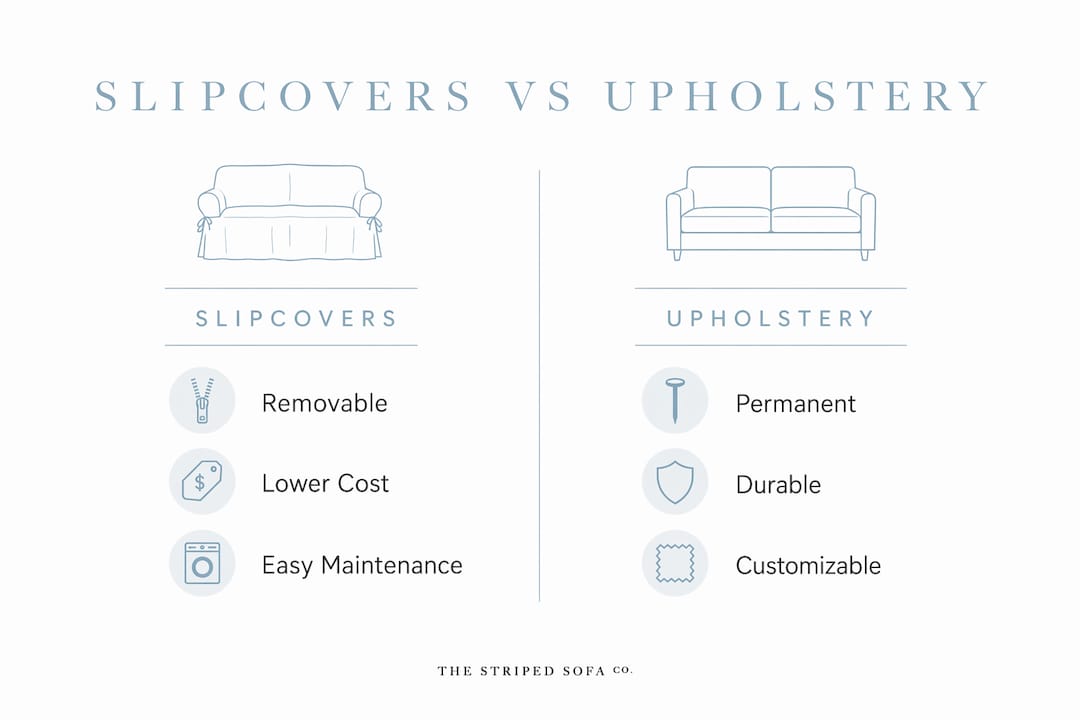
Slipcovers are removable fabric covers that slip over an existing sofa, chair, or cushion. Upholstery is the permanent system of fabric, padding, and springs that gives a piece its shape, comfort, and finished appearance. These two approaches serve different masters: slipcovers prioritize flexibility, while upholstery prioritizes permanence.
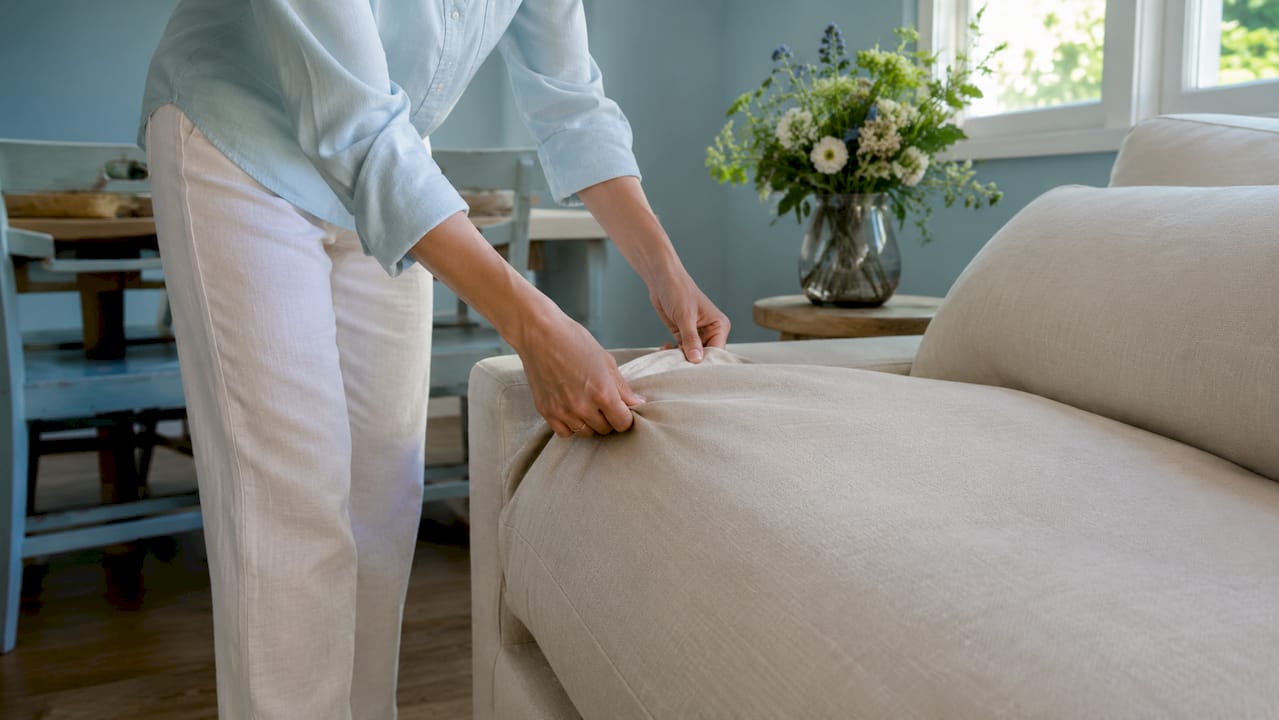
The distinction matters more than most homeowners realize. A slipcover can transform the look of a sofa in an afternoon. Upholstery, once chosen, defines that piece for a decade or more. Understanding which role fits your life is the first step toward a furniture decision you will not regret.
What are slipcovers and what benefits do they offer homeowners?
Slipcovers are the workhorses of casual, adaptable interiors. They protect furniture from stains and pet hair while giving you the freedom to change color and pattern without buying new furniture. That combination of protection and flexibility is genuinely rare in home furnishings.
The core advantages of slipcovers
- Washability. Most slipcovers go straight into a home washing machine, making cleanup after spills or muddy paws a simple task rather than a crisis.
- Affordability. Slipcover materials and installation cost far less upfront than professional reupholstery, making them the practical choice for renters or anyone on a tighter budget.
- Style flexibility. Swapping a slipcover lets you shift from a linen-white summer look to a deep charcoal for winter without touching the frame beneath.
- Protection for good bones. If your sofa frame is solid but the fabric is worn, a slipcover extends its useful life while you decide on a longer-term plan.
Slipcovers come in several forms: fitted covers tailored to a specific frame, loose covers with a relaxed drape, and custom covers made to order for an exact fit. Fitted and custom options deliver the cleanest result. Loose covers, while charming in a cottage setting, can shift and bunch with daily use.
The most common complaint about slipcovers is a sloppy, ill-fitting appearance. That problem is almost always a quality issue, not a category flaw. High-end slipcovered furniture is engineered with frames proportioned to account for cover thickness, so the finished look stays crisp rather than baggy.
Pro Tip: When shopping for a slipcover, measure your sofa’s seat depth, arm height, and back height before ordering. A cover that fits the seat but gaps at the arms will always look cheap, regardless of fabric quality.
What is upholstery and what advantages does it provide?
Upholstery is the permanent marriage of fabric, foam, batting, and springs that defines a piece of furniture from the inside out. It is not a covering applied after the fact. It is the furniture itself, shaped and finished by a craftsperson who builds comfort and structure into every seam.
Why upholstery rewards long-term thinking
- Durability. Quality upholstery lasts 8–15 years with proper care, making it the more cost-effective choice over a long ownership horizon.
- Structural repair. Reupholstering a piece allows a craftsperson to fix broken springs, replace sagging foam, and reinforce the frame at the same time. A slipcover cannot do any of that.
- Tailored finish. Fixed upholstery wraps every curve and corner with precision. The result is a polished, architectural look that no removable cover can fully replicate.
- Fabric performance. Modern performance upholstery fabrics now offer stain and liquid resistance comparable to removable covers, closing the maintenance gap that once made slipcovers the default choice for busy households.
Upholstery suits heirloom-quality pieces and investment furniture. If you own a well-built sofa with a solid hardwood frame, reupholstering it rather than covering it preserves the structural integrity and the design intent of the original piece.
Pro Tip: Before committing to reupholstery, have a furniture repair professional assess the frame. If the springs or joints need work, combining that repair with new fabric is far more cost-effective than doing them separately.
The arrival of performance fabrics in upholstery has genuinely changed the calculus. Fabrics engineered for stain resistance and easy cleaning now deliver the practical benefits once reserved for removable covers, without sacrificing the tailored, seamless finish that defines great upholstery.
How do cost, maintenance, and durability compare?
The financial picture between slipcovers and upholstery shifts dramatically depending on your time horizon. Slipcovers win on upfront cost. Upholstery wins on cost per year of use.
Slipcover installation is typically DIY with minimal additional expense, while upholstery requires professional labor and specialized tools. That gap is real and significant in the short term.
| Factor | Slipcovers | Upholstery |
|---|---|---|
| Upfront cost | Lower | Higher |
| Installation | DIY or minimal cost | Professional labor required |
| Lifespan | 1–3 years typical | 8–15 years typical |
| Maintenance | Machine washable | Spot clean or professional care |
| Structural repair | Not possible | Included during reupholstery |
| Best for | Rentals, short-term use | Investment pieces, long-term ownership |
Slipcovers suit furniture with a usage cycle under three years, such as rental properties or transitional spaces. Upholstery makes financial sense when you plan to keep a piece for a decade or more. The math is straightforward: replacing a slipcover every two years adds up faster than a single professional reupholstery job that lasts fifteen.
Maintenance regimes differ just as sharply. Slipcovers go into the washing machine. Fixed upholstery requires spot cleaning with appropriate fabric cleaners, and periodic professional treatment for deep stains. Performance upholstery fabrics reduce that burden considerably, but they do not eliminate it entirely.
Pro Tip: For upholstered furniture in high-traffic areas, treat the fabric with a water-based fabric protector every 12–18 months. It extends the time between professional cleanings and keeps the fabric looking fresh without altering its texture or color.
How do style and design intent influence the choice?
Design intent is the clearest guide to this decision. Slipcovers create a relaxed, casual aesthetic that suits informal living rooms, sunrooms, and family spaces where comfort takes priority over formality. Upholstery is the natural choice for rooms that demand crisp lines, structured silhouettes, and a polished finish.
Rooms and settings where each approach excels
- Slipcovers work beautifully in cottage-style bedrooms, family rooms with children and pets, seasonal spaces like screened porches, and any room where you redecorate frequently.
- Upholstery belongs in formal sitting rooms, dining chairs, statement sofas in open-plan living areas, and any piece where the fabric pattern or texture is central to the room’s design.
The softness of a slipcovered sofa is not accidental. It is intentional design influenced by frame proportions, where the frame is built slightly smaller to accommodate cover thickness and maintain a clean silhouette. That engineering is what separates a well-made slipcovered sofa from a cheap cover thrown over a standard frame.
Fabric choice amplifies the difference. A linen slipcover in a warm ivory reads as relaxed and layered. The same sofa in a tightly woven performance fabric with fixed upholstery reads as tailored and deliberate. Neither is wrong. They simply speak to different rooms and different lives. Learning how to choose upholstery that aligns with your room’s design language is as important as the structural decision itself.
When should you choose slipcovers versus upholstery?
The decision framework is simpler than most guides suggest. Answer three questions: How long will you keep this piece? What is your budget? What does your daily life look like around this furniture?
- If you plan to keep the furniture for fewer than three years, choose a slipcover. The upfront savings are real, and the flexibility suits transitional living situations like rentals or furnished apartments.
- If the furniture frame is structurally sound and you love the piece, invest in upholstery. A quality frame deserves a permanent finish that honors its construction.
- If you have young children or pets, consider performance upholstery fabrics first. They now rival slipcovers in cleanability while delivering a more polished look.
- If you redecorate seasonally or love changing your interiors, slipcovers give you that freedom without replacing furniture.
- If the piece is a family heirloom or a significant investment, upholstery protects its long-term value and structural integrity in ways a removable cover simply cannot.
Slipcovers cannot fix structural issues like broken springs or sagging cushions. If your sofa is uncomfortable as well as worn, a slipcover is a cosmetic solution to a structural problem. Reupholstery addresses both at once.
Key Takeaways
Slipcovers suit short-term use and flexible lifestyles, while upholstery delivers superior durability, structural repair, and tailored style for furniture you plan to keep for a decade or more.
| Point | Details |
|---|---|
| Lifespan gap is significant | Slipcovers last 1–3 years; upholstery lasts 8–15 years, making it cheaper per year of use. |
| Slipcovers cannot repair structure | Only reupholstery allows for spring, foam, and frame repairs alongside new fabric. |
| Design intent drives the choice | Casual rooms favor slipcovers; formal, tailored interiors require fixed upholstery. |
| Performance fabrics close the gap | Modern upholstery fabrics now offer stain resistance comparable to washable slipcovers. |
| Budget horizon matters most | Slipcovers win short-term; upholstery wins when you plan to keep a piece long-term. |
Why I think the slipcover-versus-upholstery debate misses the real question
People come to this decision asking “which is better?” when the more useful question is “which fits this piece and this life?” I have seen beautiful slipcovered sofas in homes where they were exactly right, and I have seen the same approach look like an afterthought in rooms that needed structure and permanence.
What changed my thinking was watching how performance fabrics evolved. For years, the practical argument for slipcovers was simple: you could wash them. Fixed upholstery meant spot-cleaning anxiety and professional cleaning bills. That gap has narrowed considerably. The performance fabric options available in upholstery today handle spills, pet hair, and daily wear with a confidence that would have seemed impossible a decade ago.
The misconception I hear most often is that upholstery is always the “serious” choice and slipcovers are a compromise. That is not true. A well-engineered slipcovered sofa, built with a frame proportioned for its cover, is a deliberate design decision. It creates a softness and layered warmth that fixed upholstery rarely achieves. The key word is “well-engineered.” A cheap cover on a standard frame is a compromise. A custom slipcovered piece is a choice.
My honest recommendation: match the solution to the furniture’s quality and your ownership timeline. Do not slipcover a great sofa you plan to keep for twenty years. Do not reupholster a piece you will replace in two. And if you are building a room around a sofa that needs to work hard and look beautiful, consider whether a performance upholstery fabric might give you the best of both worlds without the trade-offs of either.
— Kevin O’Gara
Custom sofas that bring both worlds together
At Striped Sofa Co, we built our collection around the idea that you should not have to choose between beauty and practicality.
Every sofa we make uses stain-resistant, bleach-cleanable performance fabrics free from PFAS chemicals, so the tailored finish of fixed upholstery comes with the easy-care confidence you used to get only from removable covers. Each piece is made to order in America using FSC and SFI certified wood and soy-based foam, in 6–8 weeks. Whether you are drawn to the structured elegance of a custom performance sofa or want to explore the full range at Striped Sofa Co, you will find sofas designed to live beautifully for the long term.
FAQ
What is the main difference between slipcovers and upholstery?
Slipcovers are removable fabric covers placed over existing furniture, while upholstery is the permanent fabric and padding built into the furniture’s structure. Slipcovers offer flexibility; upholstery offers durability and a tailored finish.
How long do slipcovers last compared to upholstery?
Slipcovers typically last 1–3 years before needing replacement. Quality upholstery lasts 8–15 years, making it the more cost-effective choice for furniture you plan to keep long-term.
Can slipcovers fix a sagging or uncomfortable sofa?
No. Slipcovers are cosmetic and cannot address structural problems like broken springs or compressed foam. Reupholstery is the only option that repairs comfort and structure alongside new fabric.
Are performance upholstery fabrics as easy to clean as slipcovers?
Modern performance upholstery fabrics now offer stain and liquid resistance comparable to washable slipcovers, while maintaining a seamless, tailored finish that removable covers cannot replicate.
When should a homeowner choose a slipcover over upholstery?
Choose a slipcover when you plan to keep the furniture for fewer than three years, when you rent your home, or when you want the flexibility to change your room’s look affordably and frequently.