

Fabric selection is the single most consequential decision in sofa design, shaping a sofa’s appearance, tactile comfort, and how long it holds its beauty. The role of fabric selection in sofa design goes far beyond color or pattern. It determines whether your sofa becomes a quiet foundation for gracious living or a costly disappointment within a few seasons. The Martindale rub count, a standard industry measure of abrasion resistance, gives you an objective way to compare fabrics before you buy. Choose wisely, and a well-upholstered sofa can anchor a room for well over a decade. Choose poorly, and the fabric tells the story of every spill and scuff within 18 months.
How does fabric selection shape sofa design and durability?
Fabric choice controls both the visual character and the structural longevity of a sofa. A tightly woven performance fabric holds its shape and color through years of daily use. A loosely woven decorative fabric may look stunning in a showroom but begin to pill and fade within a single season of real family life.
The Martindale rub count is the clearest durability benchmark available. It measures how many cycles of abrasion a fabric withstands before showing wear. A higher Martindale rating means better durability without sacrificing texture or visual appeal. For a sofa in a busy living room, a rating of 25,000 rubs or above is the accepted minimum for residential use.
Fabric type also determines how a sofa ages. Heavyweight woven fabrics, microfiber, and leather resist daily wear with quiet confidence. Velvet and loosely woven linen carry a refined elegance but require more careful handling. Wrong fabric choices can make a sofa look tired and stained within 18 months, while the right fabric extends its aesthetic life to over 10 years. That gap represents real money and real satisfaction.
Pro Tip: Request a fabric sample and live with it for a week before ordering. Drape it over your existing sofa, let natural light hit it at different times of day, and let your household interact with it naturally.
Comparing common sofa fabric types
| Fabric Type | Durability | Ease of Cleaning | Comfort Level |
|---|---|---|---|
| Performance weave | Very high | Easy, bleach-safe options available | High |
| Microfiber | High | Easy, wipe-clean | High |
| Leather | Very high | Easy | Moderate to high |
| Cotton canvas | Moderate | Moderate | High |
| Velvet | Low to moderate | Difficult | Very high |
| Linen | Low | Difficult | Moderate |
Stain resistance and cleanability are practical extensions of durability. Fabrics treated with stain-resistant finishes, or those made from inherently cleanable fibers, reduce the time and cost of upkeep. Striped Sofa Co builds its sofas with bleach-cleanable performance fabrics that carry no harmful PFAS chemicals, a meaningful distinction for families who want both safety and longevity.
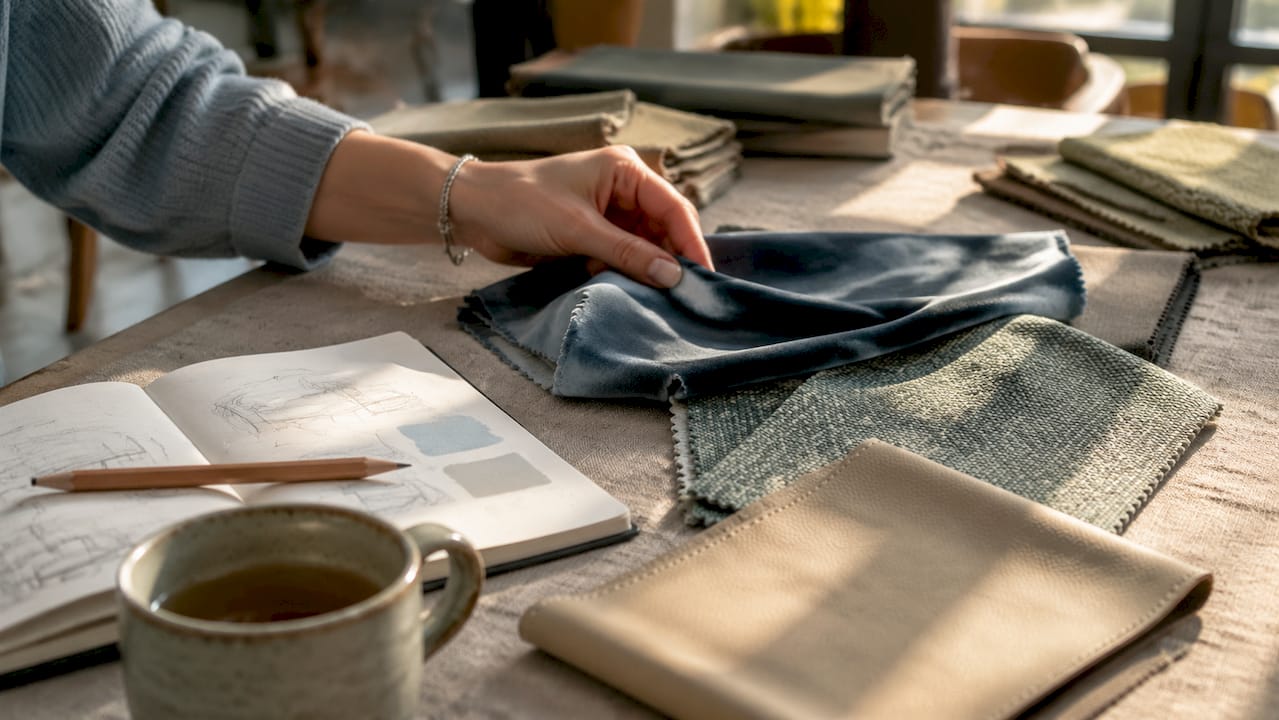
What role does fabric texture and aesthetics play in sofa design?
A sofa’s fabric texture directly influences comfort and sets the room’s mood, affecting how the sofa functions as a design anchor. Smooth microfiber reads as casual and approachable. Plush velvet communicates luxury and visual weight. A tightly woven stripe carries a tailored, architectural quality that holds its own against bold art or patterned rugs.
The role of silhouette in sofa design and the role of arm style in sofa design both depend on fabric to complete their effect. A flare arm sofa in a crisp woven stripe reads as polished and deliberate. The same silhouette in a soft, unstructured linen reads as relaxed and lived-in. Fabric does not just cover the form. It interprets it.
Examples of high-end sofa silhouettes, from slope-arm skirted benches to ruffle-skirted armless banquettes, rely on fabric to communicate their design intention. A skirted sofa in a woven pinstripe carries a New Regency Style™ quality that feels both timeless and fresh. The stripe becomes the steady heartbeat of the room, giving the eye a rhythm to follow.
Fabric also opens the door to personalization through pattern, color, and scale. Consider these fabric choices and their design effects:
- Woven stripes: Add structure and visual rhythm; work beautifully with traditional and transitional silhouettes.
- Solid performance weaves: Provide a clean backdrop that lets the sofa’s silhouette and arm style speak clearly.
- Textured bouclé or boucle-style weaves: Add tactile warmth and a soft, organic quality suited to relaxed interiors.
- Velvet: Deepens color saturation and adds a sense of ceremony; best reserved for lower-traffic rooms.
- Printed fabrics: Introduce personality but require careful coordination with other room elements.
Successful fabric choices strike a balance between practicality and style, allowing durable fabrics to still offer sophisticated textures and colors. That balance is the mark of a considered design decision rather than an impulsive one.
How to select sofa fabric based on household lifestyle
Honest assessment of your household leads to more satisfaction than choosing fabric based on an idealized version of how you live. A fabric that photographs beautifully in a styled room may not survive a Tuesday evening with children, a dog, and a bowl of pasta.
Start by mapping your actual usage patterns:
- Count the daily users. A sofa used by four people daily needs a Martindale rating suited for heavy residential use.
- Identify the risks. Pets, young children, and frequent entertaining all call for performance fabrics with stain and bleach resistance.
- Assess your cleaning habits. If you prefer low-maintenance care, choose fabrics you can wipe down rather than fabrics requiring professional cleaning.
- Consider placement. A sofa in a sunlit room needs a fabric with good UV resistance to prevent fading.
- Think about removable covers. Removable, washable covers and protective coatings help sustain fabric condition through heavy use and simplify long-term care.
Most consumers over-prioritize aesthetics, leading to fabric failure within 18 months because they ignored their actual usage patterns. Fabric choice is the dominant factor in sofa lifespan, outweighing even frame quality. That is a counterintuitive finding, but it holds true across thousands of real-world sofas.
Pro Tip: If you have pets or young children, look specifically for fabrics labeled bleach-cleanable. These fabrics let you address accidents immediately and thoroughly without damaging the upholstery.
For high-traffic homes, the best sofa fabrics combine a tight weave, a high Martindale count, and inherent stain resistance. Performance fabrics engineered for residential use now come in a wide range of textures and colors, so durability no longer requires a sacrifice of beauty.
What are the cost implications of fabric selection?
Fabric failure is the most expensive sofa problem to resolve. Structural repairs like replacing cushion inserts or repairing legs cost far less than full reupholstery or sofa replacement. When fabric wears out prematurely, the entire investment is at risk.
Reupholstering a sofa typically costs a significant fraction of the original purchase price, and in many cases it approaches or exceeds the cost of a new mid-range sofa. Choosing a performance fabric upfront avoids that calculation entirely. Performance fabrics justify their higher upfront cost by significantly lowering lifetime maintenance and replacement expenses.
| Fabric Category | Expected Lifespan | Maintenance Cost | Replacement Risk |
|---|---|---|---|
| Performance weave | 10+ years | Low | Low |
| Microfiber | 8–10 years | Low | Low |
| Leather | 10–15 years | Low to moderate | Low |
| Standard cotton | 4–6 years | Moderate | Moderate |
| Velvet | 3–5 years (high traffic) | High | High |
| Linen | 2–4 years (high traffic) | High | High |
The resale and longevity value of a sofa also ties directly to fabric condition. A sofa that still looks fresh after eight years holds its value as a room anchor and as a piece worth keeping. A sofa that looks worn after three years becomes a liability, both financially and aesthetically. Investing in the right fabric from the start is the quietest form of financial wisdom in home furnishing.
Key takeaways
Fabric selection is the most impactful decision in sofa design, determining lifespan, maintenance cost, and the sofa’s ability to anchor a room with lasting beauty.
| Point | Details |
|---|---|
| Durability starts with Martindale | Choose fabrics with a Martindale rating suited to your traffic level for long-term wear resistance. |
| Wrong fabric ages fast | Poor fabric choices can make a sofa look worn within 18 months; the right choice extends life to 10+ years. |
| Lifestyle drives the decision | Assess real household use, including pets and children, before selecting any fabric type. |
| Performance fabrics save money | Higher upfront fabric cost reduces reupholstery and replacement expenses over the sofa’s lifespan. |
| Texture shapes room mood | Fabric texture and pattern complete a sofa’s silhouette and define its role as a design anchor. |
Fabric is the decision I wish more people took seriously
I have spent years watching homeowners fall in love with a sofa’s silhouette and arm style, then choose the fabric almost as an afterthought. It is the single most common mistake I see, and it is entirely avoidable.
The honest truth is that fabric is not the finishing touch. It is the foundation. A beautifully proportioned sofa in the wrong fabric will disappoint you within a year. A simpler silhouette in a well-chosen performance weave will serve you with quiet dignity for a decade or more.
What I have learned from designing sofas at Striped Sofa Co is that the clients who are most satisfied are the ones who were honest with themselves about how they actually live. They did not choose fabric for the version of their home they hoped to have. They chose it for the home they actually inhabit, with real children, real pets, and real Tuesday evenings.
The other thing I would tell you is that durability and beauty are not opposites. The woven performance fabrics we use at Striped Sofa Co carry a layered beauty and a tactile richness that rivals anything in a traditional fabric collection. You do not have to choose between a sofa that looks extraordinary and one that lasts. You just have to know where to look and what questions to ask.
Work with a designer or fabric specialist who can show you Martindale ratings alongside swatches. Ask about cleanability. Ask about UV resistance if your room gets strong afternoon light. These are not technical questions. They are the questions that separate a sofa you will love in ten years from one you will regret in two.
— Kevin O’Gara
Striped Sofa Co and the art of fabric-forward design
At Striped Sofa Co, every sofa begins with fabric as the central design decision, not an afterthought. The custom performance sofa collection pairs designer-grade silhouettes with upholstery fabrics that are stain-resistant, bleach-cleanable, and free from harmful PFAS chemicals. Each piece is made to order in America using FSC and SFI certified wood and soy-based foam.
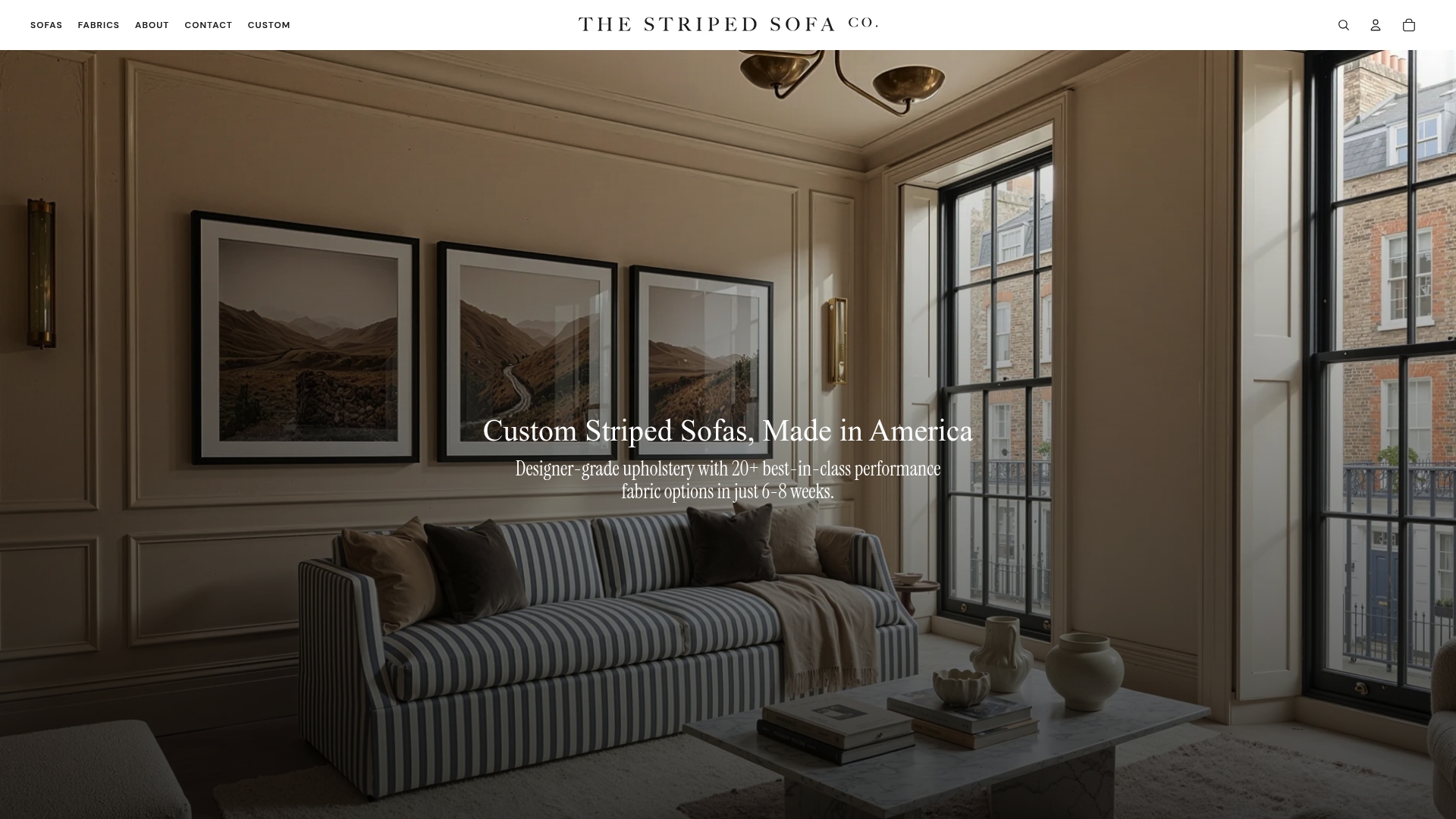
Whether you are drawn to the slope-arm elegance of The Dalston or the flare-arm grandeur of The Chelsea, every silhouette is available in performance fabrics built for real life. Request fabric samples, explore the full collection, and find a sofa that serves as both foundation and friend for years to come at Striped Sofa Co.
FAQ
What is the Martindale rub count and why does it matter?
The Martindale rub count measures how many cycles of abrasion a fabric withstands before showing wear. A higher count means the fabric is more durable and better suited for high-traffic sofa use.
How do I choose the right sofa fabric for a home with pets?
Prioritize performance fabrics with stain resistance and bleach-cleanable properties. These fabrics handle accidents without permanent damage and maintain their appearance through heavy daily use.
Can durable fabrics still look high-end?
Yes. Performance weaves and tightly woven fabrics now come in sophisticated textures, patterns, and colors that rival traditional decorative fabrics. Durability and elegance are fully compatible in modern upholstery.
How does fabric choice affect the sofa’s role as a design anchor?
Fabric texture and pattern complete the sofa’s silhouette and communicate the room’s mood. A well-chosen fabric reinforces the sofa’s visual weight and makes it the defining piece of the space.
What is the most expensive sofa problem to fix?
Fabric failure is the costliest issue, often requiring full reupholstery or sofa replacement. Structural repairs like cushion inserts or leg fixes cost far less, making fabric selection the most financially consequential upfront decision.