

Custom sofa sizing is defined as the process of specifying your sofa’s exact width, depth, and height to match your living space and personal comfort needs. When you choose sofa dimensions made to order, you move beyond the constraints of standard retail sizes and into a world where the furniture serves the room, not the other way around. Most retail sofas come in a narrow band of sizes that rarely account for narrow hallways, oddly shaped rooms, or the specific way a family actually lives. A made-to-order sofa, by contrast, is built to your specifications, typically delivered in 6–8 weeks, and designed to feel like it was always meant to be there.
How to choose sofa dimensions made to order: the measurements that matter
Getting the right custom sofa starts with understanding which numbers actually matter. Four dimensions define every sofa: overall width, overall depth, seat height, and diagonal depth. Most homeowners measure width and stop there. That is a costly mistake.
The four core sofa dimensions:
- Overall width: The full length of the sofa from arm to arm, typically 72–96 inches for a standard three-seater.
- Overall depth: The distance from the front of the seat cushion to the back of the sofa, usually 32–40 inches.
- Seat height: The distance from the floor to the top of the seat cushion. Seat height between 40–50 cm affects ease of sitting and standing, which matters especially for households with elderly family members or shorter individuals.
- Diagonal depth: Measured from the highest back corner to the lowest front corner. Diagonal depth is the critical delivery dimension because it determines whether a sofa can be angled through a doorway or hallway without damage.
Tools you need before you order:
- A steel measuring tape (cloth tapes stretch and give false readings)
- A laser measure for long walls and diagonal room measurements
- Graph paper or a free floor plan app to sketch your room to scale
- Painter’s tape to mark the sofa footprint on the floor before you commit
| Dimension | What to measure | Why it matters |
|---|---|---|
| Overall width | Arm to arm | Confirms wall fit and visual scale |
| Overall depth | Front cushion to back | Determines seat comfort and room clearance |
| Seat height | Floor to cushion top | Affects accessibility and lounge feel |
| Diagonal depth | Top back corner to bottom front | Critical for delivery through tight spaces |
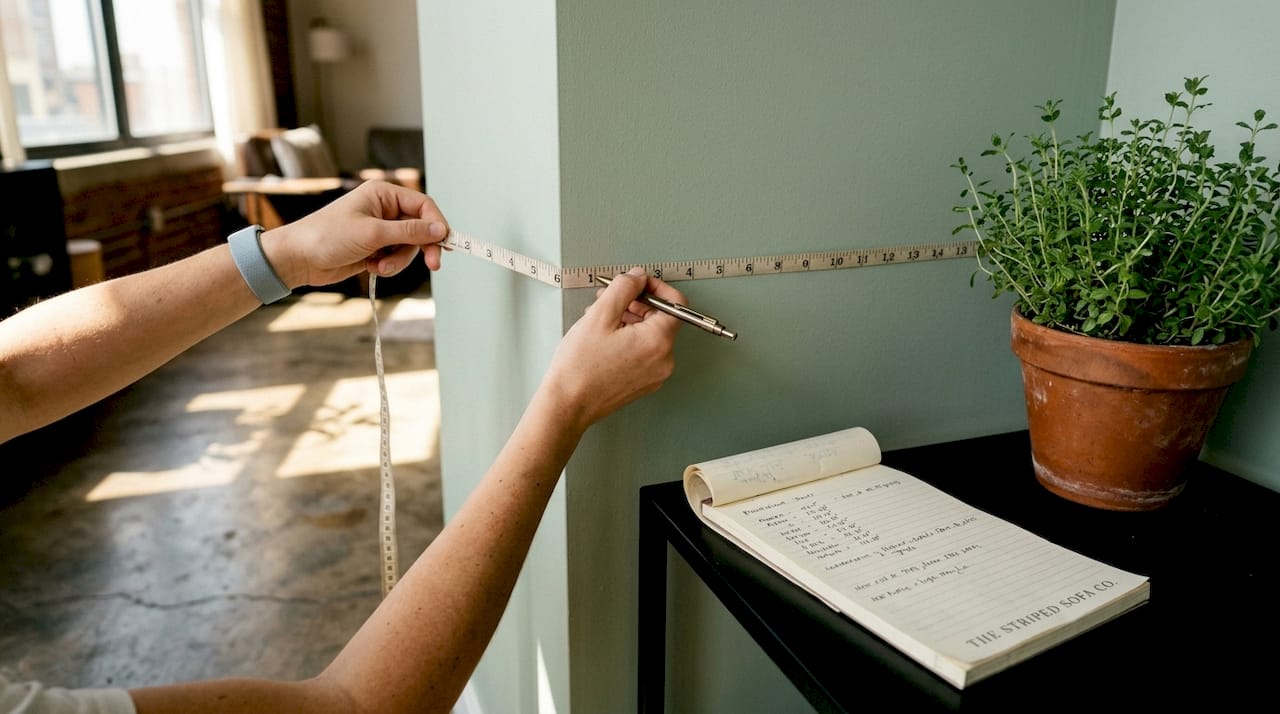
Pro Tip: Measure your room at multiple points along each wall. Older homes often have walls that are not perfectly square, so always use the smaller of two measurements to avoid a sofa that fits on paper but not in reality.
How does room layout and lifestyle shape the right sofa size?
Room dimensions set the outer boundary. Your lifestyle sets the inner one. These two forces pull in different directions, and the best custom sofa sits exactly where they meet.
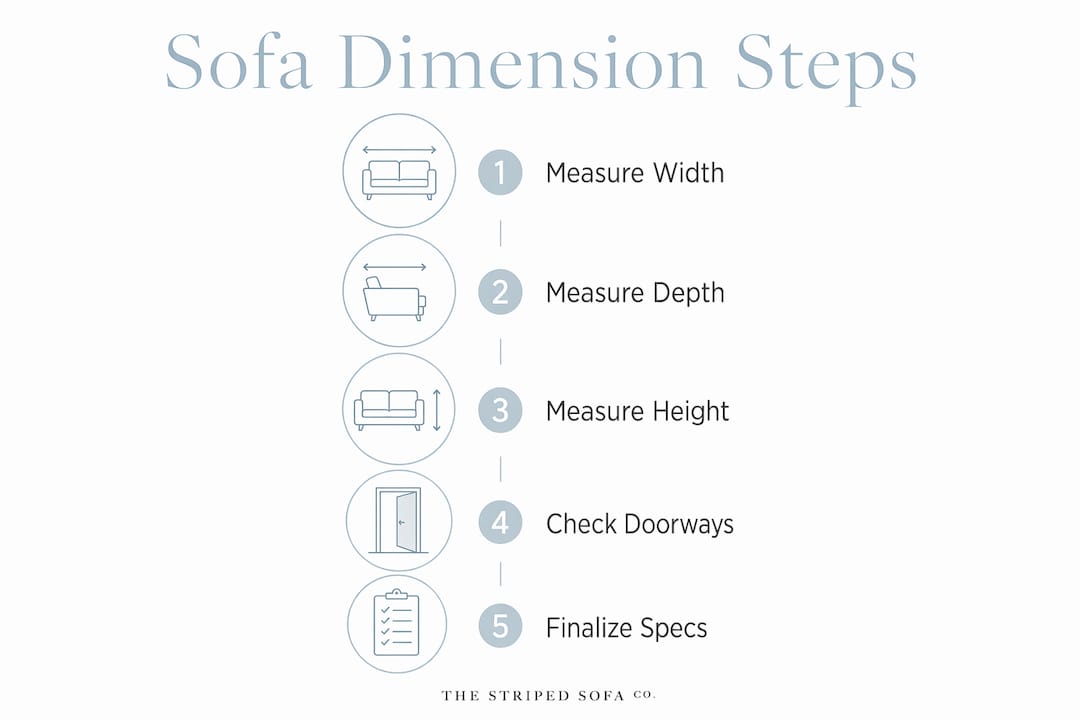
Start by measuring your room’s full footprint, then identify the placement zone: the specific area where the sofa will live. A sofa should take up roughly two-thirds of the wall it sits against. That proportion keeps the room feeling balanced rather than crowded or sparse. Leave at least 30 inches of clearance for walkways around the sofa so the room stays functional and easy to move through.
Next, think honestly about how your household uses a sofa. Lifestyle dictates sofa dimensions as much as room size. A deep seat of 38–40 inches suits a family room where people stretch out and watch movies. A shallower seat of 32–34 inches works better in a formal sitting room or an open-plan space where guests circulate freely.
Follow this sequence when assessing your room and lifestyle:
- Measure the placement zone. Mark the exact wall length and the depth available before the nearest coffee table or walkway begins.
- Identify your primary use. Lounging, hosting, reading, or a mix of all three. Each use case favors different seat depths and arm heights.
- Check the coffee table gap. A comfortable gap of 16 to 18 inches between sofa and coffee table keeps the arrangement open and easy to use.
- Tape the footprint. Taping out the sofa footprint on the floor before ordering reveals practical issues that measurements alone miss, like how the sofa interacts with a door swing or a heating vent.
- Photograph the taped outline. Walk around it, sit in a chair at the same height, and live with it for a day before finalizing your order.
Pro Tip: If you entertain often, prioritize walkway clearance over seat depth. A sofa that seats six but blocks the path to the kitchen will frustrate every gathering.
What delivery logistics should you plan for with a custom sofa?
A sofa that fits your room perfectly is useless if it cannot get through your front door. Delivery planning is not an afterthought. It is part of the dimension decision.
The single most common delivery failure comes from measuring the wrong part of the doorway. Measure the clear opening between door stops, not the door frame edges. The difference can be 1–2 inches, which is exactly the margin that causes a sofa to get stuck.
Diagonal depth is the measurement that delivery crews rely on most. A sofa with a 38-inch overall depth may have a diagonal depth of only 32 inches, which means it can be tilted and angled through a 33-inch doorway with room to spare. Skipping this measurement is the single most preventable cause of failed sofa deliveries.
Check every passage point the sofa must travel through:
- Front door clear opening: Measure between the door stops, not the frame.
- Hallway width: Measure at the narrowest point, including any light switches or molding that protrudes.
- Stairwell: Measure width, ceiling height at the turn, and the diagonal of the stairwell opening.
- Elevator: Measure interior depth and door opening width if you live in a multi-story building.
Modular sectionals and sofas with removable legs or arms solve most tight-space delivery problems. A sofa that breaks into two or three pieces passes through spaces that a single-frame sofa never could. When you work with a made-to-order manufacturer, ask specifically whether the design supports disassembly for delivery.
How do you finalize custom dimensions and work with your designer or manufacturer?
Finalizing a custom sofa order requires more than handing over a width measurement. It requires a complete specification that accounts for every dimension that affects fit, comfort, and delivery.
Use this checklist when reviewing your order before it goes into production:
- Confirm overall width, depth, and height against your room measurements and placement zone.
- Verify seat height against the needs of everyone in the household, particularly children, elderly family members, or anyone with mobility considerations.
- Check arm width and style. Rolled arms add 4–6 inches to overall width compared to track arms. That difference matters in tight spaces.
- Confirm leg height. Taller legs raise the seat height and change the visual weight of the sofa. Shorter legs create a lower, more grounded silhouette.
- Review the sofa configuration options to confirm whether a modular layout better suits your room and delivery path.
- Request diagonal depth in writing from the manufacturer before the order is placed.
| Specification | What to confirm | Impact if overlooked |
|---|---|---|
| Arm style | Track vs. rolled vs. flared | Up to 6 inches added to overall width |
| Leg height | Short vs. tall | Changes seat height and visual weight |
| Seat depth | Lounge vs. standard | Affects comfort for primary use case |
| Modular option | Yes or no | Determines delivery feasibility |
Communicate your lifestyle priorities clearly to the design team. A custom sofa specification checklist that includes room dimensions, delivery path measurements, and primary use notes gives the manufacturer everything needed to build a sofa that fits without revision. The fabric selection you choose also affects the final footprint slightly, since thicker upholstery adds a small amount to the overall depth.
Key Takeaways
Choosing sofa dimensions made to order requires measuring four core dimensions, matching them to your lifestyle and room layout, and planning every passage point the sofa must travel through before delivery.
| Point | Details |
|---|---|
| Measure diagonal depth | This single number determines delivery success through doorways and hallways. |
| Use the smaller wall measurement | Older rooms have uneven walls; always size to the narrowest point. |
| Match seat depth to lifestyle | Deep seats suit lounging; shallower seats suit hosting and open-plan rooms. |
| Tape the footprint first | Mark the sofa outline on the floor before ordering to confirm real-world fit. |
| Confirm arm and leg specs | Arm style and leg height can shift overall width and seat height significantly. |
What I’ve learned from years of watching homeowners get this wrong
The most common mistake I see is measuring the room and ignoring the delivery path entirely. A family spends weeks choosing the perfect dimensions, the right fabric, the ideal seat depth, and then the sofa arrives and cannot make it past the front hallway. It is a heartbreaking and entirely avoidable situation.
The second mistake is treating seat depth as a minor detail. Seat depth is the dimension that determines whether a sofa feels like a place to rest or a place to perch. I have seen beautifully proportioned rooms ruined by a sofa that was two inches too shallow to feel comfortable, or two inches too deep to allow a proper walkway. Those two inches are the difference between a room that works and one that does not.
My honest advice: tape the footprint on the floor and live with it for 24 hours before you place your order. Walk around it in the morning. Sit in a chair at the same height in the evening. Notice whether the room still feels open. That single exercise has saved more orders from regret than any measurement formula I know. The sofa back height guide from Striped Sofa Co is also worth reading before you finalize, because back height changes the visual weight of the sofa in ways that photographs rarely capture.
— Kevin O’Gara
Custom sofas built to fit your space, from Striped Sofa Co
Striped Sofa Co builds every sofa to order in America, using FSC and SFI certified wood frames and soy-based foam, with delivery in 6–8 weeks. The custom design process walks you through every dimension decision, from overall width to seat depth to arm style, so nothing is left to guesswork. Fabrics are stain-resistant, bleach-cleanable, and free from PFAS chemicals, which means the sofa is built to last through real family life.
Whether you are working with a compact apartment or a generous living room, Striped Sofa Co offers configurations and dimensions that fit the actual space you have. Start with the full sofa collection to find the silhouette that suits your room, then customize the dimensions to make it yours.
FAQ
What does custom sofa sizing mean in furniture?
Custom sofa sizing means specifying the exact width, depth, and height of a sofa to fit a particular room and lifestyle, rather than choosing from a fixed range of standard retail sizes.
How do I measure my doorway for sofa delivery?
Measure the clear opening between the door stops, not the door frame edges. This gives the true passage width and prevents delivery failures caused by a gap that is narrower than it appears.
What is diagonal depth and why does it matter?
Diagonal depth is measured from the highest back corner to the lowest front corner of a sofa. It is the critical measurement for angling a sofa through tight doorways and hallways during delivery.
How much space should I leave around a custom sofa?
Leave at least 30 inches of clearance for walkways around the sofa, and keep a gap of 16 to 18 inches between the sofa and the coffee table for comfortable use and visual balance.
Can I order a modular sofa to solve delivery problems?
Yes. Modular sectionals and sofas with removable legs or arms break into smaller pieces that pass through spaces a single-frame sofa cannot, making them the practical choice for tight delivery paths.