

The sofa back height option is defined as the distance from the top of the seat cushion to the highest point of the backrest, and it is the single measurement that determines how well a sofa supports your head and neck. This dimension, known in the industry as inside back height, shapes both your daily comfort and the visual weight of the piece in your room. Average sofa back height runs 28–36 inches from the floor overall, with inside back height typically falling between 16 and 20 inches from the seat. Getting this number right before you buy saves you from years of neck strain or a sofa that swallows your living room whole.
What is sofa back height option, and why does it matter?
Inside back height is the critical comfort metric, not overall back height. Overall back height can mislead consumers because it includes the seat and leg height, which have nothing to do with how well the backrest cradles your spine. Inside back height tells you exactly how much support the backrest actually delivers from the moment you sit down.
The distinction matters most for head and neck support. A sofa with a generous seat height but a shallow backrest may measure 34 inches from the floor yet leave your neck completely unsupported. Conversely, a low-profile sofa with a deep inside back height can feel far more restful than its overall dimensions suggest.
Sofa back dimensions also influence how a room breathes. A tall backrest creates a visual wall. A lower one keeps sight lines open and the space feeling airy. Choosing the right back height is as much a design decision as it is a comfort one.
What are standard sofa back height ranges and their comfort levels?
Back support tiers are defined by inside back height: 15 inches or fewer is minimal support, 16–17 inches is moderate support, and 18 inches or more is high support, best for head and neck rest. These three categories map directly to how you use your sofa every day.
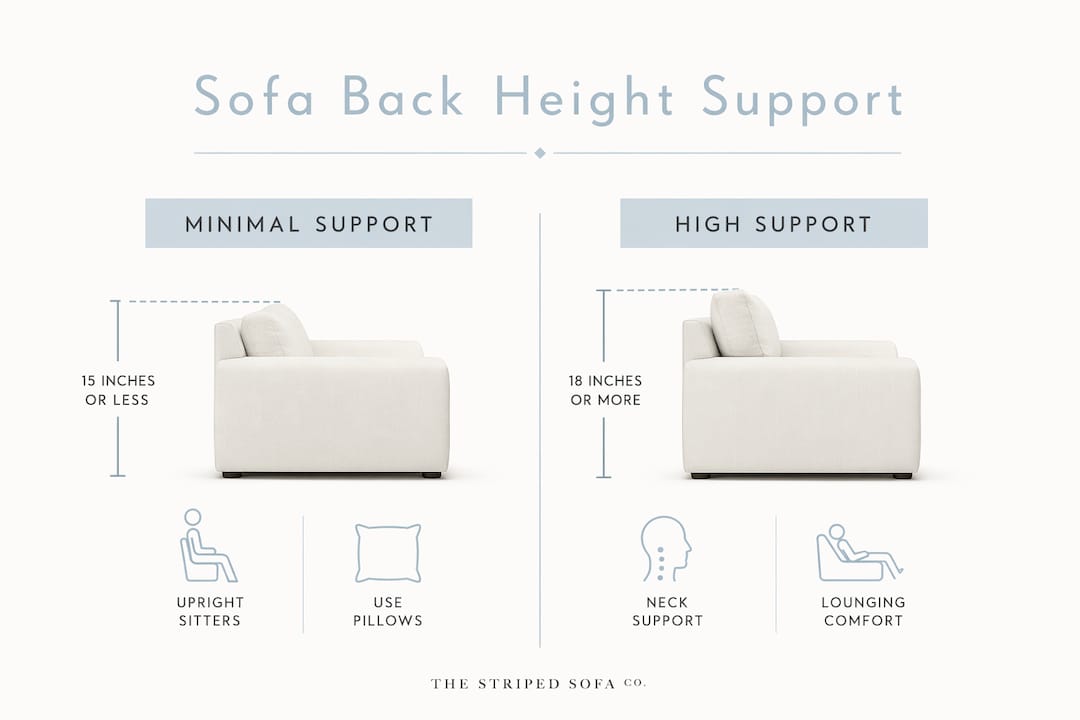
Minimal support sofas (15 inches or fewer inside back height) suit people who sit upright or use throw pillows for extra cushioning. They work well in formal sitting rooms where lounging is not the primary activity. Moderate support sofas (16–17 inches) cover the widest range of users and seating styles, making them the most common choice for family living rooms. Comfortable couch back height typically falls between 16 and 19 inches inside back, which confirms this middle tier as the practical sweet spot for most households.
High support sofas (18 inches or more inside back height) are built for true relaxation. They cradle the neck and allow the head to rest without a pillow. The trade-off is visual mass: these sofas read as large and traditional in a room.
| Inside back height | Support tier | Best for |
|---|---|---|
| 15 inches or fewer | Minimal | Upright sitters, formal rooms |
| 16–17 inches | Moderate | Most users, everyday living rooms |
| 18 inches or more | High support | Loungers, neck support needs |
| 16–19 inches (typical range) | Comfortable standard | General household comfort |
How does sofa back height affect design and visual impact?
A sofa’s back height changes the entire character of a room. Low-back sofas keep smaller rooms open and maintain clear sight lines, which is why designers often place them in front of windows or in open-plan spaces where blocking the view would shrink the room visually. High-back sofas carry a sense of tradition and enclosure, anchoring a space with authority.
Placement amplifies the effect of back height. A sofa placed away from a wall appears larger than the same sofa pushed against one. A high-back sofa floating in the center of a modest room can feel imposing in a way that the same piece against a wall never would. Designers consistently recommend mapping the sofa’s footprint in the actual space before committing to a tall backrest.
Room style also guides the choice. A clean, modern interior with low ceilings benefits from a lower back profile. A traditional library or a room with high ceilings and crown molding can carry the visual weight of a high-back sofa with grace.
- Low-back sofas suit modern, open-plan rooms and work beautifully in front of windows.
- Moderate-back sofas read as versatile and blend into most interior styles without dominating.
- High-back sofas anchor traditional rooms and create a sense of enclosure and warmth.
- Floating placement makes any back height read larger; wall placement reduces visual mass.
Pro Tip: Before purchasing, tape the sofa’s footprint on your floor and stand at every entry point to the room. This reveals whether a high-back sofa will block natural light or interrupt the flow of the space.
How to measure sofa back height correctly for comfort and fit
Measuring sofa back height correctly requires knowing which number you actually need. Inside back height and overall back height serve different purposes, and confusing them leads to poor purchasing decisions.
- Measure inside back height from the top of the seat cushion to the highest point of the backrest. This number tells you how much support you will actually feel when seated.
- Measure overall back height from the floor to the top of the backrest. Use this number for spatial planning and to check whether the sofa fits under a window sill or beside a console table.
- Measure to the solid frame, not the cushion top. Cushions compress over time, making cushion-based measurements unreliable. The frame height is fixed and gives you a consistent reference point.
- Account for the outside back panel. The outside back is typically shorter than the inside back because it does not wrap over the frame top. If you are ordering custom covers or planning reupholstery work, both measurements matter for accurate fabric yardage.
- Test in person when possible. Sit on the sofa and note where the backrest meets your spine. If it ends at your shoulder blades, your head will have no support during relaxed sitting.
The most common mistake buyers make is measuring only the cushion height or reading the outside back dimension from a product page. Neither number reflects the actual support you will experience.
Pro Tip: When ordering custom slipcovers or planning to reupholster, always request both the inside back height and the outside back height from the manufacturer. These two numbers differ, and using only one will result in fabric that is cut too short or too long.
Comparing sofa back height options: benefits and drawbacks for different users
The right back height depends on your body, your habits, and your room. No single measurement works for everyone, which is why understanding the trade-offs matters before you commit.

Higher back sofas provide better head and neck support but can overwhelm smaller rooms visually. Low-back sofas offer a sleek, modern profile but leave the neck unsupported during relaxed sitting, which is a frequent complaint among users who spend long evenings on the sofa. The choice is genuinely a trade-off, not a clear winner.
Tall users face a specific challenge. Individuals above 6 feet rarely find adequate head support in standard sofas. Most production sofas top out at an inside back height that reaches the shoulder of a tall person, leaving the neck exposed. Custom sofas with extended back heights are the practical solution for this group.
| User profile | Recommended inside back height | Key benefit | Main trade-off |
|---|---|---|---|
| Upright sitter, formal use | 15 inches or fewer | Clean, low profile | Minimal head support |
| Average height, everyday lounging | 16–17 inches | Balanced comfort and style | Moderate head support only |
| Relaxed lounger, neck support priority | 18 inches or more | Full head and neck rest | Visually heavy in small rooms |
| Tall user (above 6 feet) | Custom or 20 inches or more | Actual head support | Fewer standard options available |
| Open-plan or small room | 15–16 inches | Preserves sight lines | Less neck support |
The custom sofa design route solves the problem that production furniture cannot: matching back height precisely to the user’s body and the room’s proportions at the same time.
Key takeaways
The inside back height of a sofa, not the overall floor-to-top measurement, determines the actual head and neck support you will experience when seated.
| Point | Details |
|---|---|
| Inside back height is what matters | Measure from seat cushion top to backrest top for true comfort assessment. |
| Three support tiers guide selection | Choose 15 inches or fewer for minimal, 16–17 for moderate, and 18 or more for high support. |
| Back height shapes room design | Low backs preserve sight lines; high backs anchor traditional rooms but add visual weight. |
| Measure to the frame, not the cushion | Cushions compress over time, making frame height the only reliable fixed reference. |
| Tall users need custom solutions | Standard sofas rarely provide head support for individuals above 6 feet tall. |
Why I think most people measure the wrong thing entirely
Kevin O’Gara here. After years of designing sofas and talking with homeowners who have made expensive mistakes, I am convinced that the single biggest error in sofa buying is fixating on overall height instead of inside back height. People walk into a showroom, see a sofa that looks tall and supportive, and buy it. Then they get home and realize the seat is so high that the inside back height is actually quite shallow. The sofa looks like it supports your head. It does not.
The second mistake I see constantly is choosing back height based on aesthetics alone. A low-back sofa looks wonderful in a magazine. It photographs beautifully in a bright, open room. But if you spend three hours on it every evening, the absence of neck support becomes genuinely uncomfortable within weeks. I always tell people: sit on a sofa for at least ten minutes in the showroom, not thirty seconds. Your body will tell you what your eyes cannot.
My honest recommendation is to measure your own torso. Sit in a chair and measure from the seat to the top of your head. That number, minus a few inches for natural recline, is the inside back height you need for full support. Bring that measurement to every showroom and every product page. It will save you from a sofa that looks right but never quite feels right.
— Kevin O’Gara
Sofas built with back height you can actually choose
At Striped Sofa Co, back height is not an afterthought. Every sofa is made to order in America, which means you are not choosing from a fixed catalog of heights that may or may not suit your body or your room.
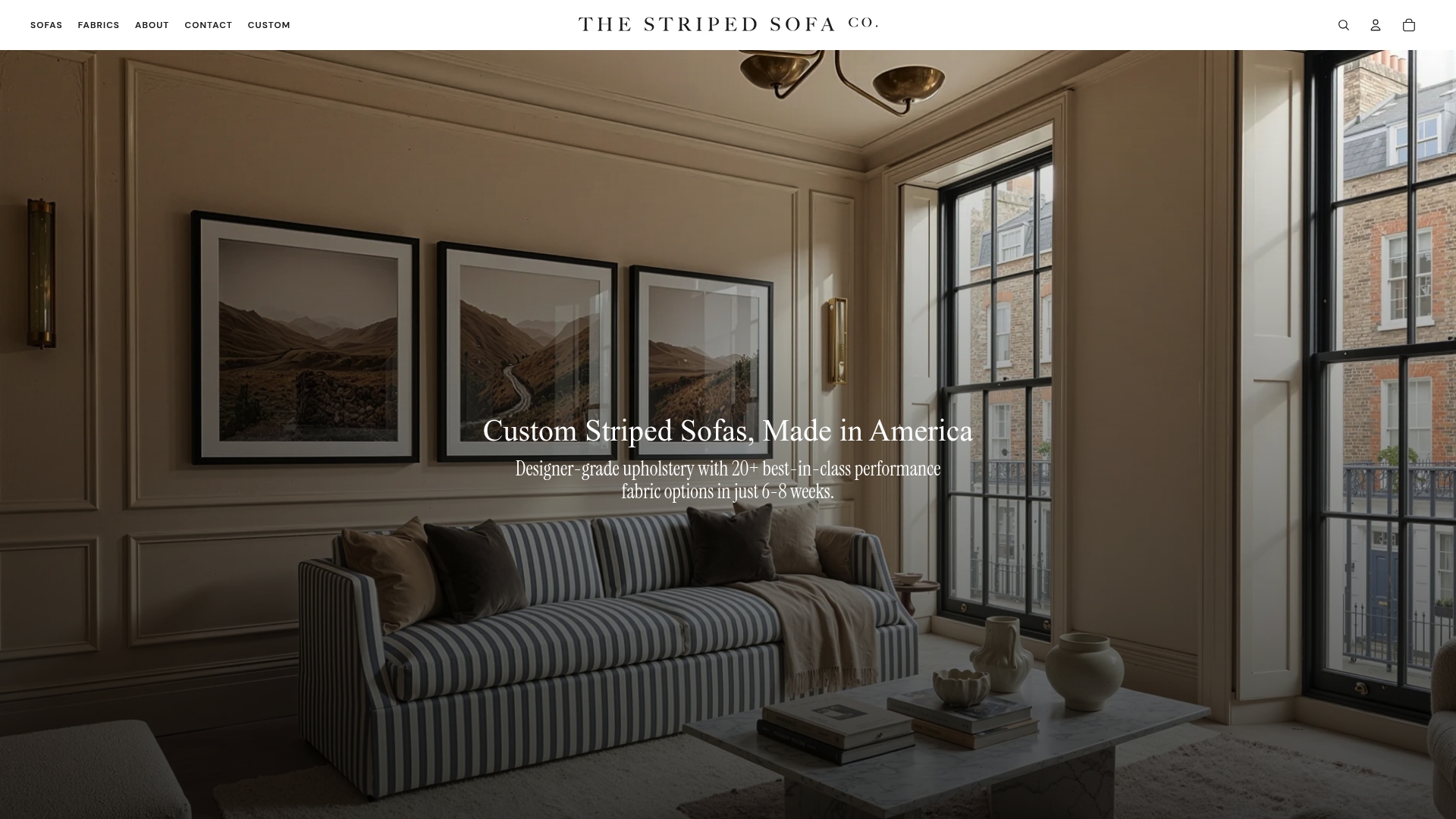
The Chelsea and The Dalston each offer distinct back profiles, giving you a real choice between a more open, modern silhouette and a fuller, more supportive backrest. All Striped Sofa Co pieces are upholstered in stain-resistant, bleach-cleanable fabrics free from PFAS chemicals, and built on FSC and SFI certified wood frames with soy-based foam. If you want a back height tailored to your exact measurements, the custom sofa design page walks you through every option, with delivery in 6–8 weeks.
FAQ
What is a comfortable sofa back height?
A comfortable inside back height falls between 16 and 19 inches from the seat cushion top. This range provides moderate to high support for most adults during everyday sitting and relaxed lounging.
How tall is a sofa back from the floor?
Overall sofa back height typically ranges from 28 to 36 inches from the floor. Inside back height, the measurement that determines actual support, generally runs 16–20 inches from the seat.
Should I choose a high-back or low-back sofa?
Choose a high-back sofa (18 inches or more inside back height) if head and neck support is your priority. Choose a low-back sofa if you want to preserve sight lines in a smaller or open-plan room.
How do I know if a sofa back height will support my head?
Measure your torso from the seat to the top of your head while seated, then compare that to the sofa’s inside back height. If the inside back height is shorter than your torso measurement, the sofa will not support your head during relaxed sitting.
Does back height affect how big a sofa looks in a room?
Yes. High-back sofas read as visually heavier, especially when placed away from a wall. Low-back sofas keep rooms feeling open and are the better choice for smaller spaces or rooms with low ceilings.