

Sofa fabric quality is defined as the combination of fiber type, weave density, durability rating, and surface treatment that determines how a sofa performs over years of daily use. A sofa sits at the center of your home’s life. It absorbs spills, holds sleeping children, and endures the weight of every ordinary evening. Choosing the wrong fabric means paying for that mistake within a few years. Understanding why sofa fabric quality matters is the first step toward a purchase you will not regret.
Why sofa fabric quality matters: the Martindale rub count explained
The Martindale rub count is the industry standard for measuring fabric abrasion resistance. It counts how many times a fabric can be rubbed against a standard wool cloth before showing visible wear. That number tells you far more about a sofa’s future than its showroom appearance ever will.
Residential sofas need 15,000–25,000 rubs for typical household use. Homes with children, pets, or heavy daily traffic require 30,000 or more. That gap matters enormously in practice.
| Household type | Recommended rub count | Why it matters |
|---|---|---|
| Light use, adults only | 15,000–25,000 | Adequate for low-traffic rooms |
| Families with children | 30,000+ | Resists daily abrasion and spills |
| Pets present | 30,000+ | Withstands claws and repeated friction |
| High-traffic living rooms | 40,000+ | Maintains appearance under constant use |
A fabric rated at 12,000 rubs placed in a family room will show wear within two years. A fabric rated at 40,000 rubs in the same room will still look composed a decade later. The rub count is not a marketing number. It is a prediction of your sofa’s future.
Pro Tip: Ask your retailer for the Martindale rating in writing before you buy. If they cannot provide it, treat that as a signal about the fabric’s quality.
What are the most common sofa fabric types and how do they compare?
Fabric type shapes everything from how a sofa feels on a warm afternoon to how it survives a cup of red wine. The most common materials each carry distinct strengths and trade-offs.
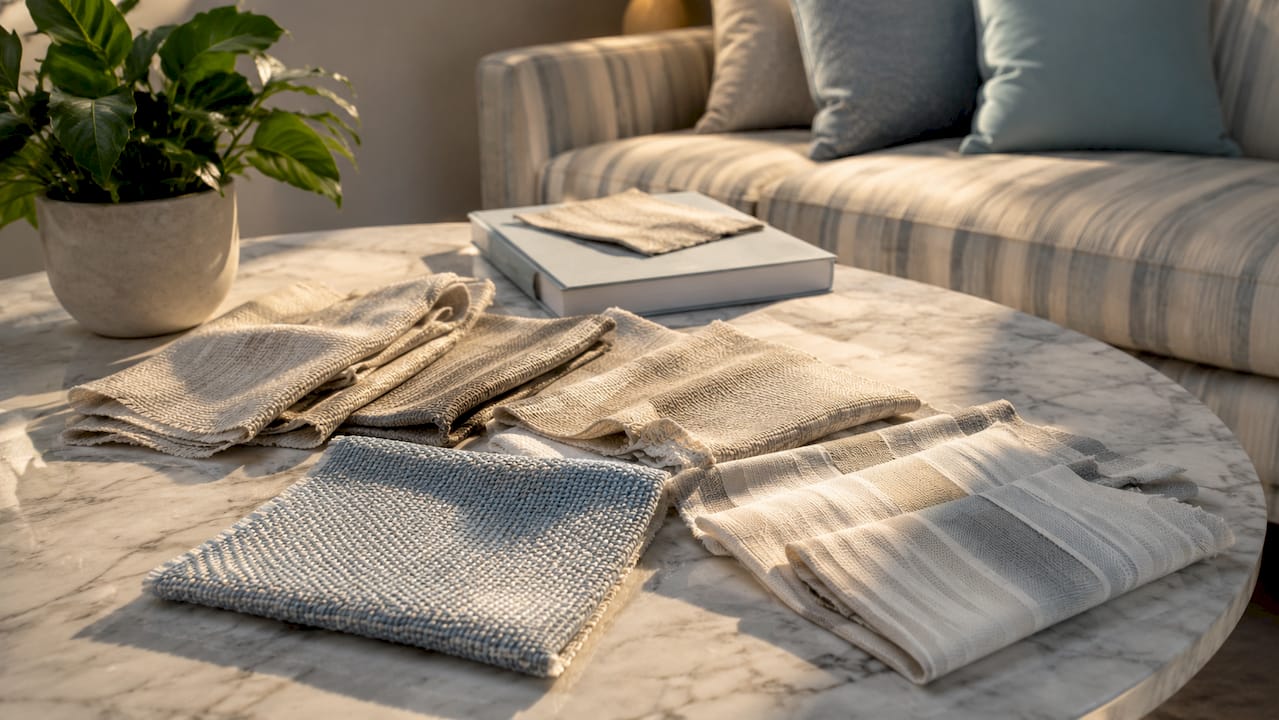
Wool and wool blends rank among the most durable natural options. Wool provides natural elasticity and stain resistance, and fewer than 25% of wool sofas show visible wear after up to ten years of use. That resilience comes from the fiber’s natural crimp, which helps it spring back after compression.
Linen offers a relaxed, lived-in beauty that suits casual interiors well. Linen is durable but wrinkles easily and stains more readily than synthetics, which means it demands more upkeep. It rewards homeowners who appreciate its texture and are willing to care for it.
Cotton breathes well and feels soft, but it pills and fades faster than most alternatives without a protective treatment. Polyester resists staining and holds color well, though cheaper grades can feel stiff and develop a shine over time. Olefin (also called polypropylene) is highly stain-resistant and nearly impervious to moisture, making it a practical choice for casual family rooms.
| Fabric | Durability | Stain resistance | Best suited for |
|---|---|---|---|
| Wool blend | Very high | Good | Long-term investment pieces |
| Linen | Moderate | Low | Low-traffic, adult rooms |
| Cotton | Moderate | Low to moderate | Casual use with covers |
| Polyester | High | High | Family rooms, everyday use |
| Olefin | High | Very high | Pets, children, outdoor-adjacent spaces |
| Performance fabric | Very high | Excellent | All household types |
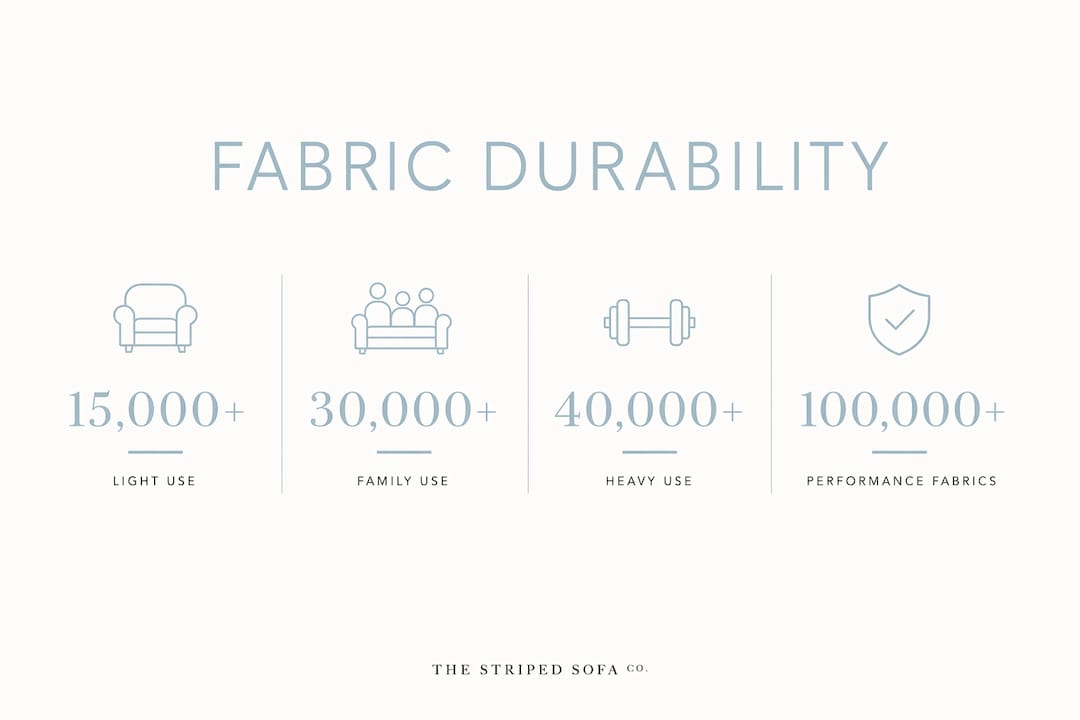
Performance fabrics deserve their own category. These are engineered textiles, often polyester or olefin-based, treated to resist liquid, stains, and fading. Performance fabrics frequently exceed 100,000 rub counts while offering the visual softness of traditional upholstery. They have changed what is possible in family-friendly living rooms.
Fabric weave density matters as much as fiber type. A tightly woven fabric resists abrasion better and prevents spills from penetrating the surface. A loosely woven decorative textile may look beautiful in a showroom and fail within a season of real use.
Why does fabric quality matter especially in family and pet-friendly homes?
Family living rooms are not showrooms. They are where juice gets spilled, dogs shake off rain, and toddlers drag toys across cushions. The fabric on your sofa absorbs all of it.
Showroom fabric appearance is often deceptive. A fabric that feels luxurious under careful hands in a quiet store may crack under the pressure of real household use within months. The qualities that matter most at home, including cleaning tolerance, abrasion resistance, and liquid repellency, are invisible to the touch.
For families, the most practical family-friendly sofa features include tight weave construction, verified rub counts above 30,000, and surface treatments that allow liquid to bead rather than absorb. Removable, washable covers add another layer of practicality. They let you address stains directly without professional cleaning.
- Tight weave construction prevents pet claws and abrasion from catching individual threads.
- Liquid-repellent treatments give you time to blot a spill before it sets.
- Fade-resistant fibers maintain color under sunlight, which matters in rooms with large windows.
- Removable covers reduce the cost and effort of keeping a sofa clean over years.
- PFAS-free stain treatments protect fabric without introducing chemicals linked to health concerns.
Pro Tip: When choosing fabric for a home with kids or pets, run your thumbnail firmly across a fabric swatch. If threads snag or shift, the weave is too loose for high-traffic use.
Interior designers recommend being honest about your household’s daily reality when selecting fabric. A family that describes their home as “fairly tidy” often lives with more chaos than they admit. Choosing a fabric that matches your actual life, not your aspirational one, is the single most practical decision you can make.
What happens when sofa fabric quality is poor?
Poor fabric quality follows a predictable path. Pilling appears first, usually within the first year on high-use surfaces like seat cushions and armrests. Fading follows, especially on sofas near windows. Then stains begin to set permanently because the fabric lacks the density or treatment to resist absorption. By year three or four, the sofa looks tired even if the frame is structurally sound.
Choosing the wrong fabric leads to reupholstery or replacement within 1–5 years. That cost almost always exceeds what a quality fabric upgrade would have cost at the point of purchase. The math is straightforward and consistently overlooked.
- Pilling forms when short fibers tangle on the surface, creating a rough, worn appearance that no amount of brushing fully reverses.
- Fading strips color from fabric exposed to UV light, leaving cushions that no longer match the sofa’s frame or the room’s palette.
- Permanent staining occurs when fabric lacks a protective treatment, allowing liquids to bond with fibers at the molecular level.
- Structural deterioration follows when abrasion wears through the weave, exposing foam or batting beneath.
- Early replacement becomes the only option, at a cost that dwarfs the original price difference between standard and quality fabric.
Replacing fabric within five years costs more than choosing a premium textile upfront. That is not an opinion. It is a consistent pattern across thousands of households. The sofa fabric pilling problem alone accounts for more early sofa replacements than most homeowners realize.
How do you choose sofa fabric quality that fits your life?
Matching fabric to your actual household is a practical exercise, not a design one. Start with an honest assessment of how your living room is used, then work backward to the fabric specifications that can handle it.
- Assess your traffic level. A sofa used daily by a family of four needs a minimum Martindale rating of 30,000. A guest room sofa used occasionally can work with 15,000–20,000.
- Account for pets. Pet claws and fur demand tight weaves and high rub counts. Olefin and performance fabrics handle both better than natural fibers.
- Consider your cleaning willingness. If you will not dry-clean cushion covers, choose a fabric with removable, machine-washable covers or a surface that wipes clean.
- Ask about chemical treatments. Stain-resistant finishes vary widely in safety and longevity. Look for PFAS-free treatments, which protect fabric without the health concerns associated with traditional fluorochemical coatings.
- Request verified durability data. A reputable manufacturer discloses Martindale ratings, fiber content, and treatment details. Transparency about materials is a reliable signal of quality.
The best way to assess sofa fabric goes beyond showroom feel. Examine the tightness of the weave, ask for chemical disclosure, and look for independently verified durability ratings. A fabric that passes those three tests is one you can trust in a real home.
Modern performance fabrics for high-traffic homes have closed the gap between durability and beauty. You no longer have to choose between a sofa that looks refined and one that survives daily life. The two qualities now coexist in well-engineered textiles, and that shift has made quality fabric selection more rewarding than ever.
Key Takeaways
Sofa fabric quality determines longevity, maintenance cost, and daily comfort more than any other single factor in a sofa purchase.
| Point | Details |
|---|---|
| Martindale rub count is the standard | Choose 30,000+ for families and pets; 15,000–25,000 for light residential use. |
| Weave density matters as much as fiber | Tightly woven fabrics resist abrasion and spills better than soft, loose textiles. |
| Poor fabric costs more long term | Reupholstery or replacement within five years exceeds the cost of quality fabric upfront. |
| Performance fabrics serve most households | Modern engineered textiles exceed 100,000 rub counts while maintaining visual appeal. |
| Transparency signals quality | Manufacturers who disclose Martindale ratings and chemical treatments are more trustworthy. |
What I have learned from years of watching sofas age
I have been in enough homes to know that the sofa tells the truth about how a family actually lives. Not the curated version. The real one. And the fabric is always the first thing that gives it away.
The most common mistake I see is choosing fabric for the showroom moment rather than the Tuesday evening reality. A pale linen sofa looks extraordinary in a well-lit studio. In a home with two children and a retriever, it becomes a source of daily anxiety within six months. Experienced designers stress matching fabric durability to household use honestly to avoid exactly that kind of upkeep exhaustion.
What I have come to believe, after years of working with homeowners and specifying furniture for interiors, is that fabric quality is the most undervalued decision in the entire sofa purchase. People agonize over silhouette and color. They accept whatever fabric the manufacturer offers at the standard price point. Then they wonder why the sofa looks tired in three years.
The sofas that age with grace, the ones that develop a quiet patina rather than a worn-out look, are almost always built on a foundation of honest fabric selection. A tight weave, a verified rub count, a treatment that does not compromise the household’s health. Those details are not glamorous. They are the difference between a sofa that serves your home for a decade and one that you resent by year four.
Invest in the fabric first. The frame and the silhouette matter, but the fabric is what you live with every single day.
— Kevin O’Gara
Striped Sofa Co brings performance and beauty together
At Striped Sofa Co, every sofa is built around the belief that beauty and durability belong in the same piece of furniture. The collection features designer-grade performance fabrics that are stain-resistant, bleach-cleanable, and free from harmful PFAS chemicals, so your sofa can handle real life without sacrificing its character.
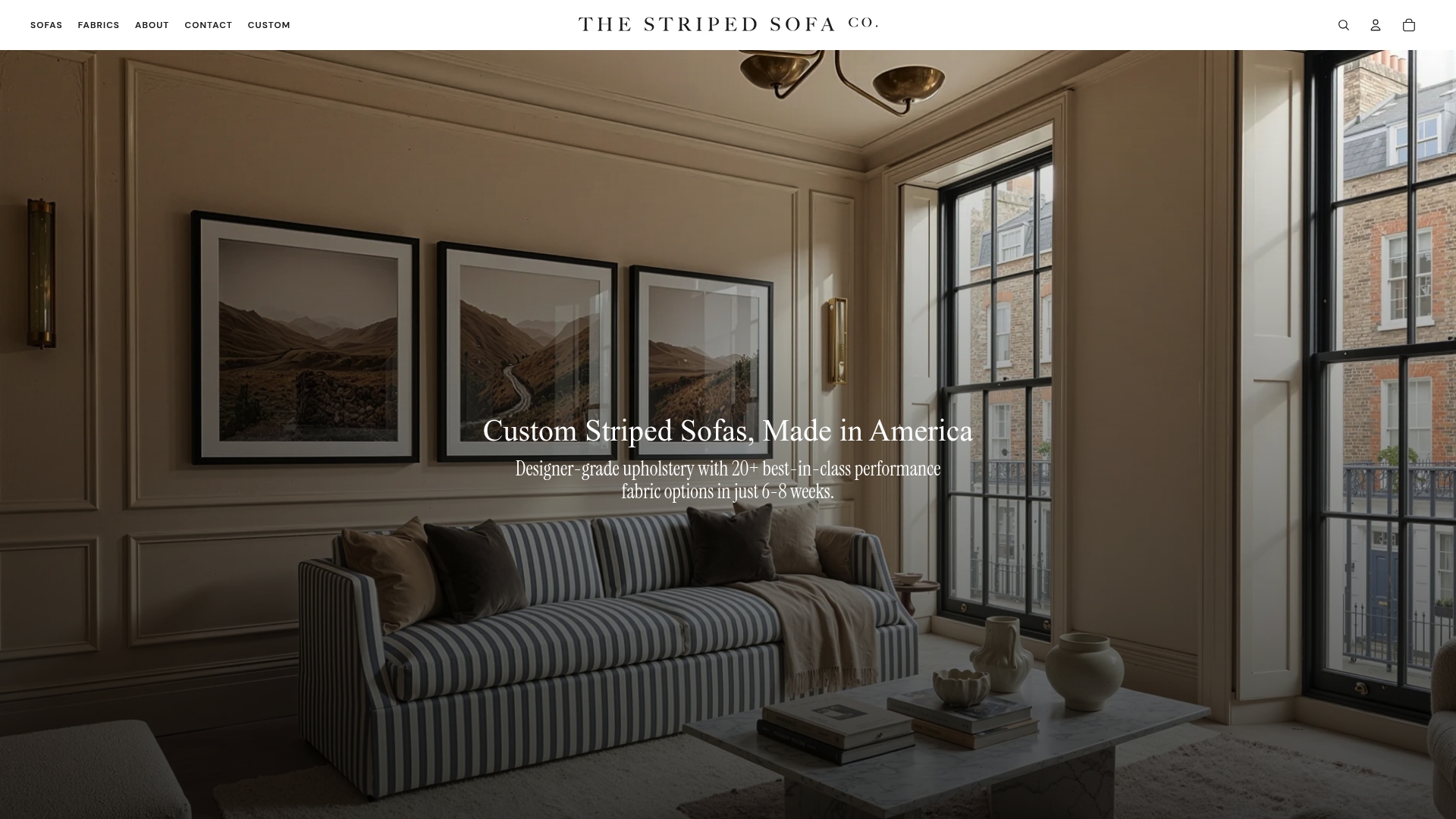
Each piece is made to order in America using FSC and SFI certified wood and soy-based foam, with a delivery window of 6–8 weeks. You choose the silhouette, the stripe, and the fabric, and Striped Sofa Co builds it to last. If you are ready to invest in a sofa that earns its place in your home for years to come, explore the custom sofa design options and find the piece that fits your life.
FAQ
What is a good Martindale rub count for a family sofa?
A Martindale rub count of 30,000 or higher is recommended for homes with children, pets, or heavy daily use. Typical residential sofas with light use can perform well at 15,000–25,000.
Why does sofa fabric quality matter for homes with kids?
Children accelerate fabric wear through spills, abrasion, and repeated contact. High-quality, tightly woven fabrics with stain-resistant treatments resist this damage and maintain their appearance far longer than standard upholstery.
Are performance fabrics worth the investment?
Performance fabrics regularly exceed 100,000 rub counts and resist stains, fading, and liquid absorption. That durability makes them more cost-effective than standard fabrics, which often require reupholstery or replacement within five years.
What fabric is best for a sofa in a pet-friendly home?
Olefin and performance fabrics are the strongest choices for pet-friendly homes. Both resist claw abrasion, repel moisture, and clean easily without damaging the fiber structure.
How do I know if a sofa fabric is genuinely high quality?
Ask the manufacturer for the Martindale rub count, fiber content, and details about any chemical treatments. A reputable brand discloses all three. Examine the weave closely: a tight, dense construction is a reliable indicator of real durability.