

Sustainable furniture is furniture designed and produced to reduce environmental harm across its entire lifecycle, from raw material extraction through manufacturing, daily use, and final disposal. The term covers responsible sourcing, durable construction, low-impact finishes, and end-of-life management. Industry professionals often call this approach “lifecycle thinking,” and it goes far deeper than a recycled-content label or a green marketing claim. Certifications from the Forest Stewardship Council (FSC), OEKO-TEX, and emerging systems like Digital Product Passports (DPPs) give this concept measurable, verifiable weight. Understanding what truly qualifies as sustainable furniture helps you invest wisely and avoid the greenwashing that floods the home decor market.
What is sustainable furniture, really?
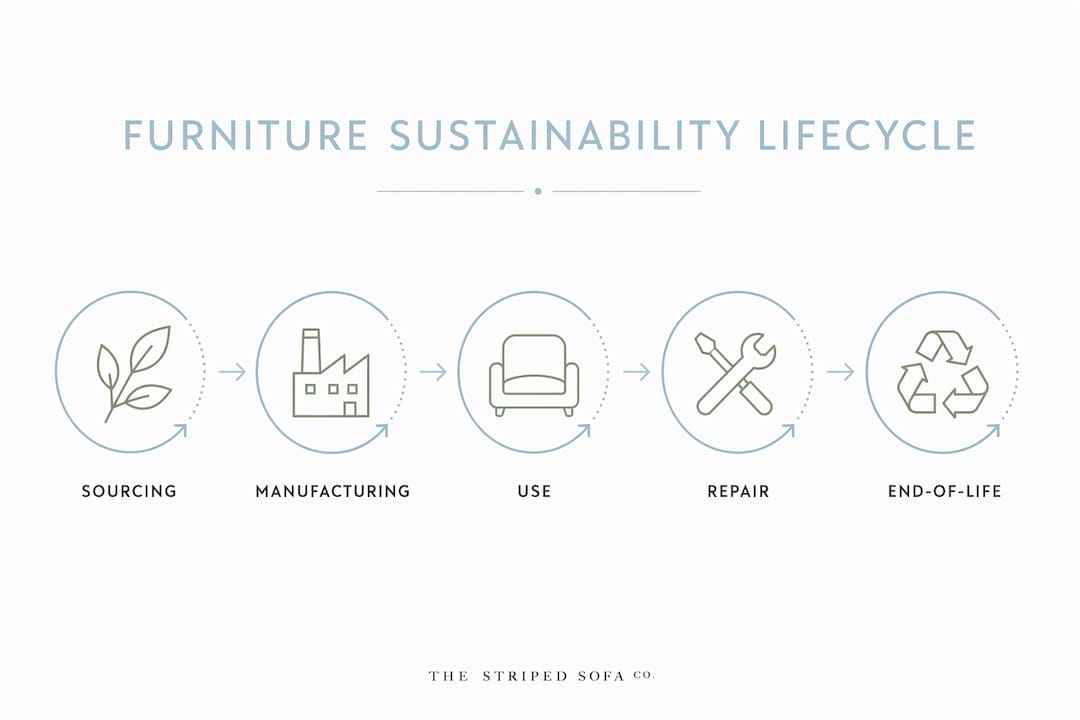
Sustainable furniture is defined by its full lifecycle impact, not by a single green attribute. A sofa made from recycled plastic but designed to fall apart in three years is not sustainable. A solid oak chair built to last decades and refinished twice is. The sustainable furniture definition rests on five pillars: responsible material sourcing, low-impact manufacturing, structural durability, repairability, and a clear end-of-life plan.
This lifecycle framework matters because furniture production touches forests, water systems, and indoor air quality all at once. A piece that scores well on one pillar but fails on others still carries a significant environmental cost. True sustainability requires all five pillars to work together, and that is the standard worth holding every purchase to.
What materials are used in sustainable furniture?
Eco-friendly furniture types share one trait: their materials cause less harm at every stage of production and use. Common sustainable materials include responsibly sourced solid wood, bamboo, cork, reclaimed wood, recycled metal, and natural upholstery fibers like linen, wool, and organic cotton. Each material carries its own trade-offs in durability, renewability, and cost.

| Material | Sustainability strength | Durability | Common uses |
|---|---|---|---|
| FSC-certified hardwood | Responsibly managed forests | Very high | Frames, legs, structural parts |
| Bamboo | Fast-growing, renewable | High | Frames, panels, accents |
| Reclaimed wood | Diverts waste, no new harvest | High | Tabletops, shelving, accents |
| Recycled metal | Reduces mining demand | Very high | Legs, hardware, frames |
| Cork | Renewable, biodegradable | Moderate | Upholstery backing, padding |
| Linen and wool | Natural, biodegradable fibers | Moderate to high | Upholstery, cushion covers |
Low-VOC finishes paired with these materials reduce chemical emissions and protect indoor air quality. This matters more than most buyers realize. Conventional furniture finishes can off-gas volatile organic compounds for months after purchase, affecting the air inside your home every day.
Pro Tip: When shopping for upholstered pieces, ask specifically whether the fabric is OEKO-TEX certified. That certification confirms the textile was tested for harmful substances, not just marketed as “natural.”
Does durability really define sustainability?
Durability is the cornerstone of sustainability. Furniture lasting about 15 years is more sustainable than a recycled-content product that needs replacement every few years. The environmental cost of manufacturing, shipping, and disposing of furniture is so high that longevity outweighs almost every other factor.
Repairability is equally critical. Sustainable furniture design integrates modular construction and mechanical fixings, such as bolts and screws, rather than permanently glued assemblies. When a leg breaks or a cushion wears out, a repairable piece gets fixed. A glued-together piece goes to the landfill.
Quality hardwoods like American White Oak are chosen specifically for longevity and structural integrity, and that choice directly enhances sustainability. A frame built from American White Oak can be refinished, reupholstered, and handed down across generations. That is the quiet foundation of genuinely green furniture.
Use this checklist before buying any piece:
- Frame material: Is it solid wood or quality metal, not particleboard or MDF?
- Joinery: Are connections mechanical (bolted, screwed) rather than glued only?
- Cushion covers: Are they removable and washable or replaceable?
- Spare parts: Does the manufacturer offer replacement components?
- Refinishing potential: Can the surface be sanded, stained, or repainted?
- Reupholstering: Is the frame built to accept new fabric without structural damage?
Pro Tip: A sofa with a removable, replaceable cushion cover costs the same to produce as one without. The difference is intentional design. Ask the retailer directly whether cushion covers can be ordered separately.
What certifications verify sustainable furniture claims?
Certifications are the clearest way to separate genuine sustainability from marketing language. FSC certification for wood, OEKO-TEX certification for textiles, and E1 or E0 formaldehyde ratings for composite wood panels each verify a specific claim. No single certification covers everything, so understanding what each one guarantees is worth your time.
The Sustainable Forestry Initiative (SFI) certification works alongside FSC to verify responsible forest management in North American supply chains. E1 and E0 ratings measure formaldehyde emissions from panels like plywood and MDF. E0 is the stricter standard and indicates very low emissions. OEKO-TEX Standard 100 certifies that every component of a textile, including thread and dyes, has been tested for harmful substances.
The most significant shift coming to the industry is the Digital Product Passport. DPP compliance is expected by 2029–2030, and it will require manufacturers to document material composition, repairability scores, recyclability, and chemical safety in a verifiable digital record. This shifts sustainability from a brand promise to a data-backed fact.
Ask these questions before purchasing from any furniture brand:
- Is your wood FSC or SFI certified? Can you show documentation?
- Are your upholstery fabrics OEKO-TEX certified?
- What formaldehyde rating applies to any composite wood in this piece?
- Do your finishes meet low-VOC standards? Which standard specifically?
- What is your policy on spare parts and repairs?
- How should this piece be disposed of at end of life?
How to choose sustainable furniture that lasts
Choosing sustainable furniture means weighing materials, construction, certifications, and end-of-life options together, not separately. Sustainability depends on the whole system, and a piece that excels in one area while failing in others still carries a real environmental cost. Prioritize longevity and quality over marketing claims every time.
Transparency from a brand is a strong signal. Manufacturers who publish their wood sourcing, foam composition, and finish chemistry are far more trustworthy than those who use vague terms like “eco-friendly” or “green” without specifics. Striped Sofa Co, for example, publishes its use of FSC and SFI certified wood frames and soy-based foam, and its fabrics are free from harmful PFAS chemicals. That level of specificity is what genuine sustainability looks like in practice.
When evaluating sustainable furniture brands, look for these qualities:
- Certified wood frames (FSC or SFI)
- Natural or low-impact foam alternatives (soy-based, latex)
- OEKO-TEX or equivalent certified upholstery
- PFAS-free, low-VOC finishes
- Made-to-order or small-batch production to reduce overstock waste
- American-made or locally produced to reduce shipping emissions
- Clear repair and spare parts policy
Circular economy principles extend sustainability beyond the purchase. EU-backed research confirms that pre-use, use, and post-use stages must all be considered in any honest sustainability definition. When you buy a piece designed for refurbishing and remanufacturing, you participate in that chain rather than breaking it.
Pro Tip: Budget and sustainability are not opposites. A $1,200 sofa built to last 20 years costs less per year than a $400 sofa replaced every five. Calculate cost-per-year, not sticker price, when comparing options.
Key Takeaways
Sustainable furniture is defined by lifecycle thinking, and durability is its single most important quality.
| Point | Details |
|---|---|
| Lifecycle over labels | True sustainability covers sourcing, manufacturing, durability, repairability, and end-of-life, not just materials. |
| Durability beats recycled content | Furniture lasting 15 or more years has a lower environmental impact than short-lived recycled-content pieces. |
| Certifications matter | FSC, OEKO-TEX, SFI, and E0 ratings each verify specific claims. Ask for documentation before buying. |
| Repairability is by design | Mechanical fixings and modular parts allow repair. Glued-only assemblies end up in landfills. |
| Digital Product Passports are coming | DPP compliance expected by 2029–2030 will make sustainability claims verifiable, not just marketable. |
Why I think most “sustainable” furniture misses the point
I have spent years thinking about what it means to build furniture that genuinely serves a home and the people in it. The word “sustainable” gets applied to almost everything now, and most of the time it means very little. A bamboo side table with a toxic lacquer finish and glued joints is not sustainable. A solid oak sofa frame built with mechanical fixings, covered in PFAS-free fabric, and designed to be reupholstered in fifteen years? That is the real thing.
The part that frustrates me most is how the industry has trained buyers to focus on materials alone. Recycled content sounds responsible, and it can be, but only if the piece is also built to last. Consumers should treat sustainability as a set of decisions and be cautious of misleading eco-friendly marketing. I agree completely. The question is never just “what is this made of?” It is “how long will it last, can it be repaired, and what happens to it when it wears out?”
The emerging Digital Product Passport gives me real optimism. When every piece of furniture carries a verifiable record of its material composition, chemical safety, and repairability score, greenwashing becomes much harder to sustain. Until then, the best tool a buyer has is a direct question: “Can you show me your certifications?” If the answer is vague, walk away. The furniture worth living with is the furniture worth being honest about.
— Kevin O’Gara
Sustainable sofas made in America by Striped Sofa Co
Striped Sofa Co builds each sofa to order in 6–8 weeks using FSC and SFI certified wood frames, soy-based foam, and upholstery fabrics that are stain-resistant, bleach-cleanable, and completely free from harmful PFAS chemicals. Every piece is made in America, which reduces shipping emissions and keeps quality control close to home.

The fabrics meet the standard for high-traffic durability without relying on chemical treatments that compromise indoor air quality. If you want a sofa that reflects genuine sustainability values and holds its beauty across decades of daily life, explore the full collection at Striped Sofa Co. Custom design options are also available for those who want to match their values with their personal style.
FAQ
What is the sustainable furniture definition?
Sustainable furniture is furniture designed to minimize environmental harm across its entire lifecycle, including responsible material sourcing, durable construction, low-impact manufacturing, and a clear end-of-life plan.
What materials are considered sustainable in furniture?
FSC-certified hardwood, bamboo, reclaimed wood, recycled metal, cork, linen, wool, and organic cotton are the most widely recognized sustainable material options. Low-VOC finishes paired with these materials further reduce environmental impact.
Is sustainable furniture worth the higher price?
A durable piece lasting 15 or more years costs less per year than a cheaper replacement-cycle alternative. Longevity is the primary driver of furniture sustainability, making quality construction a sound long-term investment.
What certifications should I look for in sustainable furniture?
Look for FSC or SFI certification on wood frames, OEKO-TEX Standard 100 on upholstery fabrics, and E1 or E0 formaldehyde ratings on any composite wood panels. These certifications verify specific claims rather than general marketing language.
What is a Digital Product Passport for furniture?
A Digital Product Passport is a verifiable digital record documenting a furniture piece’s material composition, chemical safety, repairability, and recyclability. DPP compliance is expected by 2029–2030 and will make sustainability claims far more transparent for buyers.