

Made-to-order furniture is manufactured only after a customer places a specific order, allowing you to select variables like dimensions, upholstery, finishes, and hardware before a single piece of wood is cut. This demand-pull production model stands apart from mass-produced furniture, which sits in warehouses waiting for a buyer. The result is a piece built around your life, your room, and your taste rather than the average consumer’s. Brands like Stripedsofaco, Petra Madalena, and Kavela Furniture have built their entire identity on this philosophy, proving that personalization and quality craftsmanship are not luxuries reserved for the few.
What is made-to-order furniture and how does it work?
Made-to-order furniture, also called custom-made furniture in the industry, is produced only after your order triggers the manufacturing process. No piece exists in a warehouse. No fabric is cut speculatively. Production begins the moment you confirm your choices.
The process follows a clear sequence:
- Order placement. You select your configuration, including size, fabric, finish, and any hardware details, from the maker’s available options.
- Material sourcing. The manufacturer procures raw materials specific to your order, which is why lead times begin after confirmation rather than before.
- Frame construction. Craftspeople build the structural foundation, often using standardized templates that allow for dimensional variation without starting from scratch.
- Upholstery and finishing. Fabric is cut, applied, and finished to your chosen specifications. Hardware is fitted last.
- Quality review and delivery. The completed piece is inspected before it ships directly to you.
This sequence replaces the mass-market batch model, where factories produce thousands of identical units and push them into retail channels. The demand-pull approach eliminates large inventory requirements and reduces overhead costs for the maker. Those savings, combined with better materials, are what make the investment worthwhile for the buyer.
Pro Tip: Ask your furniture maker whether they use standardized frames or build from scratch. Standardized frames typically mean a 6–12 week lead time, while fully bespoke commissions can run 6 months or longer.
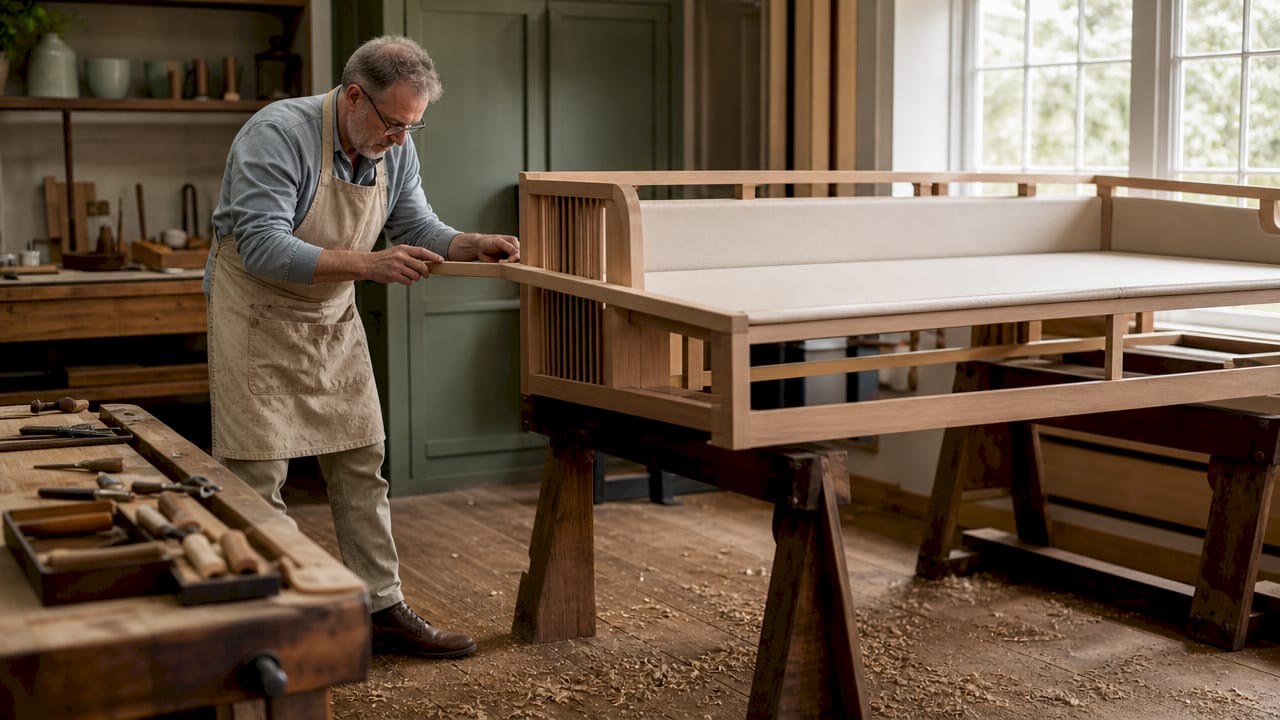
What are the customization benefits of made-to-order furniture?
The most compelling advantage of custom furniture options is the ability to fit your actual space rather than compromise around it. Made-to-order furniture maximizes spatial efficiency by fitting awkward architectural areas, turning an unused alcove or an oddly angled corner into a purposeful, beautiful feature. Mass-market furniture is designed for average room dimensions. Your home is rarely average.
Beyond spatial fit, the customization benefits extend across every material and aesthetic choice:
- Wood species and finish. Choose from white oak, walnut, maple, or painted finishes rather than accepting whatever veneer the factory applied.
- Upholstery fabric. Select from performance weaves, natural linens, velvets, or specialty textiles. At Stripedsofaco, for example, you can choose performance upholstery fabrics that are stain-resistant and free from harmful PFAS chemicals.
- Dimensions. A sofa that is 3 inches narrower or 6 inches longer can be the difference between a room that breathes and one that feels crowded.
- Hardware and leg style. Brass, matte black, or natural wood legs change the entire character of a piece without altering its silhouette.
- Cushion configuration. Depth, firmness, and fill material all affect daily comfort in ways that a showroom floor model cannot communicate.
Sofas, dining tables, wardrobes, and built-in storage units benefit most from this level of tailored furniture solutions. These are the pieces that anchor a room for decades. Getting them right the first time matters.
Pro Tip: Before you finalize dimensions, tape out the footprint of your planned piece on the floor with painter’s tape. Live with it for 48 hours. You will catch sizing problems before they become expensive ones.
How does quality compare: made-to-order vs. mass-produced furniture?
The quality gap between made-to-order and mass-produced furniture is measurable in years. Custom furniture lasts 25–50 years due to superior materials and traditional joinery, compared to 5–10 years for most mass-produced pieces. That difference is not a marketing claim. It reflects the materials used and the methods applied.
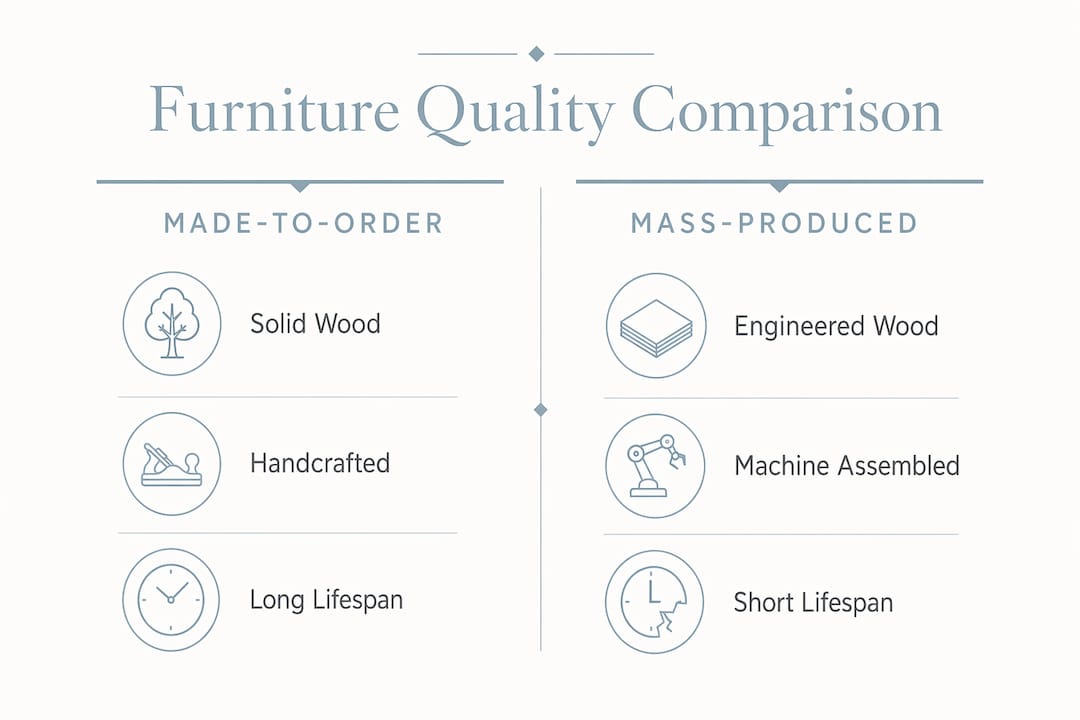
| Feature | Made-to-order furniture | Mass-produced furniture |
|---|---|---|
| Core material | Solid wood, kiln-dried hardwood | Particleboard, MDF, laminate |
| Joinery method | Mortise and tenon, dovetail, dowel | Staples, cam locks, adhesive |
| Upholstery | Full-wrap, hand-applied fabric | Machine-stapled, pre-cut panels |
| Expected lifespan | 25–50 years | 5–10 years |
| Repairability | High, individual components replaceable | Low, often not worth repairing |
| Lifecycle cost | Lower over time | Higher due to replacement frequency |
Mortise and tenon joinery, for instance, locks wood together mechanically without relying on glue alone. Dovetail joints in drawer construction resist the racking forces that come from decades of daily use. These are techniques that mass-production lines cannot replicate at scale without dramatically increasing cost.
The long-term value of made-to-order furniture is also an environmental argument. A sofa that lasts 40 years instead of 8 represents five fewer manufacturing cycles, five fewer disposal events, and five fewer rounds of raw material extraction. Custom furniture delivers greater long-term value through durability, performance, and sustained aesthetic appeal. That is not just good for your home. It is good for the planet.
What are the sustainability benefits of made-to-order furniture?
Made-to-order furniture is one of the quieter heroes of sustainable consumption. The production model itself prevents overproduction. Nothing is manufactured speculatively, so nothing sits unsold in a warehouse before being discounted, liquidated, or landfilled.
Sustainable production in custom furniture favors responsibly sourced materials like FSC-certified solid woods, reducing the environmental footprint compared to fast furniture. Fast furniture, the furniture industry’s equivalent of fast fashion, relies on cheap materials, rapid production cycles, and a consumer expectation of replacement within a few years. The environmental cost of that cycle is significant.
Here is how made-to-order furniture supports more responsible consumption:
- No overproduction. The demand-pull model produces only what is ordered, eliminating the waste embedded in unsold inventory.
- Certified materials. Makers who prioritize sustainability use FSC and SFI certified wood, soy-based foams, and fabrics free from harmful chemical treatments.
- Longer product life. A piece that lasts 40 years displaces multiple disposable alternatives over the same period.
- Repairability. Solid wood frames and quality upholstery can be repaired, reupholstered, or refinished rather than discarded.
- Reduced shipping waste. Made-to-order pieces ship directly from maker to buyer, cutting out the multi-stop retail distribution chain.
When you invest in a well-made, custom piece, you are not just furnishing a room. You are opting out of a disposal cycle that costs the environment far more than the price tag suggests.
What should you know before buying made-to-order furniture?
Understanding the trade-offs before you order saves you from frustration later. The three most important factors are lead time, cost, and the degree of customization you actually have.
-
Lead time is real and non-negotiable. Production starts after order confirmation, which means a typical wait of 6–12 weeks. Plan your purchase around your move-in date or renovation timeline, not the other way around. Stripedsofaco, for example, delivers in 6–8 weeks because they use standardized frames with variable dimensions rather than building every piece from scratch.
-
Custom and bespoke are not the same thing. ‘Custom’ furniture allows selection among options on existing frames, while ‘bespoke’ furniture involves creating a unique piece from scratch. Most made-to-order furniture falls into the custom category. That is not a limitation. It is what keeps lead times reasonable and costs manageable.
-
The upfront cost is higher, but the lifecycle cost is lower. Custom furniture requires a higher initial investment but delivers greater long-term value through durability and lasting appeal. A $3,000 sofa that lasts 30 years costs less per year than a $900 sofa replaced every 7 years.
-
Clarify your customization limits before you commit. Ask specifically which elements are fixed and which are variable. Frame shape, leg height, cushion count, and fabric are often adjustable. Structural dimensions sometimes have minimum and maximum ranges. Knowing this upfront prevents disappointment.
-
Verify material certifications. Ask whether the wood is FSC or SFI certified, whether foams are soy-based or petroleum-based, and whether fabrics carry any chemical treatment disclosures. These details separate genuinely sustainable makers from those who use the language without the practice.
Key Takeaways
Made-to-order furniture is the most direct path to a piece that fits your space, reflects your taste, and lasts long enough to become part of your home’s story.
| Point | Details |
|---|---|
| Production model | Made-to-order furniture is built only after your order, eliminating speculative inventory and waste. |
| Lead time expectation | Plan for a 6–12 week wait; makers using standardized frames often deliver in 6–8 weeks. |
| Quality and lifespan | Solid wood and traditional joinery produce pieces that last 25–50 years versus 5–10 for mass-produced alternatives. |
| Sustainability advantage | Demand-pull production, certified materials, and repairability make custom furniture the more responsible choice. |
| Cost perspective | Higher upfront cost delivers lower lifecycle cost when durability and replacement frequency are factored in. |
Why I believe made-to-order is the only honest way to furnish a home
I started Stripedsofaco because I was tired of settling. Every showroom I walked into offered the same proposition: pick a color from a swatch book, accept the dimensions on the tag, and hope it fits. It rarely did, not perfectly, not in the way a room deserves.
What I have learned from years of building made-to-order sofas is that the waiting period is not a drawback. It is part of the relationship between you and the piece. You think more carefully about what you want. You measure twice. You consider how the light falls in the room in the afternoon. That deliberateness produces better decisions and, ultimately, furniture you keep rather than replace.
The sustainability argument is the one I feel most strongly about. Fast furniture is not cheap. The cost is just deferred and externalized onto landfills and ecosystems. When someone orders a custom sofa from Stripedsofaco, they are making a choice that compounds in value over time, financially, aesthetically, and environmentally. That is the kind of investment I can stand behind without reservation.
— Kevin
Bring your room to life with Stripedsofaco
If this article has clarified what made-to-order furniture can do for your home, the next step is seeing it in practice. Stripedsofaco builds luxury striped sofas in America, made-to-order in 6–8 weeks using FSC and SFI certified wood, soy-based foam, and designer-grade fabrics that are stain-resistant and free from PFAS chemicals.
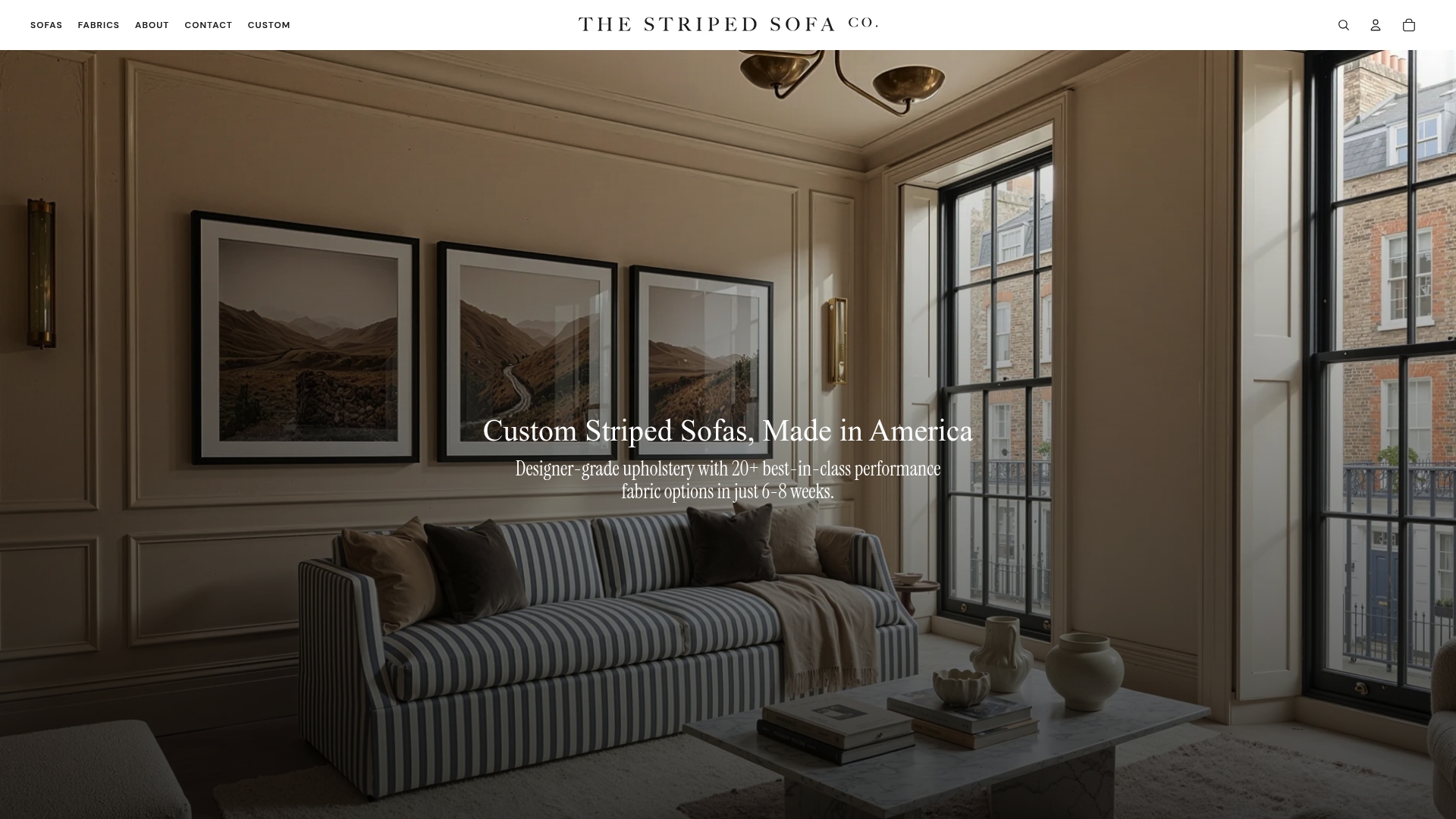
Every sofa is configured to your specifications, from the silhouette and scale to the upholstery and finish. The Dalston and the Chelsea are two of our most-loved models, each available in a range of dimensions and fabric options. Browse the full collection at Stripedsofaco and find the piece your room has been waiting for.
FAQ
What does made-to-order mean in furniture?
Made-to-order means the furniture is manufactured only after you place a specific order, with production triggered by your chosen specifications rather than pre-built for retail stock.
How long does made-to-order furniture take?
Most made-to-order furniture requires 6–12 weeks from order confirmation to delivery, depending on the complexity of the piece and the maker’s production schedule.
Is made-to-order furniture worth the higher cost?
Custom furniture carries a higher upfront price but delivers lower lifecycle cost because pieces built with solid wood and quality joinery last 25–50 years compared to 5–10 years for mass-produced alternatives.
What is the difference between custom and bespoke furniture?
Custom furniture lets you choose among options on an existing frame, while bespoke furniture is designed and built entirely from scratch, typically with a longer lead time and higher cost.
Is made-to-order furniture more sustainable?
The demand-pull production model prevents overproduction and waste, and most quality makers use certified solid woods and non-toxic materials, making made-to-order furniture significantly more sustainable than fast furniture alternatives.