

Luxury coastal living room sofas are defined by their marriage of stylish design, durable performance fabrics, and materials engineered to withstand sun, salt air, humidity, and sand. The types of luxury coastal living room sofas that hold up best over time share three traits: frames built from marine-grade aluminum, teak, or HDPE; upholstery in solution-dyed acrylics or performance linens; and silhouettes that feel relaxed without sacrificing refinement. Getting this combination right means your sofa becomes a quiet foundation for the life you actually live at the coast, not a piece you worry about the moment someone walks in from the beach.
What are the most popular types of luxury coastal living room sofas?
Coastal luxury sofas fall into four broad categories, each with distinct strengths. Understanding these categories helps you match the right sofa to your room’s conditions, your family’s habits, and your design vision.
-
Slipcovered linen sofas. These are the workhorses of coastal style sofas. The slipcover removes for machine washing, which matters enormously when humidity runs at 75–85% relative humidity in coastal regions. Linen breathes naturally, softens with age, and carries a relaxed elegance that feels at home beside an ocean view. Slipcovered designs also let you swap covers seasonally, giving you style flexibility without buying a new sofa.
-
Deep-cushioned performance fabric sectionals. Sectionals suit open-plan beach houses where the living room flows into a kitchen or dining area. Performance fabrics on these pieces resist fading, repel moisture, and clean easily. Their generous proportions invite the kind of sprawling, unhurried comfort that coastal living is built around.
-
Teak or marine-grade aluminum frame sofas. These frames carry the structural weight of coastal durability. Teak develops a silver patina over time that reads as naturally coastal rather than weathered. Marine-grade aluminum stays light, corrosion-free, and pairs well with upholstered cushions in neutral performance fabrics.
-
Low-profile, clean-lined sofas with neutral palettes. This category reflects the coastal luxe aesthetic most closely. Low arms, tight backs, and understated silhouettes keep the eye moving toward the view rather than the furniture. Paired with sand, seafoam, or driftwood upholstery, these sofas feel editorial and timeless rather than themed.
How high-performance fabrics affect longevity and maintenance
Fabric choice is the single most consequential decision you make when selecting a coastal sofa. Solution-dyed acrylics retain 98% of their original color after 3,000 hours of accelerated weathering, while standard printed polyesters fade to roughly 60% color retention under the same conditions. That gap is visible within a few seasons of coastal sun exposure.
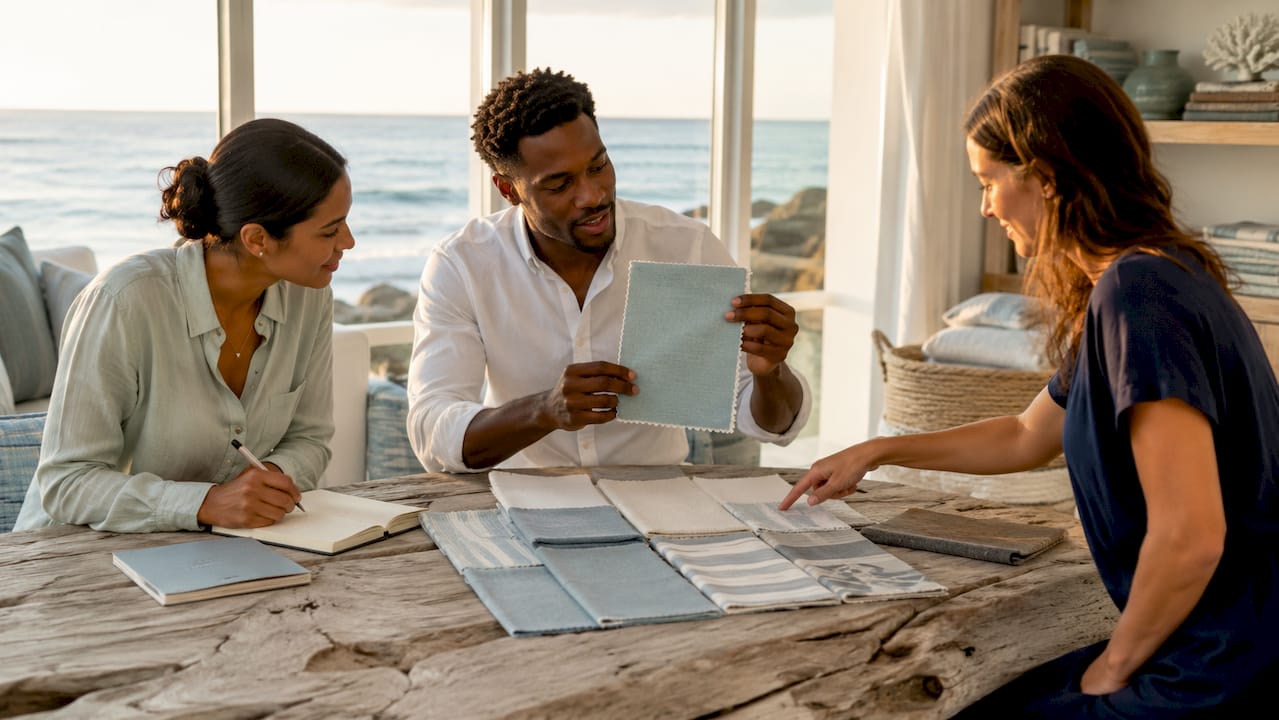
The reason solution-dyed acrylics perform so well is that the color is embedded into the fiber itself during manufacturing, not printed on the surface. Sunlight has nothing to strip away. This matters especially in coastal living rooms with floor-to-ceiling glass, where uneven sunlight fading can leave one side of a sofa noticeably lighter than the other within a year or two.
Performance linens occupy a different space. They mimic the texture and warmth of natural linen while offering stain resistance and easy upkeep that natural fibers cannot match in humid climates. For vacation rentals or high-traffic family homes, performance linens deliver the look of luxury without the fragility.
Pro Tip: If your living room gets direct afternoon sun through large windows, choose solution-dyed acrylic upholstery over printed polyester or natural linen. The color will stay true for years longer, and you will never have to rotate cushions to hide uneven fading.
What frame materials best support coastal sofa durability
Frame material determines how long your sofa survives the coastal environment. The differences between materials are not subtle.
Marine-grade aluminum and HDPE frames maintain structural integrity for 15–20+ years in coastal conditions. Teak frames last 20–30+ years and develop that desirable silver patina that blends beautifully with natural coastal palettes. Budget frames made from untreated wood or standard steel typically fail within 3–5 years due to corrosion, warping, or rot.
| Frame Material | Expected Lifespan | Maintenance Level | Aesthetic Fit |
|---|---|---|---|
| Marine-grade aluminum | 15–20+ years | Very low | Modern, minimalist |
| HDPE | 15–20+ years | Very low | Casual, relaxed |
| Teak | 20–30+ years | Low to moderate | Natural, warm, coastal |
| Untreated wood | 3–5 years | High | Not recommended for coastal |
| Standard steel | 3–5 years | High | Not recommended for coastal |
Teak requires occasional oiling if you want to preserve its warm honey tone, but it will outlast almost any other natural material even if left untreated. Marine-grade aluminum needs almost no maintenance beyond occasional cleaning. HDPE, a dense recycled plastic, is the most maintenance-free option and carries strong sustainability credentials.
Pro Tip: For indoor coastal sofas, prioritize kiln-dried hardwood frames sealed with moisture-resistant finishes. Reserve marine-grade aluminum and HDPE for covered porches or sunrooms where frames face direct humidity and salt air.
Which designer sofa styles complement coastal living rooms in 2026
The coastal luxe aesthetic that defines the best designer sofa styles for coastal homes in 2026 has moved decisively away from nautical motifs. No anchors, no rope details, no navy-and-white stripes paired with ship wheels. True coastal luxury uses a grown-up palette of sand, seafoam, driftwood, and muted blues that feel sophisticated rather than themed.
The silhouettes that work best share a few qualities:
- Relaxed but structured. Generous seat depth, low arms, and soft cushions signal comfort without looking sloppy. A sofa that looks too casual reads as beach rental rather than coastal luxe.
- Tactile fabrics. Texture carries the sensory weight that color alone cannot. Woven performance fabrics, slubbed linens, and nubby bouclés all catch light in ways that feel alive and layered.
- Neutral, natural color palettes. Sand, warm white, pale sage, and soft driftwood gray all work. These tones reflect coastal light rather than competing with it.
- Slipcovered designs for style flexibility. Washable slipcovers reduce maintenance anxiety and let luxury furniture be actually used without fear of sand or sunscreen damage. This is a practical benefit that doubles as a design asset.
- Scale and visual lightness. Sofas with exposed legs or raised frames feel lighter in a room, which suits the airy quality of coastal interiors. Low, skirted designs work when the room has strong architectural bones to anchor them.
Professional coastal interiors also rely on what designers call “edit and scale.” Leaving breathing space around seating supports natural airflow and prevents trapped humidity, which is a detail most generic guides miss entirely. A sofa pushed against a wall in a humid coastal home creates a moisture pocket that damages both the frame and the fabric over time.
How to choose the right luxury coastal sofa for your living room
Selecting the right sofa comes down to matching the piece to your specific conditions and how you actually use the space.
-
Assess your humidity level. Coastal homes within a mile of the water face the highest humidity and salt air exposure. These rooms need performance fabrics and sealed or corrosion-resistant frames. Homes set further back from the shore can tolerate a wider range of materials.
-
Consider your household. Families with children benefit most from slipcovered designs with bleach-cleanable covers. The ability to pull off a cover and run it through the wash removes the anxiety that keeps people from actually enjoying their furniture.
-
Match the sofa to your floor plan. Sectionals suit larger open-plan spaces with panoramic views. A single generous sofa works better in a more intimate room where a sectional would overwhelm the space.
-
Pair frame materials with your interior style. Teak frames complement natural wood floors, rattan accents, and warm organic textures. Marine-grade aluminum or powder-coated steel frames suit modern minimalist interiors with concrete, glass, or polished surfaces.
-
Account for window placement. Identify where direct sunlight falls across your seating area at different times of day. If a sofa sits in a sunbeam for several hours daily, solution-dyed acrylic upholstery is not optional. It is the only fabric that will hold its color evenly across the piece.
-
Think about scale and airflow. A sofa that fills a room wall to wall blocks air circulation. Leave at least 18 inches between the back of the sofa and the wall to allow airflow and prevent moisture buildup behind the piece.
Key takeaways
The best luxury sofas for coastal homes combine solution-dyed acrylic or performance linen upholstery with teak or marine-grade aluminum frames, chosen to match the room’s sun exposure, humidity level, and daily use.
| Point | Details |
|---|---|
| Fabric performance matters most | Solution-dyed acrylics retain 98% color after 3,000 hours of UV exposure, far outlasting standard fabrics. |
| Frame material determines lifespan | Teak and marine-grade aluminum last 15–30+ years; untreated wood or steel fails within 3–5 years. |
| Slipcovered designs offer real value | Washable covers make luxury sofas practical for families in sandy, humid coastal environments. |
| Coastal luxe avoids nautical clichés | Refined palettes of sand, seafoam, and driftwood create timeless elegance without themed motifs. |
| Airflow is a design requirement | Leaving space around seating prevents trapped moisture and protects both fabric and frame over time. |
What I have learned from years of designing for coastal homes
The conversation I have most often with clients who are furnishing a coastal home goes something like this: they want something beautiful, but they are terrified of ruining it. That fear is understandable. Coastal environments are genuinely hard on furniture. But the fear itself is the problem, because it leads people to buy sofas they do not love, in fabrics they do not enjoy, because they assume anything worth having cannot survive the beach.
The truth I have come to after years of working with performance fabrics and custom frames is that durability and beauty are not in tension. They are the same goal pursued through better materials. A custom performance sofa built with solution-dyed acrylic upholstery and a sealed hardwood frame does not ask you to choose between living well and living carefully. It removes that choice entirely.
What I push back on most is the instinct to go nautical. Anchors and rope motifs are a shorthand for “coastal” that actually reads as coastal-adjacent rather than genuinely of the coast. The homes I find most beautiful near the water are the ones that let the view do the work. The sofa’s job is to be a quiet, tactile, generous presence. Sand tones, soft sage, warm white. Fabrics that feel good under your hand. A silhouette that says “sit down and stay a while.” That is the real luxury.
— Kevin O’Gara
Striped Sofa Co and the coastal sofa you have been looking for
Striped Sofa Co builds American-made luxury sofas with performance fabrics designed specifically for the demands of coastal living. Every piece uses stain-resistant, bleach-cleanable upholstery free from harmful PFAS chemicals, paired with FSC and SFI certified wood frames and soy-based foam. Sofas are made to order in 6–8 weeks, with full customization across fabric, silhouette, and scale.
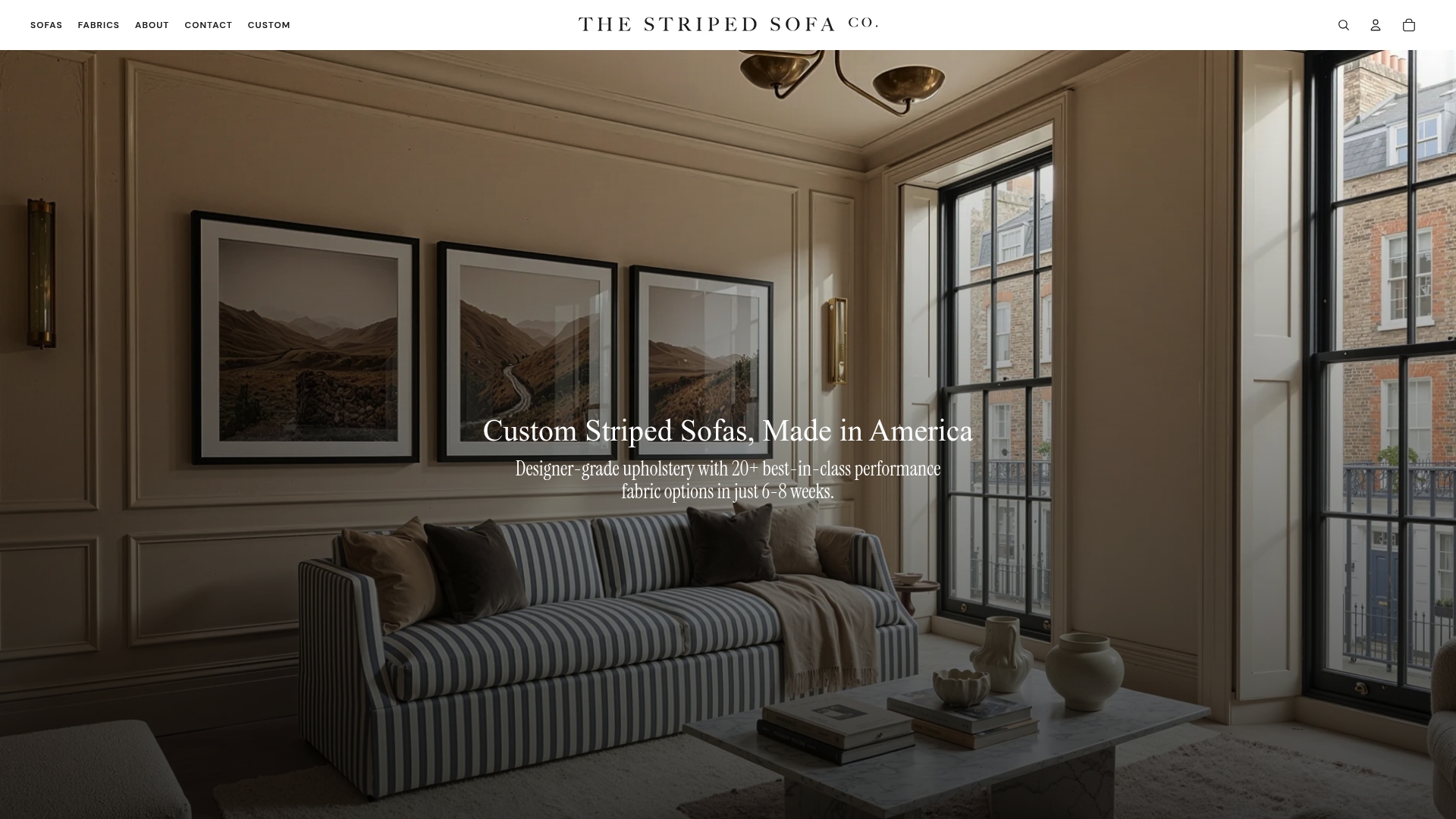
The Dalston and Chelsea models both suit coastal living rooms beautifully, offering the kind of generous proportions and tactile fabrics that make a room feel genuinely lived in. If you want a sofa that holds its color, cleans easily, and carries the quiet confidence of something built to last, browse the full collection or start with a custom design consultation to find the right fit for your space.
FAQ
What fabric is best for a luxury coastal living room sofa?
Solution-dyed acrylic is the top choice for coastal sofas because it retains 98% of its color after 3,000 hours of UV exposure. Performance linen is a strong second option for interiors with lower direct sun exposure.
How long do luxury coastal sofas last?
Sofas with teak frames last 20–30+ years, while marine-grade aluminum and HDPE frames last 15–20+ years in coastal conditions. Frame quality and fabric choice together determine the sofa’s actual lifespan.
Are slipcovered sofas a good choice for beach houses?
Yes. Washable slipcovers make luxury sofas practical for sandy, humid environments by allowing machine washing and easy replacement. They are the most family-friendly option for coastal living rooms.
What colors work best for a coastal living room sofa?
Sand, seafoam, driftwood gray, warm white, and muted sage all work well. These tones reflect coastal light naturally and avoid the dated look of nautical-themed color schemes.
How do I prevent my coastal sofa from fading unevenly?
Choose solution-dyed acrylic upholstery and position the sofa away from prolonged direct sunlight when possible. If the room has large windows, the color-embedded fibers in solution-dyed acrylics prevent the one-sided fading that affects surface-printed fabrics.