

Layering textures around a striped sofa is defined as the practice of combining multiple distinct fabric types and tactile surfaces to create depth, warmth, and visual richness in a living space. The striped sofa serves as a quiet foundation, a steady heartbeat in the room, around which matte linens, plush velvets, and nubby bouclés can each play their part. Design industry standards recommend incorporating 3–4 distinct textures, balancing light-absorbing and light-reflecting materials to add genuine depth. In 2026, wider cabana stripes and tonal palettes like olive green paired with oatmeal have made the striped sofa more relevant than ever as a versatile styling anchor.
What textures and materials complement striped sofas?
The first decision when you layer textures around a striped sofa is choosing between light-absorbing and light-reflecting materials. Light-absorbing fabrics, such as linen, wool, and cotton, create a matte, grounded quality that keeps the eye from bouncing. Light-reflecting materials, like velvet and silk, introduce a quiet luxury that catches the light and lifts the room.
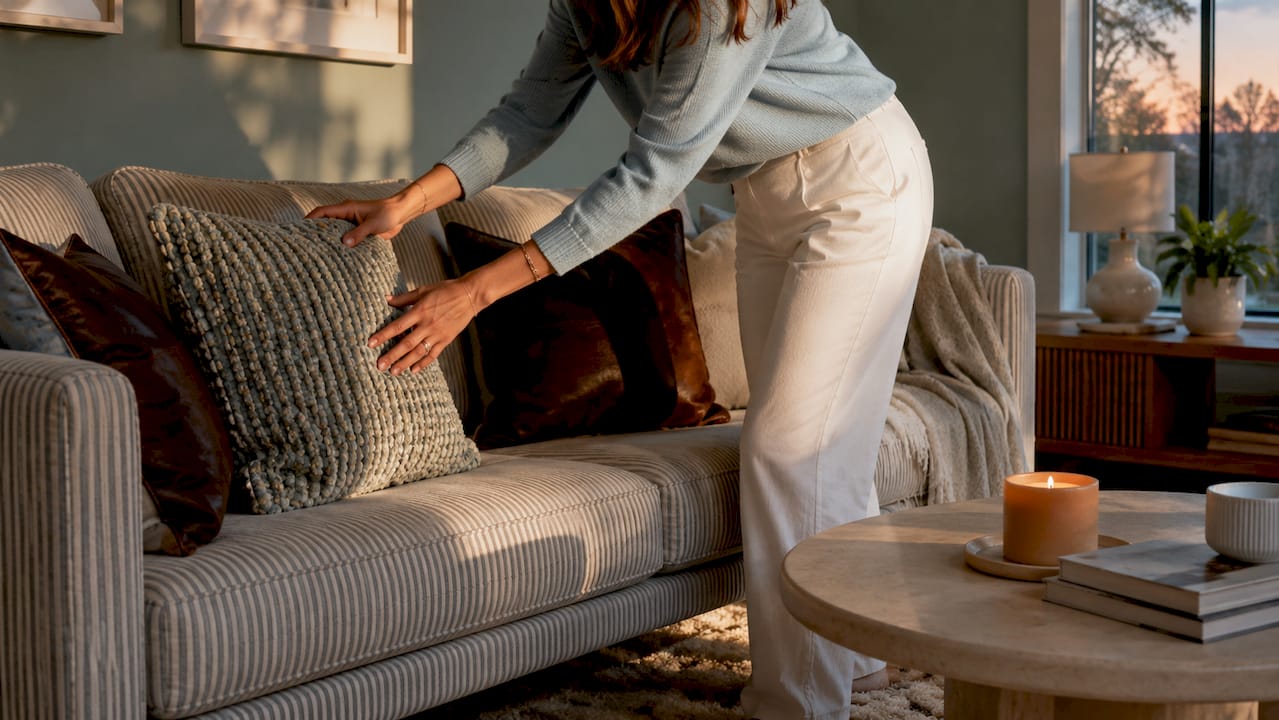
Layering contrasting textures such as smooth leather with nubby bouclé creates tactile dimension and a richer perception of comfort. That contrast is what separates a thoughtfully styled room from one that simply has furniture in it. The goal is not uniformity. It is conversation between surfaces.
The 2026 trend toward wider stripes and muted palettes means your sofa’s own fabric already does much of the visual work. That gives you freedom to layer softer, more understated textures around it without competing for attention.
Here are the material types that work best alongside a striped sofa:
- Linen cushion covers: Matte, breathable, and naturally textured. They ground the palette.
- Wool throws: Warm, slightly rough, and ideal for herringbone or cable-knit weaves.
- Velvet accent cushions: Light-reflecting and rich. Use in a color pulled from the sofa’s stripe.
- Bouclé pillows: Looped, tactile, and visually interesting without adding pattern.
- Cotton canvas: Crisp and clean. Works well as a neutral rest spot between bolder textures.
- Jute or sisal rugs: Coarse and earthy. They anchor the seating area and add a raw, natural layer.
- Silk or satin trim details: Use sparingly on cushion edges or throw borders for a refined accent.
Pro Tip: When you mix textures, run your hand across each fabric before committing. If the tactile difference between two pieces is noticeable, they will read as distinct layers visually too. Your hand is your best design tool.
How do you arrange cushions, throws, and rugs around a striped sofa?
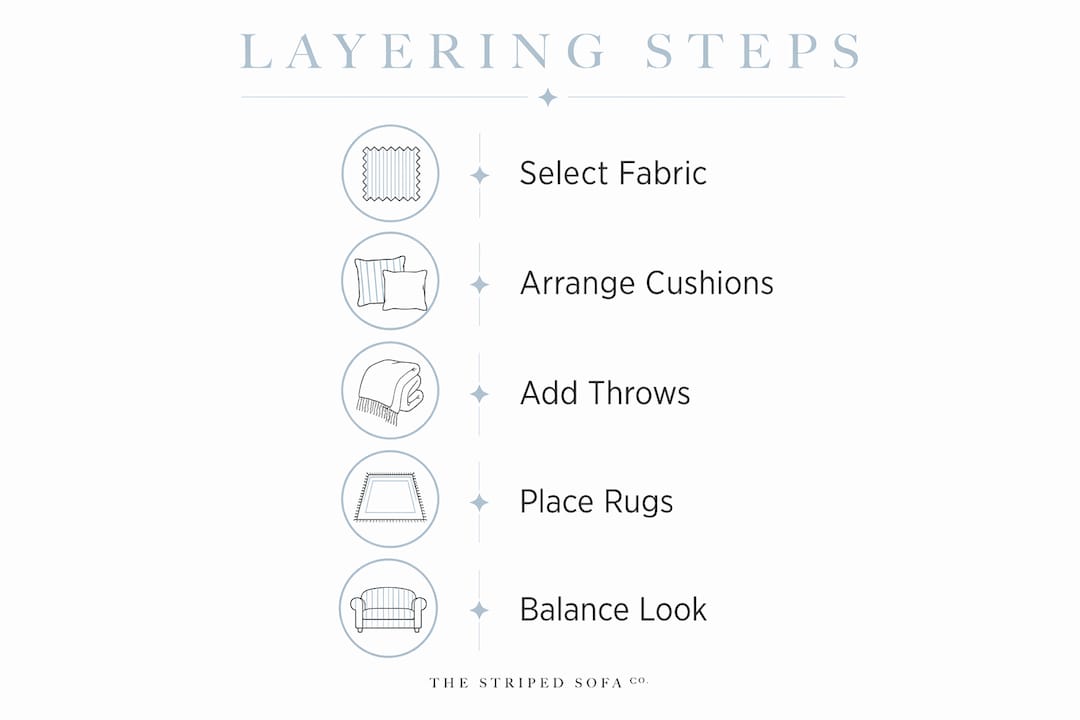
Arrangement is where layering becomes an art. The sequence matters as much as the materials. A layering strategy starts with dominant large cushions that echo the sofa’s own hues, then builds inward with medium and small-scale patterned pieces, and finishes with a textured throw draped casually at one end.
Color harmony is the thread that holds it together. Pull one or two colors from the sofa’s stripe and repeat them across your cushions, rug, and throw at different intensities. This creates rhythm without repetition.
Follow these steps to build a layered arrangement that feels intentional:
- Start with large cushions (around 55cm). Choose a solid or subtly textured fabric in a color that matches or closely echoes one of the sofa’s stripe tones. These are your anchors.
- Add medium cushions (around 45cm) with a complementary pattern. Florals, geometrics, or abstract prints all work well alongside stripes, provided the scale differs significantly. Mixing patterns with different scales keeps the room steady.
- Introduce small accent cushions (around 35cm). These carry the most personality. A velvet cushion in a deep jewel tone or a bouclé piece in a warm neutral adds the final layer of tactile interest.
- Drape a textured throw. A herringbone wool or chunky-knit cotton throw folded loosely over one arm adds warmth and a lived-in quality. Avoid folding it too neatly. It should look like someone just set it down.
- Place a rug to anchor the space. A jute, wool, or flatweave rug beneath the coffee table ties the seating area together. The rug’s texture should contrast with the sofa’s upholstery fabric, not mirror it.
- Distribute visual weight across the room. Professionals recommend balancing bold cushions on the sofa with a patterned armchair or textured blind on the opposite side. Neutral cushions act as rest spots between bolder pieces.
Pro Tip: Step back and squint at the room after arranging. If one corner looks heavy and another looks bare, redistribute one bold element. Your eye will tell you before your brain does.
Here is a quick reference for cushion sizing and texture pairing:
| Cushion size | Recommended texture | Pattern role |
|---|---|---|
| Large (55cm) | Solid linen or cotton canvas | Anchor, matches sofa stripe color |
| Medium (45cm) | Geometric or floral print | Complementary pattern, contrasting scale |
| Small (35cm) | Velvet, bouclé, or silk trim | Accent, adds tactile and color depth |
| Throw | Herringbone wool or chunky knit | Warmth, casual layered quality |
| Rug | Jute, sisal, or flatweave wool | Ground, ties the seating area together |
What mistakes should you avoid when layering textures around striped sofas?
The most common error is the matchy-matchy approach. Striped curtains paired with a striped sofa create a showroom-like appearance that feels stiff and unlivable. Solid linen drapes or simple Roman shades let the sofa’s stripe breathe and remain the focal point.
A second mistake is layering too many textures at once. More than four distinct surfaces in one seating area creates visual noise rather than richness. The room starts to feel cluttered rather than curated.
Texture adds tactile dimension that is equally as important as pattern for perceived luxury and comfort. The goal is not to fill every surface, but to create a conversation between materials that invites you to sit down and stay.
Here are the most common layering mistakes and how to correct them:
- Matching stripe to stripe: Pair the sofa with solid or sheer window treatments instead of repeating the stripe pattern on curtains or rugs.
- Overloading textures: Limit yourself to 3–4 distinct textures. If you add a fifth, remove one that is already present.
- High-contrast small stripes in tight spaces: Small-scale, high-contrast stripes in rooms under 180 sq ft cause visual vibration and a sense of unease. Choose wider, tonal stripes for small rooms.
- Clustering bold patterns on one side: Spread visual weight evenly. A bold cushion on the sofa should be balanced by a textured element on the opposite wall or chair.
- Ignoring rest spots: Every arrangement needs neutral breathing room. A plain cotton cushion or a solid-colored throw gives the eye a place to pause.
How does room size change your layering approach?
Room size is the variable most homeowners underestimate. A layering strategy that feels rich and generous in a large open-plan living room can feel suffocating in a compact space.
Layering in small rooms (under 180 sq ft)
Small rooms call for restraint and softness. Wider, tonal stripes on the sofa create calm rather than visual stress. Limit your texture count to three. Choose lighter materials, such as linen and cotton, over heavy wool or velvet. A flatweave rug in a neutral tone keeps the floor from feeling heavy. For sofa styling in small spaces, two large cushions and one accent cushion is enough. Simplicity reads as confidence in a tight room.
Layering in large rooms
Large rooms can carry more. Richer textures like chunky-knit throws, layered wool rugs, and velvet cushions in deeper tones all work well. You can introduce a fourth texture without the space feeling crowded. Bold accent colors pulled from the sofa’s stripe can appear in a patterned armchair or a statement rug. The striped sofa as a grounding element allows other patterns with different scales to add personality without overwhelming the room.
Here is a comparison of layering approaches by room size and sofa stripe style:
| Room type | Sofa stripe style | Texture count | Key materials | Pattern approach |
|---|---|---|---|---|
| Small (under 180 sq ft) | Wide, tonal stripes | 3 | Linen, cotton, flatweave | Solids and one subtle pattern |
| Medium living room | Cabana or classic stripe | 3–4 | Wool, velvet, jute | Mix of geometric and floral at contrasting scales |
| Large open-plan | Bold or high-contrast stripe | 4 | Bouclé, chunky knit, silk | Richer patterns, bolder accents |
| Coastal or relaxed | Soft tonal or nautical stripe | 3 | Linen, cotton canvas, sisal | Natural textures, minimal pattern |
| Formal or traditional | Refined pinstripe or regency | 4 | Velvet, silk trim, wool | Florals and geometrics in muted tones |
For homeowners working with a retro or modern stripe design, the principle stays the same. Let the sofa’s stripe scale guide your choices. A wide cabana stripe pairs naturally with loose, casual textures. A refined pinstripe calls for more polished fabrics, like velvet or a silk-trimmed cushion. You can explore mixing patterns with a striped sofa in more depth to find the right balance for your specific stripe style.
Key Takeaways
Layering textures around a striped sofa works best when you combine 3–4 distinct materials, balance light-absorbing and light-reflecting surfaces, and distribute visual weight evenly across the room.
| Point | Details |
|---|---|
| Use 3–4 distinct textures | Mixing linen, wool, velvet, and bouclé creates depth without visual noise. |
| Start large, build inward | Begin with large anchor cushions, then layer medium and small accent pieces. |
| Match stripe scale to room size | Wide, tonal stripes suit small rooms; bold stripes carry well in large spaces. |
| Avoid matchy-matchy patterns | Never repeat the sofa’s stripe in curtains or rugs; use solids or sheers instead. |
| Distribute visual weight | Balance bold cushions on the sofa with textured elements on the opposite side of the room. |
Why texture is the detail that changes everything
I have spent years watching homeowners get the pattern right and still feel like something is missing. The sofa looks fine. The cushions are coordinated. But the room feels flat. Nine times out of ten, the missing ingredient is texture.
Stripes, by their nature, are graphic and linear. They bring order to a room, which is exactly why I love them as a starting point. But order alone does not invite you to sit down. Warmth does. And warmth comes from the way a chunky-knit throw catches the afternoon light, or the way a bouclé cushion looks slightly imperfect and entirely inviting.
What I have found, after years of working with striped upholstery, is that the stripe itself is almost neutral in the best sense. Designers use a striped sofa as a grounding element, letting other patterns and textures carry the personality of the room. The stripe holds the room steady while everything else gets to be expressive.
The mistake I see most often is treating texture as an afterthought, something to add once the “real” decorating is done. Texture is not decoration. It is the quality that makes a room feel lived in, loved, and worth returning to. A room without tactile contrast is like a meal without seasoning. Technically complete, but not satisfying.
My advice is to trust your hands as much as your eyes. Touch every fabric before you commit. If it does not feel interesting, it will not look interesting either.
— Kevin O’Gara
Striped Sofa Co: where your layering vision starts
The right sofa makes every layering decision easier. When the foundation is beautiful, the rest of the room follows naturally.
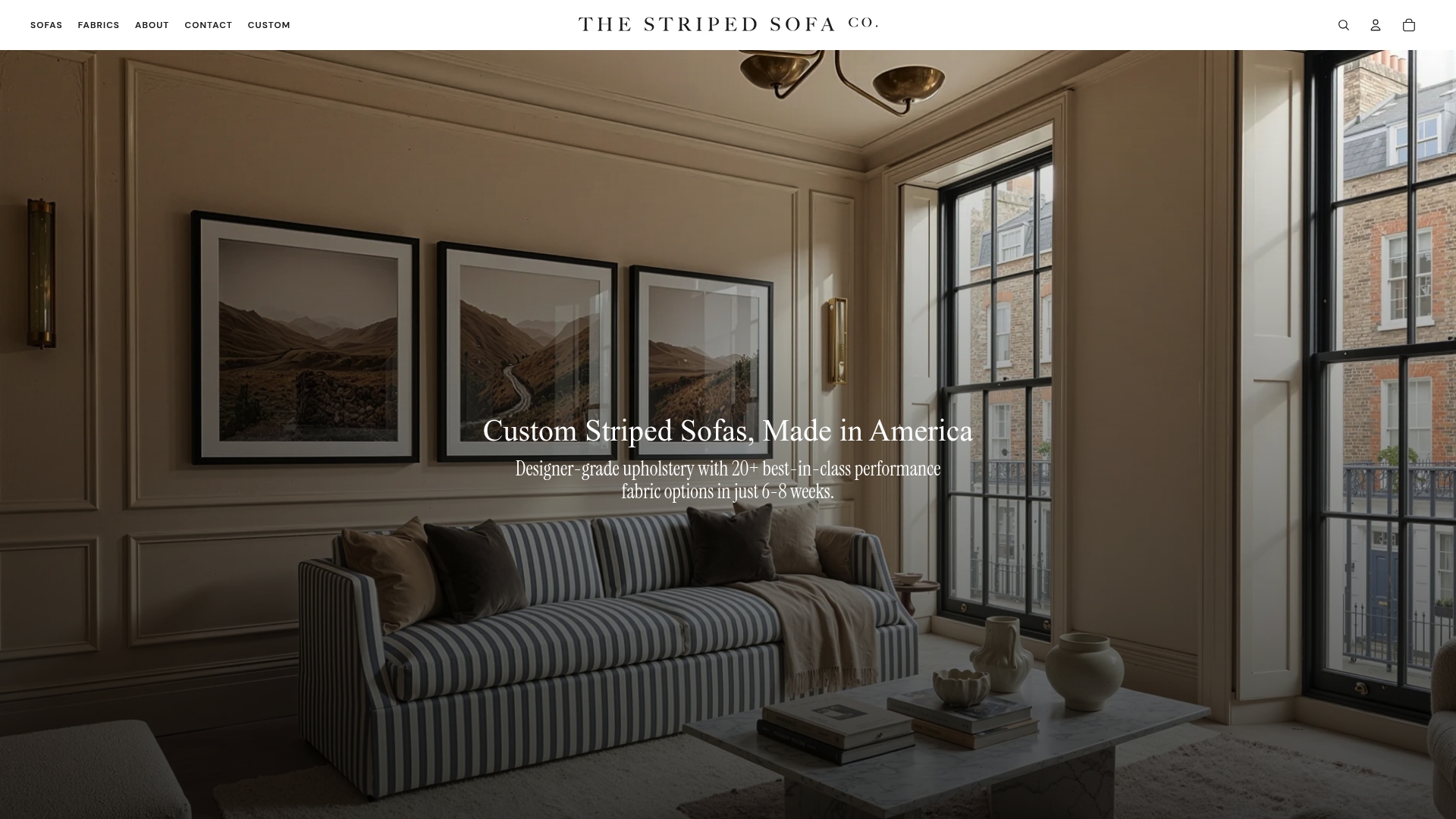
Striped Sofa Co builds custom performance striped sofas made in America, using FSC and SFI certified wood, soy-based foam, and stain-resistant, bleach-cleanable fabrics free from harmful PFAS chemicals. Each sofa is made to order in 6–8 weeks, with a range of stripe styles and fabric textures designed to serve as the quiet foundation your layering vision deserves. Whether you are drawn to a wide cabana stripe or a refined pinstripe, Striped Sofa Co offers the fabric and design options to match your personal aesthetic. Your sofa should be the piece everything else is built around.
FAQ
How many textures should you layer around a striped sofa?
Design standards recommend 3–4 distinct textures, balancing light-absorbing materials like linen and wool with light-reflecting ones like velvet or silk. More than four textures in one seating area tends to create visual clutter rather than richness.
Can you mix patterns with a striped sofa?
Yes. Striped sofas pair well with florals and geometrics when the scale of the secondary pattern differs significantly from the stripe. Designers treat stripes as neutrals, which gives you considerable freedom to layer other prints around them.
What is the best rug texture to use with a striped sofa?
A jute, sisal, or flatweave wool rug works best. These materials contrast with the sofa’s upholstery fabric rather than competing with it, and they anchor the seating area with a natural, grounded quality.
Should striped curtains match a striped sofa?
No. Matching striped curtains to a striped sofa creates a stiff, showroom-like appearance. Solid linen drapes or simple Roman shades let the sofa remain the focal point and give the room a more curated, relaxed feel.
How do you layer textures in a small room with a striped sofa?
Keep the texture count to three and choose lighter materials like linen and cotton. Wider, tonal stripes on the sofa create visual calm in rooms under 180 sq ft, while small-scale, high-contrast stripes cause visual vibration and make the space feel smaller.